 Whalesbook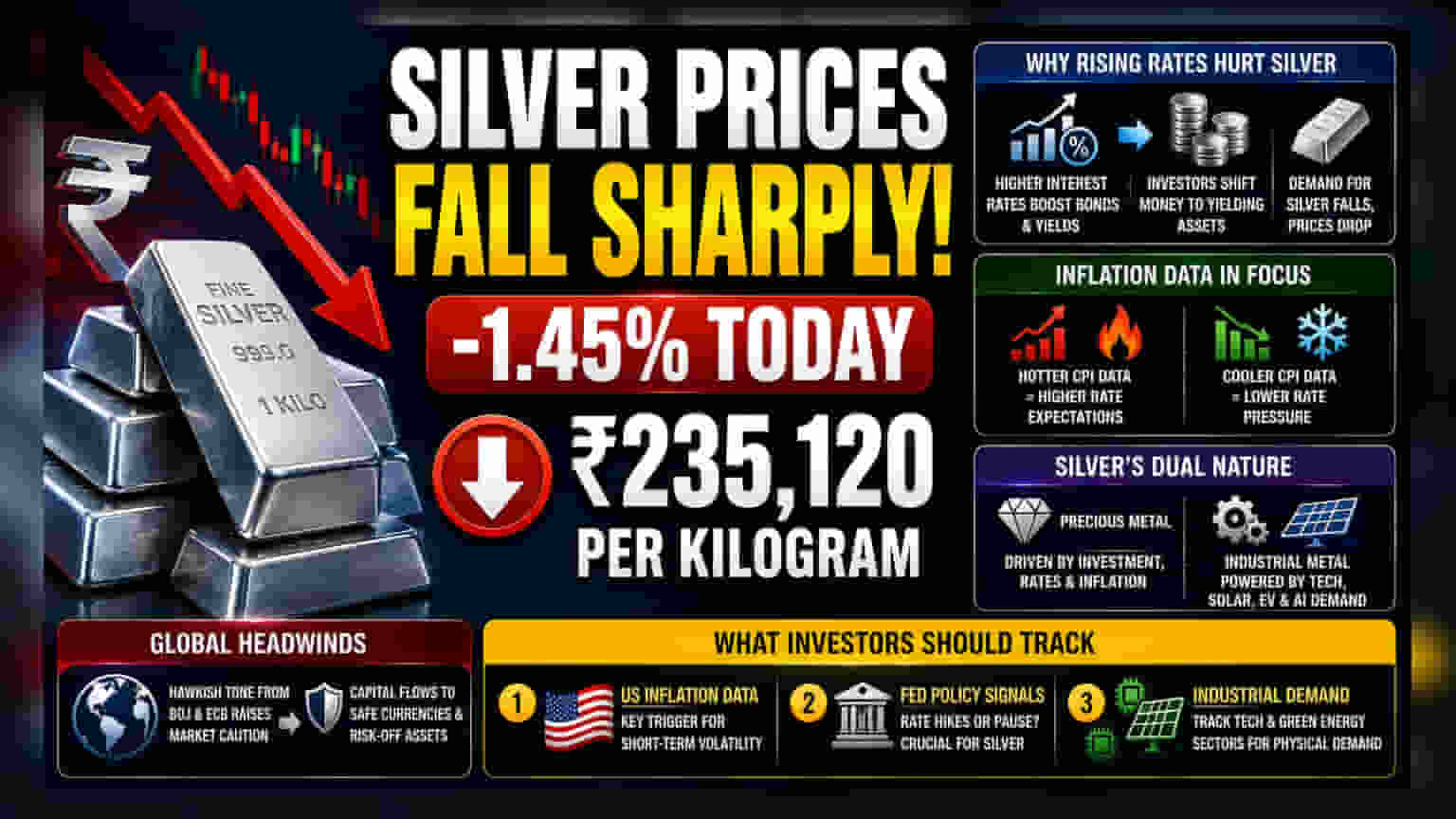


Silver prices fell to ₹235,120 per kg in India on June 10, 2026. The decline follows global market weakness and growing speculation about potential US Federal Reserve interest rate hikes. Here is what investors should know about the dual factors moving silver prices.
What Happened
Silver prices in India experienced a sharp decline of 1.45% on June 10, 2026, closing at ₹235,120 per kilogram. This movement reflects a broader trend of cooling interest in precious metals globally, as markets react to changing economic conditions and central bank policies in major economies.
Why Interest Rates Are Pressuring Silver
To understand why silver prices often fall when interest rate expectations rise, it helps to look at how investors compare assets. Silver is a non-yielding asset, meaning it does not generate regular interest or dividends like a bank deposit or a government bond. When central banks, such as the US Federal Reserve, signal that they might raise interest rates, the return on interest-bearing assets like bonds increases. As these bonds become more attractive, investors often move their capital out of precious metals like silver and into these higher-yielding financial products. This shift in capital can lead to a drop in the demand for silver, pulling prices lower.
The Inflation Data Watch
Market participants are currently focused on the upcoming US Consumer Price Index (CPI) data. This report measures the average change in prices for consumer goods and services and is a key indicator of inflation. If inflation figures come in higher than expected, it suggests that the economy is heating up, which could encourage the Federal Reserve to maintain or increase interest rates to control it. For silver investors, 'hotter' inflation data is often viewed as a negative signal because it increases the likelihood of higher rates. Conversely, if the data shows inflation is cooling, it might offer some relief, as the pressure for further rate hikes could ease.
Silver’s Unique Dual Nature
Unlike gold, which is primarily held as a store of value, silver has a dual identity: it is both a precious metal and a critical industrial commodity. A significant portion of global silver demand comes from sectors like electronics, solar panel manufacturing, electric vehicles, and AI infrastructure. This means that while investment demand fluctuates based on interest rates and inflation, industrial demand behaves differently. It is driven by actual consumption and global manufacturing activity. Investors often watch this balance closely, as strong industrial demand can sometimes provide a floor for silver prices even when investment sentiment is weak due to macroeconomic fears.
The Bigger Business Context
Recent global trends have also added to the volatility. Hawkish signals—or comments suggesting a preference for higher interest rates—from the Bank of Japan and the European Central Bank have contributed to a broader sense of caution across financial markets. When investors see major central banks moving toward tighter monetary policies, they tend to move into safer, more stable currencies or interest-bearing assets, which naturally puts pressure on commodities.
What Investors Should Track
Investors may want to keep an eye on three key areas in the coming days. First, the actual US inflation data will likely be a major trigger for short-term price volatility. Second, official statements from the Federal Reserve regarding their policy path will provide more clarity on whether interest rate hikes are imminent or if the cycle is nearing its end. Finally, tracking reports on industrial activity—particularly in the tech and green energy sectors—can help determine if underlying physical demand for silver remains robust enough to offset the current investment-led selling pressure.