 Whalesbook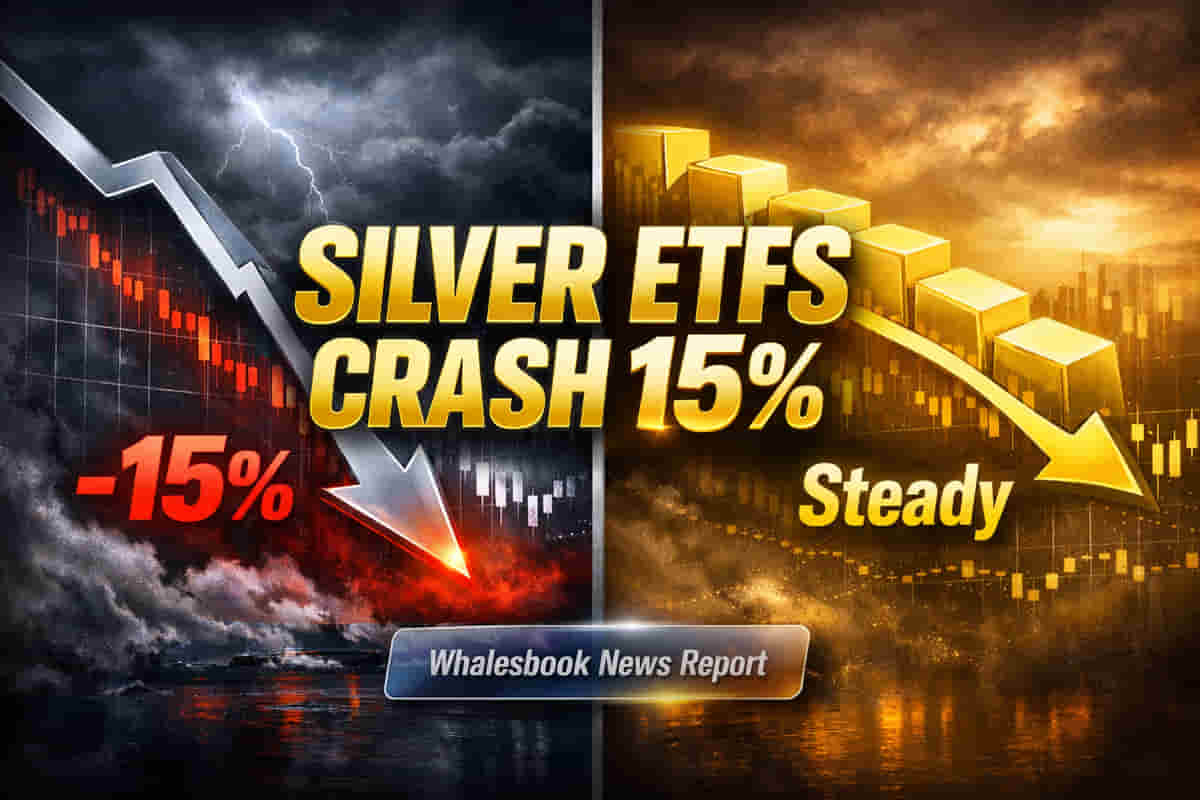


Silver's Amplified Volatility
On February 5, 2026, silver exchange-traded funds (ETFs) endured aggressive selling pressure, with early trading seeing some funds decline by over 10% and approach 15%. This severe one-day drop contrasted sharply with the more muted performance of gold ETFs, underscoring silver's increased susceptibility to volatility during market corrections. MCX silver futures registered an 8.35% decline, falling to approximately Rs 2,46,397, while MCX gold futures showed relative stability, trading near Rs 1,52,000, down just 0.68%. This divergence in performance directly translated into heavier losses for silver-focused investment products.
Industrial Demand and Market Dynamics
The heightened volatility of silver is intrinsically linked to its dual nature as both an industrial commodity and a store of value. Unlike gold, which primarily serves as a safe-haven asset, silver's price is significantly influenced by industrial demand, which accounts for roughly half of its total consumption. Key industrial applications include electronics, solar energy, and automotive manufacturing, particularly electric vehicles. Consequently, during periods of economic uncertainty or shifting industrial production cycles, silver's price movements often become exaggerated compared to gold. This sensitivity to manufacturing activity creates cyclical pricing patterns that can amplify price swings, especially when combined with speculative investment flows.
Factors Driving the Sell-off
Fresh selling pressure and elevated volatility returned to the precious metals market on February 5th, leading both gold and silver to relinquish recent gains, as noted in the Augmont Bullion Daily Report. Investor sentiment was notably shaken by record daily outflows from China's gold ETFs, with nearly $1 billion withdrawn from major bullion-backed funds following recent price corrections. Market participants also reacted to geopolitical developments, including news of upcoming U.S.-Iran talks, which dampened safe-haven demand. Furthermore, exchanges imposed additional margin requirements on gold and silver futures. An extra margin of 4.5% on silver futures and 1% on gold futures took effect on February 5th, intensifying selling pressure. Ponmudi R, CEO of Enrich Money, highlighted that MCX silver futures are trading in the Rs 2,50,000–Rs 2,60,000 range, having fallen from record highs near Rs 4,20,000, indicating short-term weakness despite a positive long-term outlook. Strong buying interest is observed around the Rs 2,35,000–Rs 2,50,000 support zone.
Comparative Performance and Outlook
Gold ETFs experienced declines, but their performance was considerably less severe than silver ETFs. For instance, Motilal Oswal Gold ETF declined around 5.5%, with other gold ETFs falling by approximately 5% on February 5th. This contrasts with silver ETFs, which saw drops ranging from 12% to over 21%. Historically, silver ETFs have demonstrated significant returns, with some delivering over 160% in 2025, indicating a sharp reversal from recent highs. Despite the current corrective phase, analysts suggest that the broader bullish structure for gold remains intact, with strong support identified in the Rs 1,45,000–Rs 1,48,000 area. A sustained move above Rs 1,55,000–Rs 1,60,000 could help gold regain upward momentum. For silver, a sustained hold above the Rs 2,35,000–Rs 2,50,000 support band could lead to a recovery toward Rs 3,00,000–Rs 3,25,000. However, experts advise caution due to continued volatility driven by global factors and investor flows. The year-to-date performance for silver ETFs in 2025 showed substantial gains, with returns ranging from 160% to 162%. In early February 2026, however, the silver market experienced a drastic reversal, with some silver ETFs falling as much as 21%. Volatility remains elevated, with spot silver down more than 13%.