

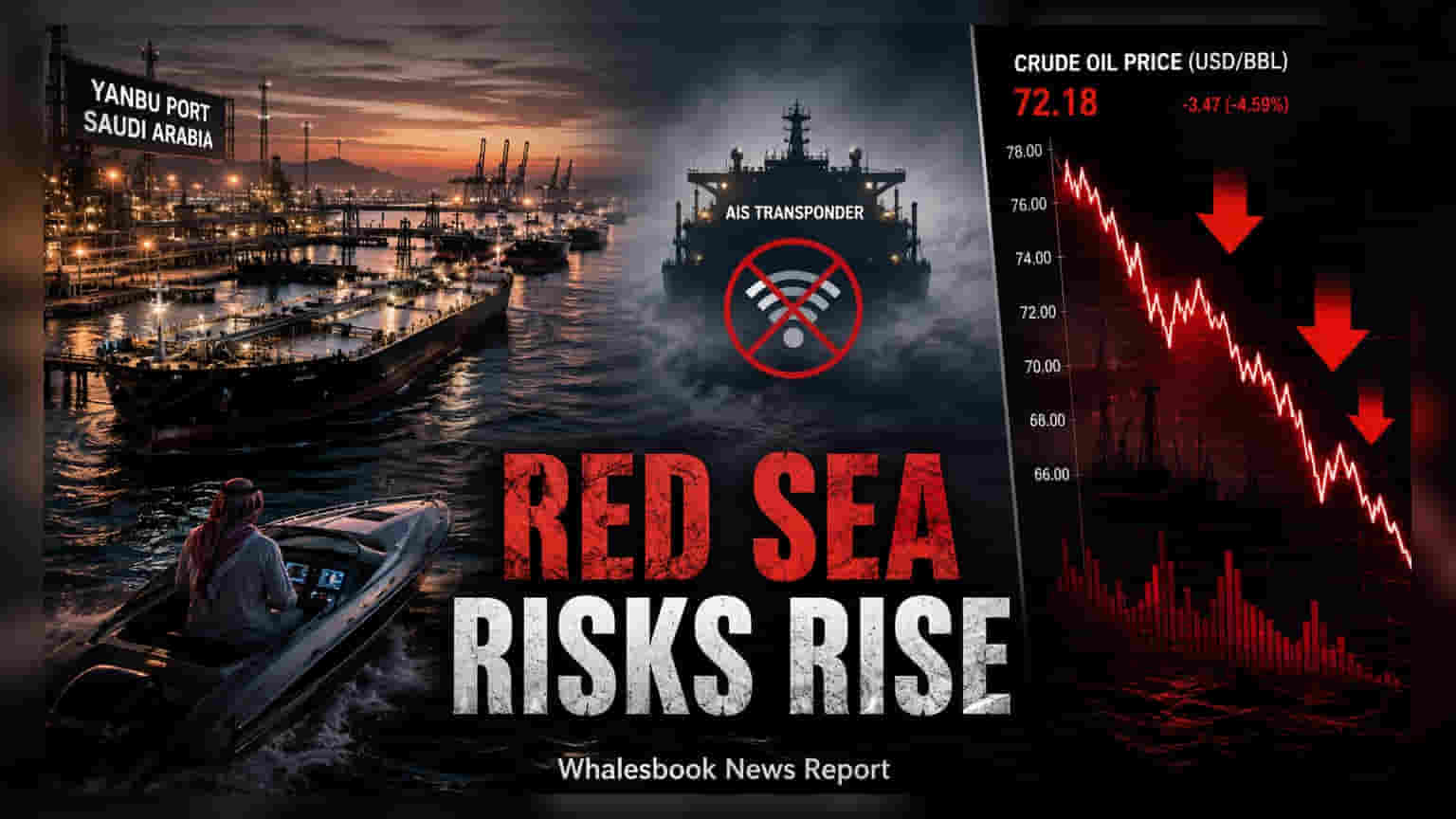
Saudi Arabia’s Yanbu port is witnessing peak tanker activity as shipping routes face ongoing security challenges. With multiple crude carriers docked, the port serves as a critical hub for global oil exports. Investors may monitor how these persistent transit risks influence global crude supply chains and shipping insurance costs.
Saudi Arabia’s Yanbu terminal, a primary export hub on the Red Sea, is currently operating at high capacity. Satellite observations from this weekend identified five Very Large Crude Carriers (VLCCs) at the port, suggesting a significant volume of oil is being processed for international markets. This activity level is notable given the persistent security threats in the region that have disrupted standard maritime trade.
The strategic importance of Yanbu has grown as shipping companies navigate security risks around the Bab el-Mandeb Strait. To ensure consistent crude exports, Saudi Arabia uses its pipeline network to transport millions of barrels of oil daily to the Red Sea coast, bypassing potential bottlenecks near the Strait of Hormuz. Each VLCC docked at the terminal is capable of carrying roughly 2 million barrels, highlighting the scale of the logistical effort required to maintain export flows.
Impact of Shipping Disruptions
Regional security tensions have fundamentally changed how energy companies move cargo. Many vessels, including those carrying Russian crude, have adopted the practice of sailing with transponders deactivated to avoid detection while transiting high-risk areas. Recent data from analytics firms Kpler and Vortexa confirmed that tankers, such as the India-flagged Desh Vaibhav and the Greek-owned Lesvos, transited the Bab el-Mandeb Strait after loading at Yanbu with their tracking systems turned off.
Beyond these tactical maneuvers, the blockade has forced a broader shift in logistics. Some operators are opting for longer, costlier routes around Africa, while others are utilizing Egypt’s Sidi Kerir terminal on the Mediterranean to bypass the Red Sea entirely. This rerouting strategy adds time and fuel costs to shipments, which can influence the final pricing of crude oil delivered to Asian and European markets.
Regional Security and Market Risks
Recent attacks on vessels, including a projectile strike on an LNG tanker near the Strait of Hormuz, continue to keep the shipping industry on high alert. Despite these risks, export volumes from the Persian Gulf remain robust. On Friday, daily export volumes exceeded 8.4 million barrels, which is among the highest levels recorded since late February.
For market participants, the primary concern remains the potential for rising shipping insurance premiums and operational delays. As tankers continue to transit through sensitive zones without active tracking, the transparency of global oil supply chains remains under pressure. Investors may track whether these logistical hurdles lead to sustained increases in shipping costs or further reallocations of global crude trade routes in the coming months.