 Whalesbook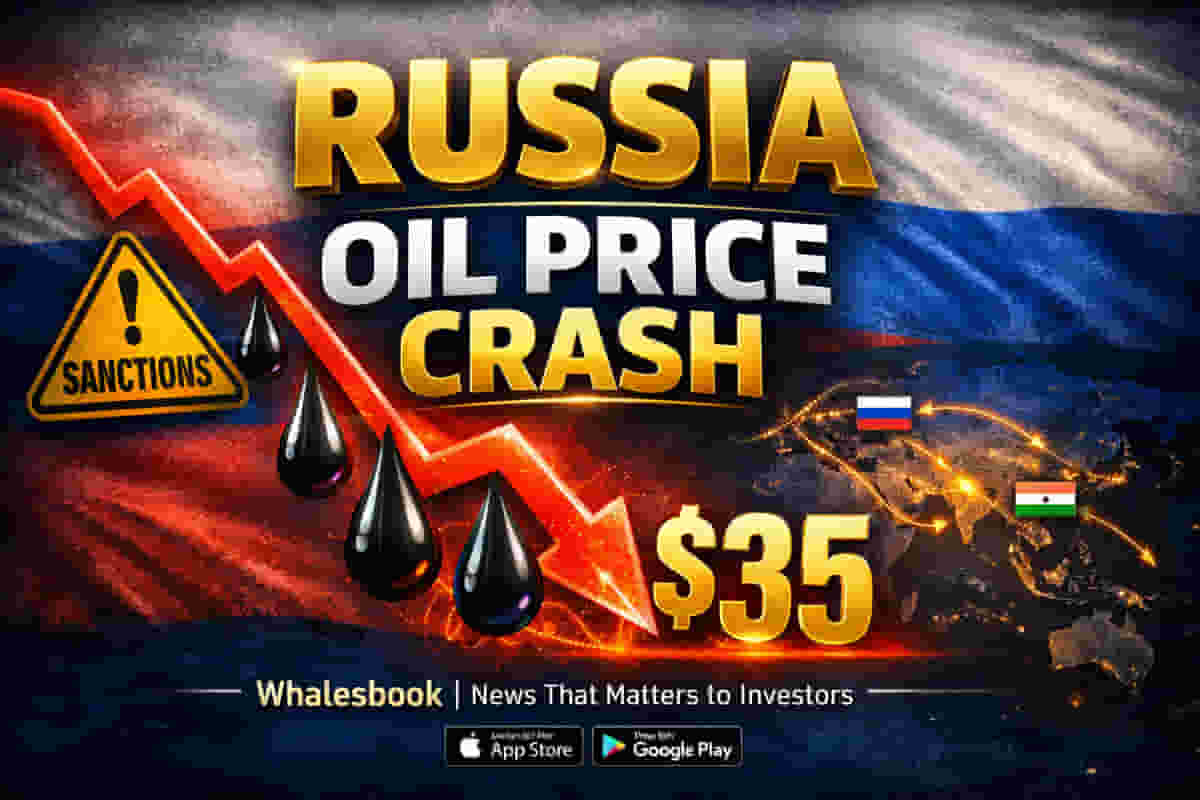


Urals Crude Oil Price Plunges Amid Sanctions
Russia's key Urals crude oil grade has seen a dramatic price slump, reportedly trading around $34 a barrel. This significant drop underscores the impact of United States sanctions imposed on Moscow's major oil producers. The price of Urals crude in the Baltic Sea fell to $34.82 a barrel on Friday, while in the Black Sea, it reached $33.17. This contrasts sharply with Dated Brent, an international benchmark that stood at approximately $61 a barrel, illustrating a substantial discount for Russian oil this year.
Sanctions Challenge Russian Flows
The sanctions, announced by President Donald Trump's administration in October, targeted Russia's top two oil producers. While these measures did not halt Russian oil exports entirely, they have undeniably made the process more complex and costly. This increased challenge is set to impact supply chains, with India, a significant importer, looking likely to receive fewer oil barrels from Russia next month.
Financial Implications for Russia
A sustained slump in oil prices poses a considerable threat to Russia's economy. Oil and gas revenues account for roughly a quarter of the Kremlin's budget, funds crucial for its operations, including the ongoing war in Ukraine. Although Russia maintains that these discounts will narrow within months, a prolonged period of low prices would significantly reduce its access to essential petrodollars.
Discount Dynamics and Refiner Incentives
According to Argus Media, the discounts for Urals crude at the point of export average about $27 a barrel. By the time this oil reaches India, the discount narrows to approximately $7.50. The exact portion of this delivery spread that benefits Russian entities remains unclear. A key dynamic is that the cheaper Russian oil becomes, the greater the financial incentive for refineries to potentially overlook sanctions and continue purchasing it. Historically, this has led to a normalization of Russian oil prices after an initial decline, suggesting a complex market response to sanctions.
Market Reaction and Future Outlook
The stark difference between Urals and Dated Brent prices highlights a fractured global oil market. While international benchmarks have seen declines, they have not been as severe as the drop in Russian grades. Russia's expectation of narrowing discounts suggests an attempt to stabilize its oil market position. However, the immediate future indicates reduced supply for key importers like India, potentially leading to shifts in global energy trade routes and pricing.
Impact
This news directly impacts global energy prices, potentially influencing inflation in India and other importing nations. Companies involved in oil imports and refining may see shifts in their operational costs and supply chain strategies. The geopolitical implications of sanctions affecting a major energy producer also add to global market uncertainty.
Impact Rating: 7/10
Difficult Terms Explained
- Urals: A specific grade or type of crude oil produced in Russia.
- Dated Brent: A benchmark price for crude oil that serves as a global reference point for oil trading.
- Sanctions: Penalties or restrictions imposed by one country on another, often for political or security reasons, affecting trade and financial dealings.
- Petrodollars: U.S. dollars earned by petroleum-exporting countries from the sale of oil.
- Kremlin: The seat of the Russian government; often used as a metonym for the Russian state or its leadership.
- Refineries: Industrial plants where crude oil is processed and refined into more useful products like gasoline, diesel fuel, and heating oil.