

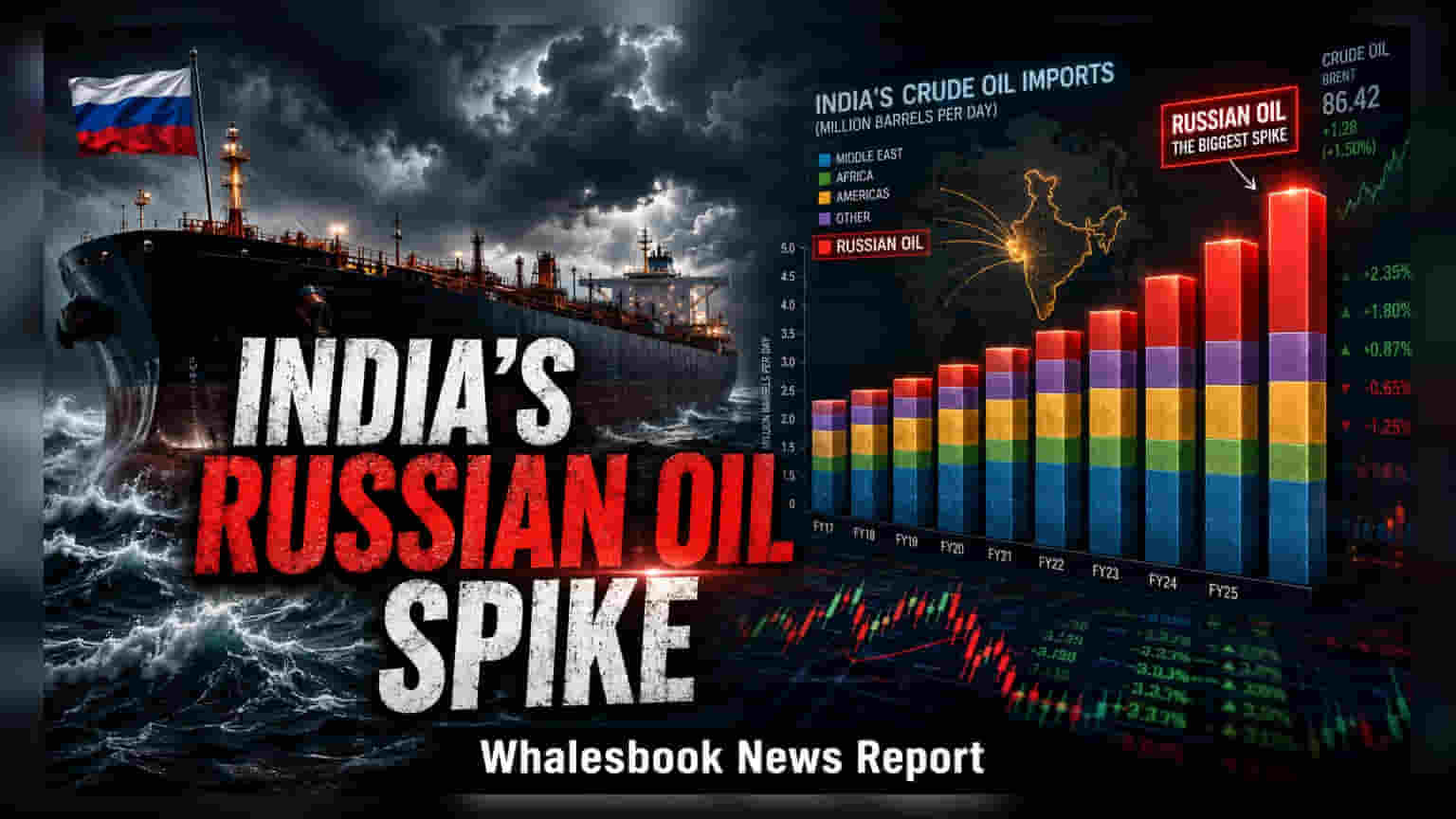
India's Russian crude oil imports reached a record 2.8 million barrels per day in July, accounting for over half of the nation's total purchases. This shift highlights a strategic reliance on discounted supplies despite improving volumes from traditional West Asian exporters. The data reflects ongoing adjustments in India's energy sourcing amid global maritime tensions.
India’s crude oil import profile reached a significant milestone in July 2026, with Russian supplies accounting for 55.5% of total purchases. According to trade and shipping data, imports from Russia climbed to 2.8 million barrels per day (mbd), the highest level recorded since India began sourcing discounted crude following the start of the conflict in Ukraine in 2022. This volume surpassed total imports from all other major sources combined, underscoring the deep integration of Russian energy into the Indian refining system.
Reliability Amid Geopolitical Pressures
Market analysts observe that the sustained preference for Russian crude is driven by a combination of price competitiveness and the perceived reliability of logistics. Maritime security concerns in critical transit points such as the Strait of Hormuz and the Bab el-Mandeb Strait have encouraged refiners to favor established supply corridors. Additionally, reports suggest that drone activity impacting Russian domestic refining capacity has increased the volume of crude available for international export, creating a steady supply stream for major buyers like India.
Recovery in West Asian Trade
While the reliance on Russian oil remains elevated, July data also signaled a meaningful recovery in supplies from traditional West Asian partners. Saudi Arabia increased its exports to India to 4.2 lakh barrels per day from 2.9 lakh barrels in June. Similarly, imports from Iraq nearly doubled to 1.3 lakh barrels per day, marking three consecutive months of growth. Kuwait also resumed exports to India, contributing 51,600 barrels per day. This diversification is essential for Indian refiners, who must manage long-term supply contracts alongside opportunistic purchases of discounted crude.
Impact on Domestic Energy Dynamics
For investors, the primary monitorable remains the evolution of crude price differentials. While Russian Urals crude has historically traded at a discount, industry reports suggest these price benefits have recently narrowed. The ability of Indian refiners to maintain healthy gross refining margins will depend on their success in balancing these narrowing discounts against the landed cost of crude from West Asia and other global suppliers. Furthermore, the United States remains a critical partner in the energy sector, maintaining a dominant 73% share of India's Liquefied Petroleum Gas (LPG) imports in July, totaling over 9 lakh tonnes. The evolving energy import mix will continue to be a key factor influencing the operational costs and profitability of Indian oil marketing and refining companies in the coming quarters.