

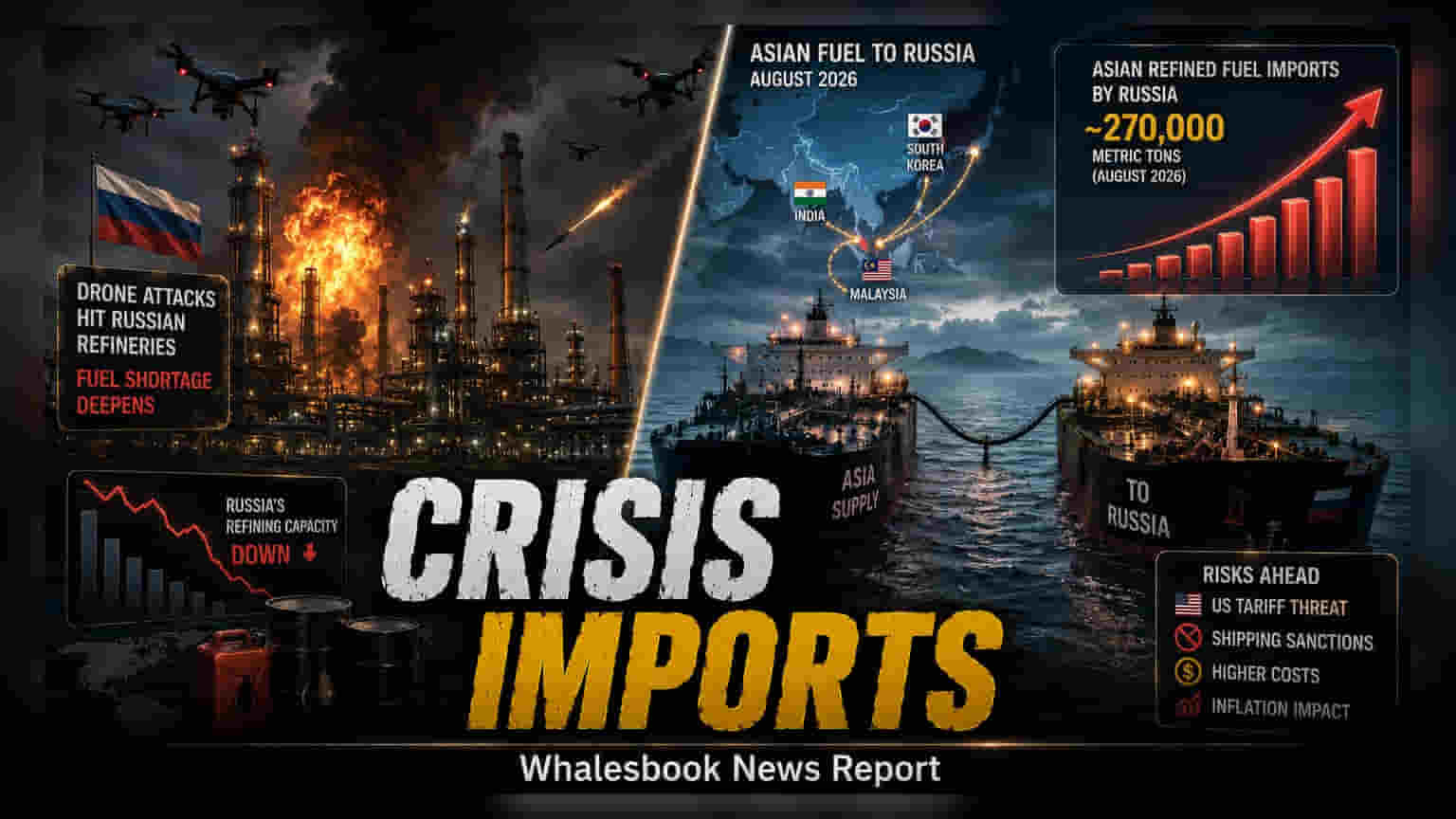
Russia is importing 270,000 metric tons of refined fuel from Asia, including India, to address domestic shortages caused by recent refinery attacks. This shift highlights the complexities of the global energy trade as Russia uses ship-to-ship transfers to bypass potential sanctions, creating new trade dynamics for Indian refiners.
Russia is sourcing nearly 270,000 metric tons of refined fuels from Asia this August to combat severe fuel shortages. These shortages are a direct result of ongoing drone attacks on Russian oil refineries, which have significantly reduced the country's domestic processing capacity. To navigate international sanctions and secure these energy supplies, the trade is being conducted through complex ship-to-ship transfers, a method often used to obscure the final destination and origin of the cargo.
India has emerged as a major player in this supply chain, accounting for approximately one-third of the total volume delivered to Russia this month. Reports identify companies such as Nayara Energy, which has partial ownership by Russia’s Rosneft, as being involved in these supply routes. The remaining volume is being sourced from other Asian hubs, including transfers conducted off the coasts of South Korea and Malaysia.
For the Indian energy sector, this development represents a unique shift in trade patterns. While Indian refiners have historically been major buyers of Russian crude oil, they are now playing a dual role by supplying finished products back to the Russian market. This flow of refined fuel can support profit margins for Indian refiners, as it allows them to tap into a high-demand market created by the production gap in Russia.
However, the situation brings significant risks that stakeholders should understand. The use of complex logistical methods, such as shadow fleet tankers and mid-sea transfers, adds cost and operational uncertainty to these trades. More importantly, the geopolitical risk is intensifying. There is ongoing discussion in international circles, particularly in the United States, regarding legislative proposals that could impose heavy tariffs on countries that continue to purchase Russian energy. If these measures were to take effect, they could increase the cost of doing business for Indian energy companies and potentially force them to source crude oil from more expensive markets, such as the Gulf or West Africa.
There is also a broader economic impact to monitor. If global fuel prices remain volatile or if supply chains become further restricted, this could affect input costs for domestic industries. Some analysts have indicated that a significant rise in import costs could lead to minor inflationary pressure on the Indian economy, though the scale of this depends on the volume and duration of these trade flows.
The key monitorables for the coming months will be the frequency of refinery attacks within Russia, the status of international sanction regimes, and any legislative moves in the US regarding energy trade tariffs. Investors will also look for management commentary from major Indian oil refiners to understand how these changing trade dynamics affect export margins and long-term supply agreements.