

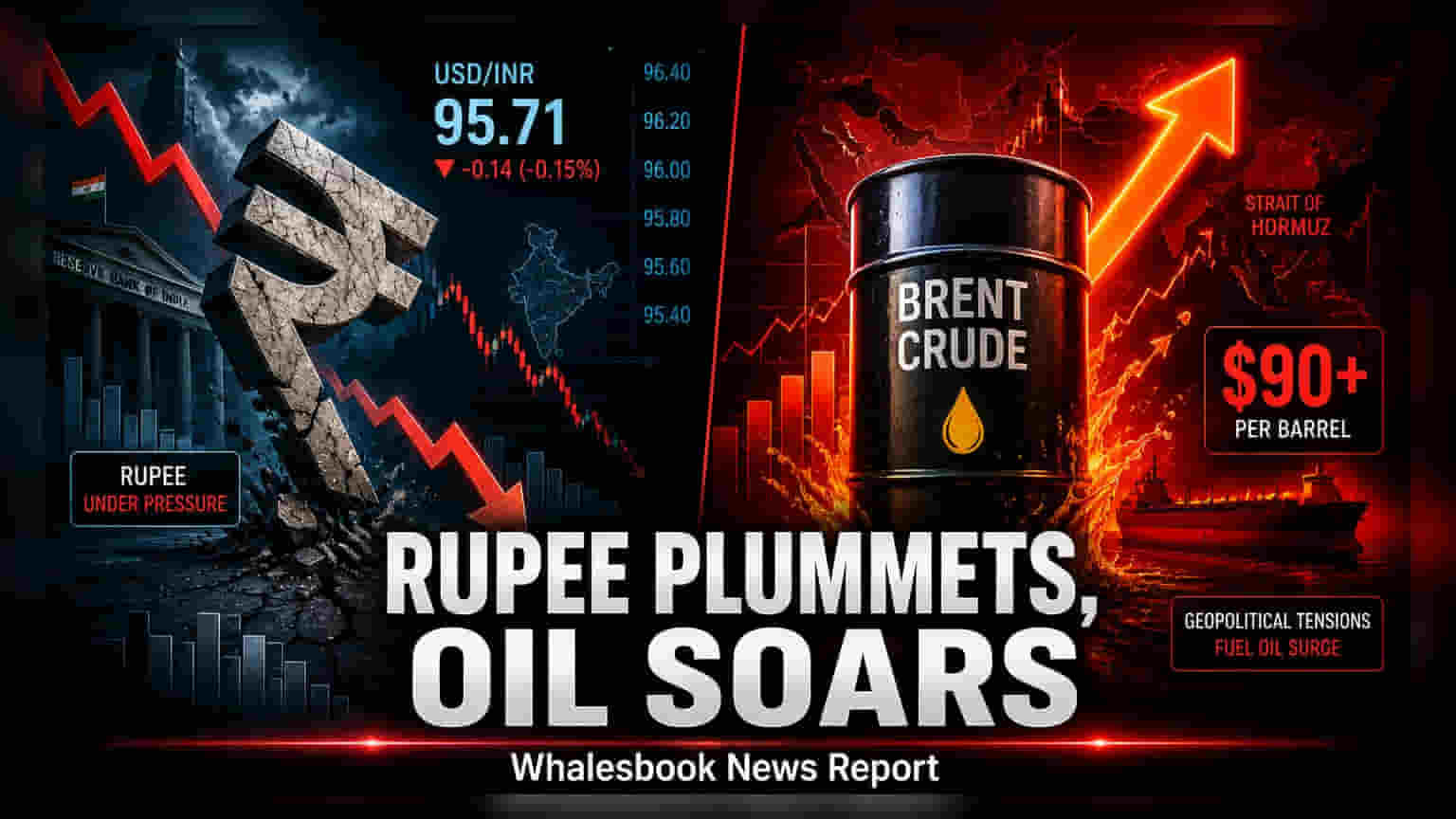
The Indian rupee traded lower at 95.71 against the US dollar as Brent crude oil prices spiked above $92 per barrel. This surge, fueled by US-Iran tensions over the Strait of Hormuz, raises concerns about India's trade deficit, inflation, and corporate profit margins.
The Indian rupee opened lower at 95.71 against the US dollar on Wednesday, August 19, 2026, as investors reacted to a sharp rise in global crude oil prices. Brent crude has now surged past the $92 mark, driven by escalating geopolitical tensions between the United States and Iran regarding the Strait of Hormuz.
Geopolitical Tensions and Oil Prices
Global energy markets have become increasingly volatile as the standoff over the Strait of Hormuz remains unresolved. Iran’s assertion that it controls the vital energy chokepoint, despite US assurances that the route will remain open, has created a risk premium in oil prices. Brent crude has climbed for four consecutive days, directly impacting import-dependent economies like India.
India's Economic Vulnerability
India relies on imports for approximately 85 percent of its energy needs. When crude oil prices rise, the cost of these imports increases significantly, which leads to a wider trade deficit and puts downward pressure on the rupee. Because India must pay for these imports in dollars, a sustained rise in oil prices creates consistent demand for the US currency, making it difficult for the rupee to recover even with central bank support.
While the Reserve Bank of India (RBI) has been intervening in the foreign exchange market to manage volatility, market analysts note that the fundamental demand for dollars from oil importers remains high. The central bank faces the challenge of balancing exchange rate stability with the necessity of allowing market forces to reflect the higher cost of imported energy.
Pressure on Equities and Corporate Margins
The rising cost of oil has also cast a shadow over Indian equity markets, contributing to a multi-session losing streak for the Sensex and Nifty. Investors are concerned that higher energy costs will lead to increased inflation, potentially complicating the monetary policy outlook.
For many Indian companies, this environment poses a risk to profit margins. Sectors such as aviation, manufacturing, and paints are particularly sensitive to crude oil prices, as higher fuel and raw material costs are difficult to pass on to consumers in a competitive market. Furthermore, the depreciation of the rupee increases the cost of servicing dollar-denominated debt, which can impact the financial health of companies with significant foreign borrowings.
The trajectory of crude oil prices remains the most critical factor for investors in the near term. Market participants will be watching for any signs of de-escalation in the Strait of Hormuz, the consistency of RBI’s market intervention, and the impact of these higher energy costs on upcoming inflation data.