

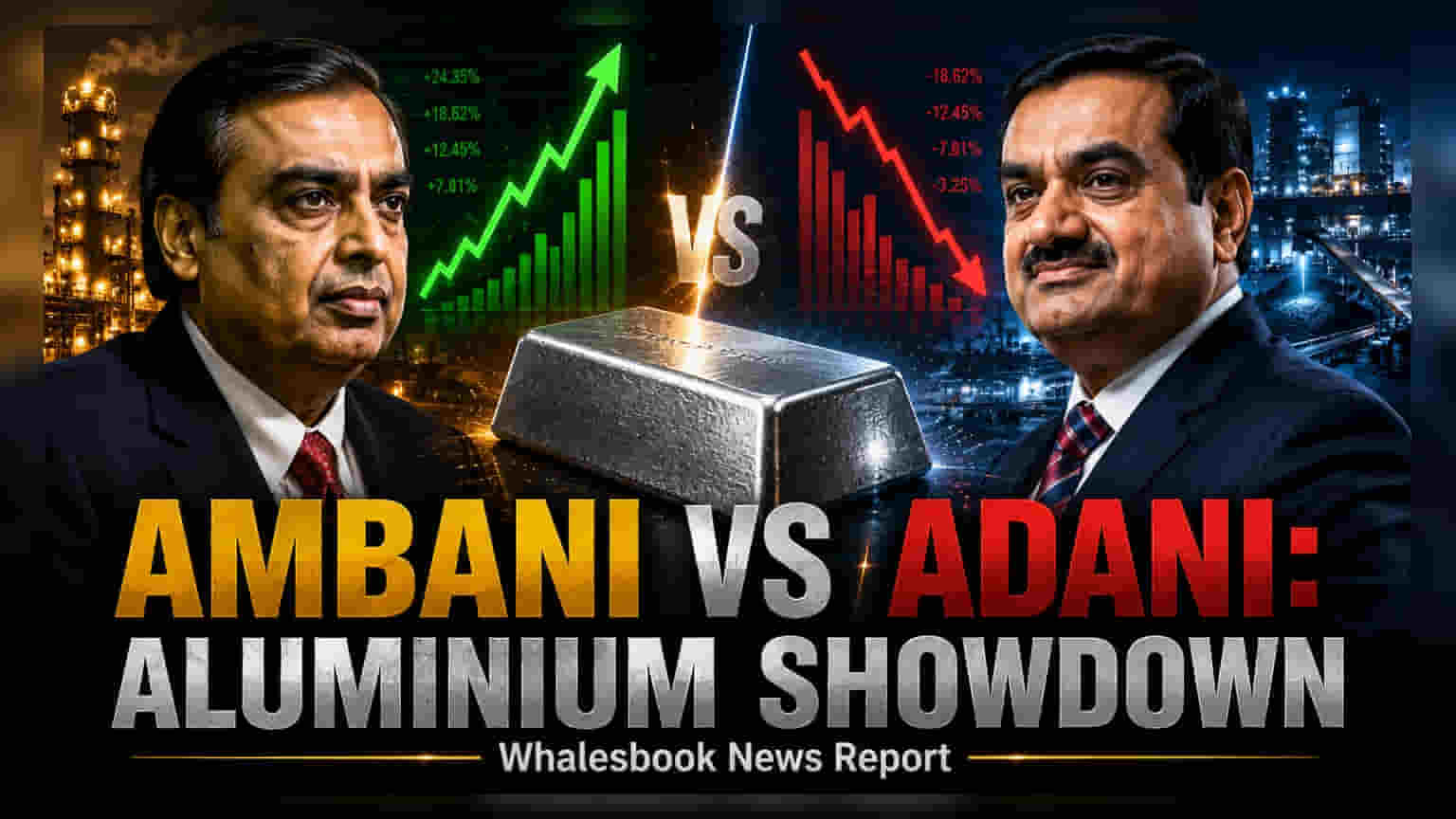
Reliance Industries is evaluating a potential entry into the aluminium sector, aiming to improve the economics of its coal gasification projects. This strategic shift could place the company in direct competition with Adani Enterprises, which recently committed $11.5 billion to an aluminium project in Odisha. Investors are now watching for official confirmation and the potential impact on the company's capital spending plans.
Reliance Industries Ltd (RIL) is actively evaluating an entry into the aluminium industry, a move that would represent a significant diversification for the conglomerate. This interest is not just about producing metal but is reportedly tied to the company's broader strategy of enhancing the commercial viability of its coal gasification projects. By integrating aluminium production, Reliance aims to create more efficient uses for the fuel and energy generated from these large-scale industrial projects.
The strategic consideration follows closely on the heels of a major move by Adani Enterprises, which announced in June 2026 a commitment of $11.5 billion to set up a 2 million tonnes per annum aluminium project in Odisha. This project, which involves a partnership with the UAE's International Holding Company, has signaled a new phase of intense competition between India's two largest business groups. Traditionally, the two conglomerates have focused on different core areas, but their convergence in the metals sector marks a notable shift in the corporate landscape.
Reliance's interest has been further highlighted by its participation in the auction for the Karlapat bauxite block in Odisha. Although Vedanta Aluminium emerged as the successful bidder, RIL’s involvement served as a clear indicator of its strategic intent to enter the space. This comes at a time when the company is actively expanding its industrial footprint, as evidenced by the shareholder approval received on August 20, 2026, to amend its objects clause to include activities like the manufacturing of ammonia, ammonium nitrate, and other related chemicals. This amendment highlights the company’s ongoing efforts to diversify beyond its traditional oil-to-chemicals business.
The Indian aluminium sector itself is currently seeing strong growth potential, driven by rising demand from infrastructure, renewable energy, and the electric vehicle industry. Domestic consumption is projected to rise significantly over the coming years, creating a need for new capacity. However, entering this market comes with significant risks. The aluminium industry is highly capital-intensive, meaning any project would require substantial financial resources and could put pressure on the company's balance sheet if not managed carefully.
Furthermore, the sector is dominated by established giants like Vedanta Aluminium, Hindalco Industries, and the state-owned National Aluminium Co. Ltd (Nalco). These players have deep experience in managing the cyclical nature of commodity prices, which can be highly volatile on the global market. A new entrant would face not only the challenge of building massive infrastructure but also the competitive pressure of established supply chains and energy costs.
For investors, the key monitorable will be any official exchange filing or management commentary that confirms a concrete project timeline or capital spending budget. While the interest in the sector fits Reliance's pattern of large-scale industrial diversification, the success of such a venture will depend on execution, access to ore, and the ability to maintain profit margins despite global price fluctuations.