 Whalesbook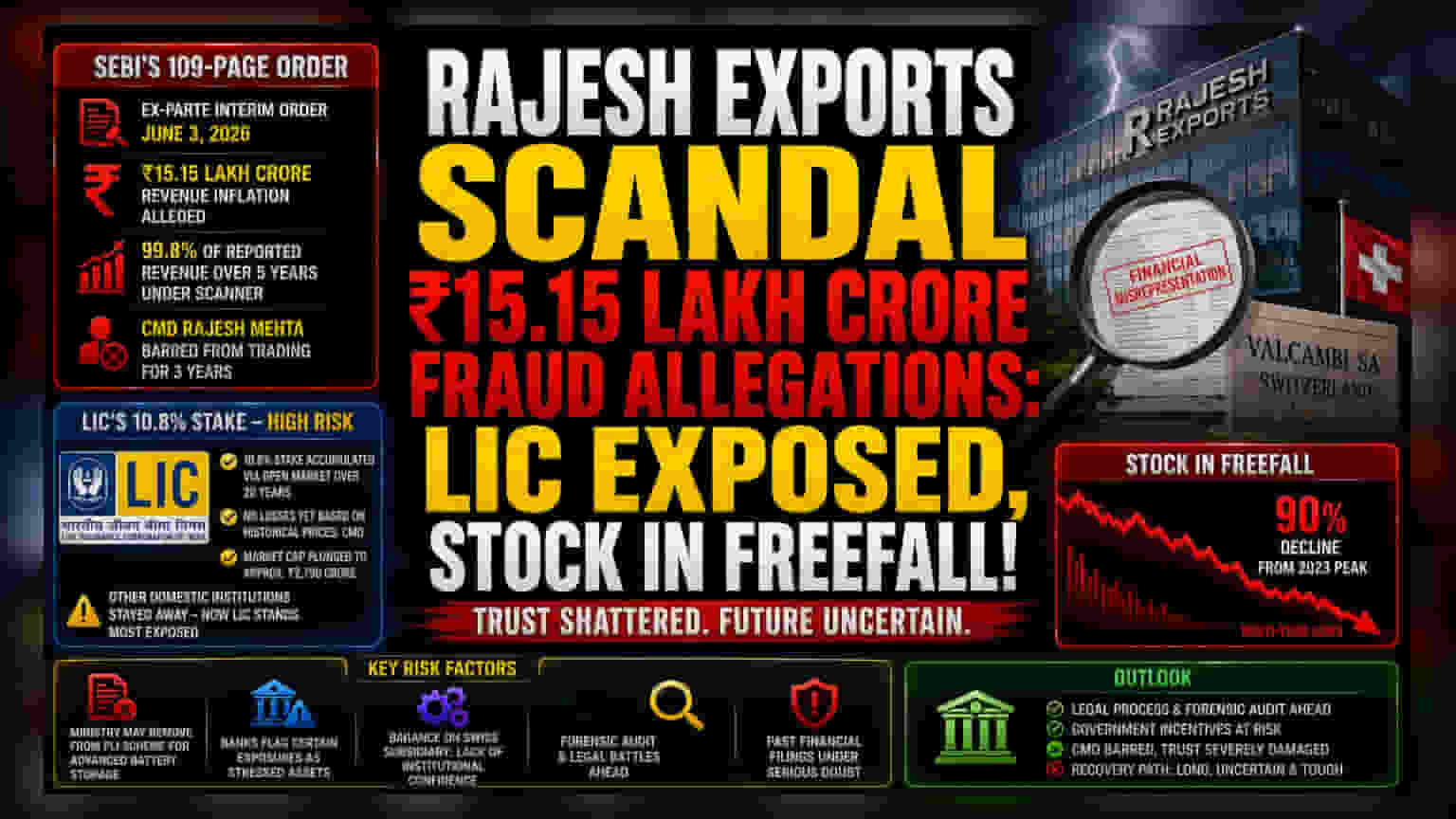


The Regulatory Overhang
Rajesh Exports is currently navigating one of the most severe governance crises in recent Indian corporate history. Following an interim ex-parte order from the Securities and Exchange Board of India (SEBI) issued on June 3, 2026, the company’s stock has been locked in lower circuits for three consecutive sessions. The regulator’s 109-page order alleges a gargantuan financial misrepresentation, asserting that the firm inflated its consolidated revenues by approximately ₹15.15 lakh crore over the last five fiscal years. SEBI’s investigation suggests this figure accounts for nearly 99.8% of the company’s reported consolidated revenue during that period, primarily attributed to unverified transactions linked to its Swiss subsidiary, Valcambi SA. Consequently, SEBI has barred Chairman and Managing Director Rajesh Mehta from trading in the company’s securities for three years.
The Institutional Exposure Dilemma
Amidst the stock's 90% decline from its 2023 peak, focus has intensified on Life Insurance Corporation of India’s (LIC) 10.8% stake. Chairman Rajesh Mehta has publicly distanced the firm from the insurer’s investment decisions, insisting that these holdings were accumulated via open-market purchases over two decades rather than through direct placements. However, the optics of the situation remain challenging. While Mehta maintains that the insurer has not yet incurred losses based on historical purchase prices, the market capitalization has cratered to approximately ₹2,790 crore. The lack of participation from other domestic institutional investors—many of whom avoided the stock due to lingering doubts over its financial disclosures—places LIC in a uniquely exposed position among major domestic institutions.
Structural Weaknesses and Risk Factors
The company’s defense attributes the discrepancy to a fundamental misunderstanding of its business model, specifically claiming that SEBI conflated Valcambi’s EBITDA with consolidated revenue. Yet, external risks are compounding. Reports suggest the Ministry of Heavy Industries may remove the company from the production-linked incentive (PLI) scheme for advanced chemistry cell battery storage. Furthermore, the company faces operational friction, with banks reportedly classifying certain exposures as stressed assets. Unlike peers in the gems and jewellery sector, which have maintained more transparent reporting and broader institutional support, Rajesh Exports’ reliance on its subsidiary’s scale and the absence of domestic mutual fund interest highlights a lack of diversified stakeholder confidence that further complicates its recovery potential.
Future Outlook
Market sentiment remains heavily weighted toward the negative, with the stock trading at a fraction of its book value—a classic indicator of distressed valuation. Beyond the immediate legal battles, the company must now contend with a potential forensic audit and the threat of lost government subsidies. With the CMD barred from securities dealings and significant doubt surrounding the accuracy of past financial filings, analysts remain cautious. The path forward necessitates not only legal vindication but a total restoration of institutional trust, which currently remains fractured as the stock continues to test multi-year lows.