 Whalesbook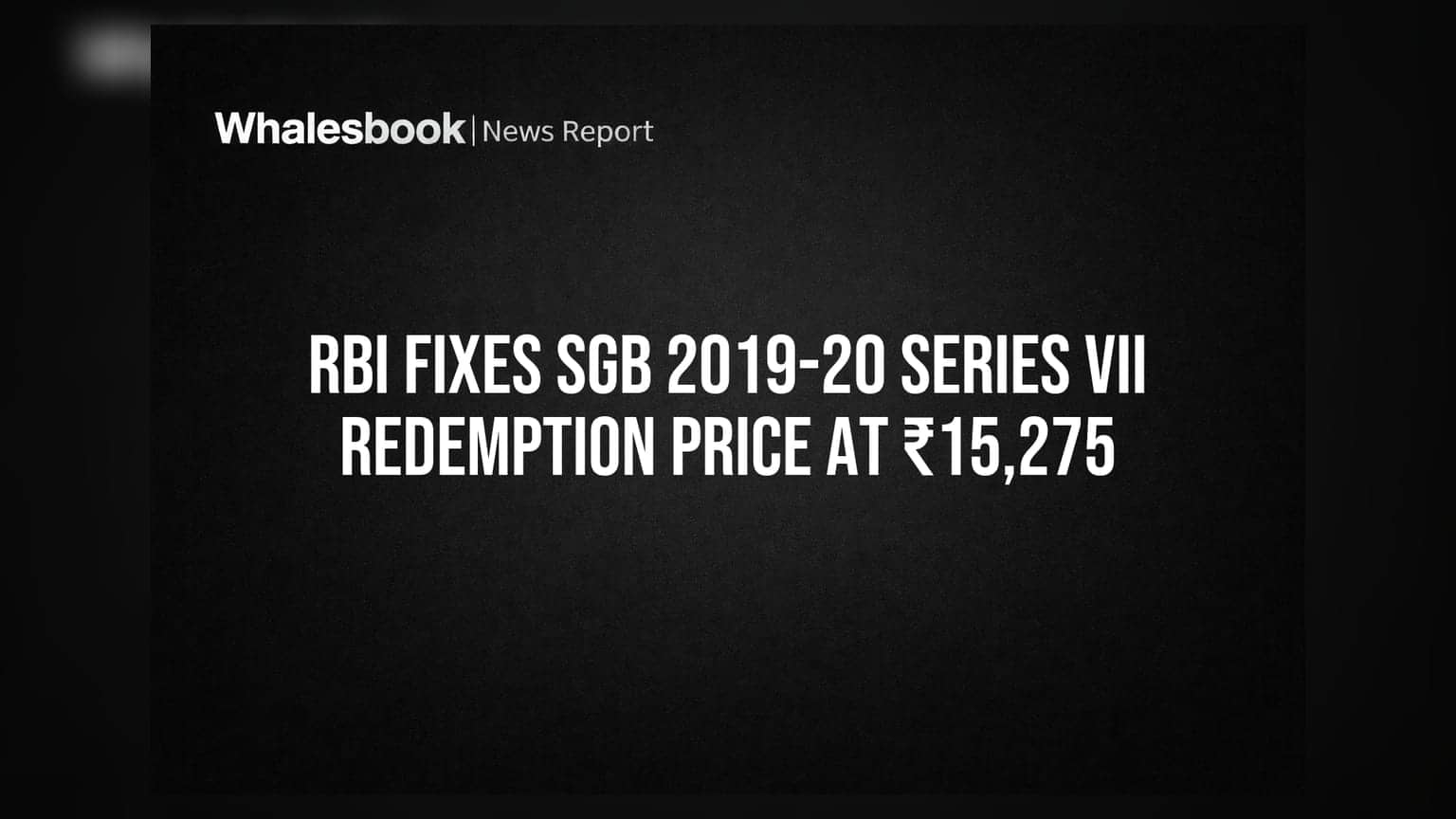


What Happened
The Reserve Bank of India (RBI) has officially announced the early redemption price for the Sovereign Gold Bond (SGB) 2019-20 Series VII. Investors who purchased these bonds when they were issued on December 10, 2019, are now eligible to redeem their investment. The central bank has fixed the redemption price at ₹15,275 per unit, payable on June 10, 2026.
This price was calculated by taking the simple average of the closing price of 999-purity gold over the three business days preceding the redemption date, which were June 5, June 8, and June 9, 2026. These gold prices are officially published by the India Bullion and Jewellers Association (IBJA).
Why This Matters For Investors
Sovereign Gold Bonds were introduced by the government as an alternative to holding physical gold. They allow investors to earn a fixed annual interest rate while also gaining from any increase in the price of gold over the investment period. For many investors, this redemption window serves as a liquidity event, allowing them to cash out their gold investment after five years if they choose to do so.
Investors who hold these bonds have been receiving a fixed interest rate of 2.5% per annum, paid semi-annually, in addition to the capital appreciation of the gold price. The redemption at the end of the lock-in period is a significant milestone for those who entered the scheme in late 2019.
How Investors May Read This
When deciding whether to redeem or hold, investors often compare the current redemption price against their original investment cost. The SGB scheme allows for early redemption after the fifth year on interest payment dates. For those who do not require the cash immediately, the decision often depends on their long-term view of gold prices and their portfolio allocation needs.
It is important to remember that physical gold comes with storage costs and making charges, which SGBs avoid. Investors who redeem their bonds will receive the credit directly into their bank accounts. If an investor chooses not to redeem now, the bond will continue to earn interest and can be held until its full maturity, which is typically eight years from the date of issue.
The Tax Context
One of the primary benefits of SGBs is their tax treatment. If an investor holds the bond until maturity, the capital gains tax is exempt. For early redemption, the tax rules can be different compared to maturity. Investors should review the specific tax implications for early exits and consult with a tax advisor to understand how this transaction affects their overall tax liability. It is also worth noting that the interest earned on these bonds is taxable according to the investor's applicable income tax slab.
What Investors Should Track
For those still holding other tranches of SGBs, the key monitorable is the upcoming interest payment date and the next available window for early redemption. Since the RBI publishes the redemption price based on gold price averages, investors should stay updated with exchange filings and official RBI circulars whenever their specific bond tranche approaches its redemption eligibility date. Monitoring long-term trends in gold prices remains the most significant factor for assessing the value of holding gold in any form.