 Whalesbook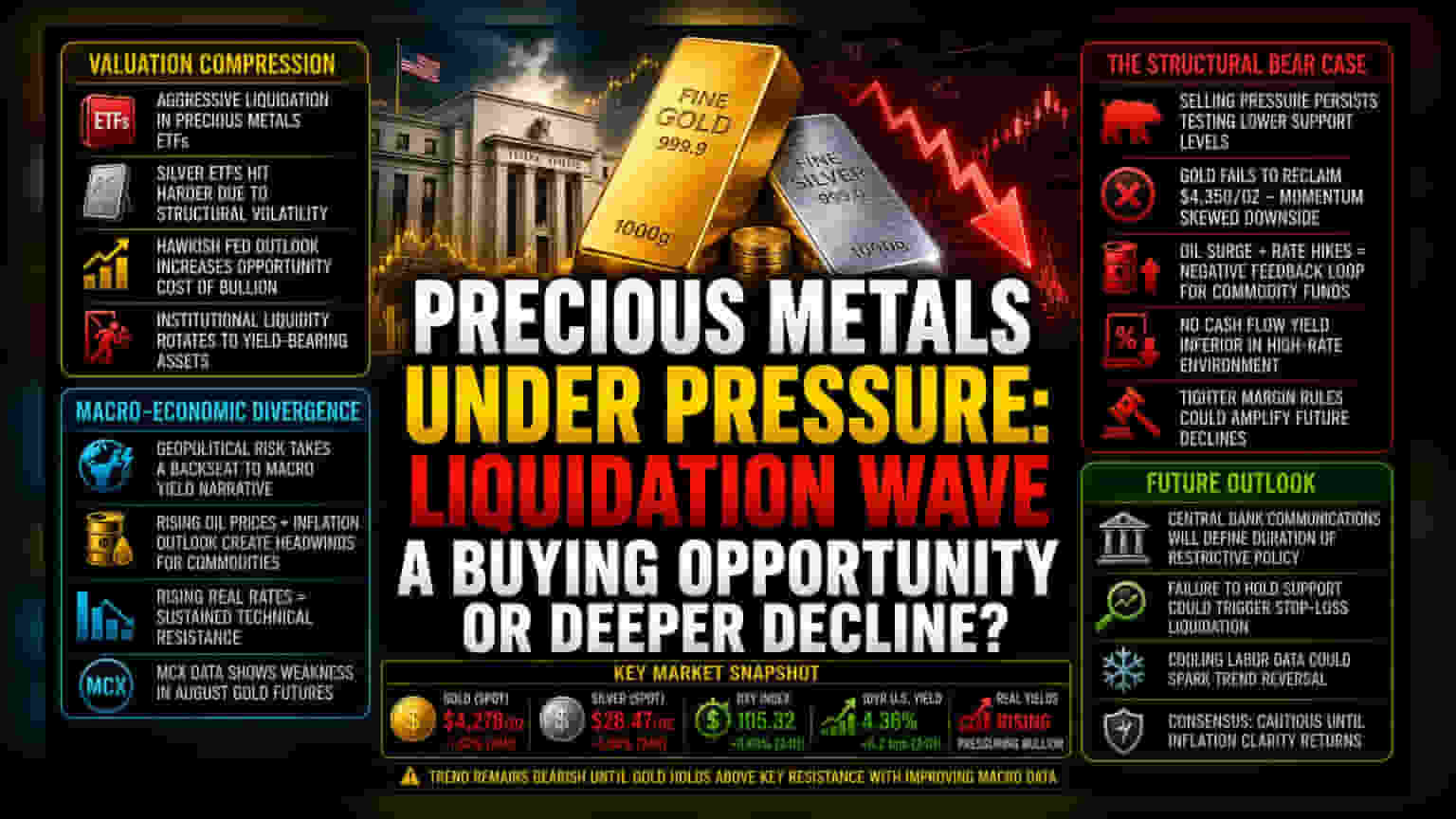


The Valuation Compression
The recent drawdown in precious metal exchange-traded funds represents a aggressive rotation away from perceived safe-haven assets. This liquidation was particularly pronounced in silver vehicles, where structural volatility exceeded that of their gold counterparts. The catalyst for this sudden repricing stems from a hawkish shift in market sentiment regarding the Federal Reserve's policy trajectory. When employment data signals an overheating economy, the opportunity cost of holding non-yielding assets like bullion increases significantly, forcing institutional liquidity to exit positions in favor of yield-bearing debt instruments.
Macro-Economic Divergence
Unlike previous cycles where gold acted as a primary hedge against geopolitical instability in West Asia, the current environment has forced a decoupling of that narrative. While regional instability typically drives a flight to quality, the present price action indicates that the market is currently prioritizing macroeconomic yield over physical asset preservation. The interaction between rising energy prices and the inflationary outlook creates a precarious environment for commodities. History suggests that when real interest rates turn sharply positive due to central bank intervention, precious metals often face sustained technical resistance. Data from the Multi-Commodity Exchange (MCX) highlights this trend, as August gold futures struggled to maintain support levels, reflecting a broader bearish bias that has permeated global bullion markets over the past two trading sessions.
The Structural Bear Case
The persistence of selling pressure indicates that the market is attempting to test lower support thresholds, potentially invalidating the bull thesis for the remainder of the quarter. Investors should note that the current technical setup shows a distinct lack of buying interest at major psychological support levels. The inability of gold to reclaim the $4,350 per ounce level on the international spot market suggests that momentum is currently skewed toward the downside. Furthermore, the correlation between surging oil prices and potential interest rate hikes creates a negative feedback loop for commodity funds. Because bullion provides no periodic cash flow, it remains structurally inferior to interest-bearing assets in a high-rate environment. Regulatory scrutiny on margin requirements for commodity futures could further exacerbate these declines if volatility continues to increase.
Future Outlook and Policy Sentiment
Market participants are now closely monitoring upcoming central bank communications to determine the duration of this restrictive monetary stance. If gold fails to stabilize above technical support, the next leg lower could invite significant stop-loss liquidation. Conversely, any cooling in U.S. labor data may provide the necessary impetus for a trend reversal, although professional consensus currently favors a cautious approach until inflation figures provide more clarity on long-term pricing power.