 Whalesbook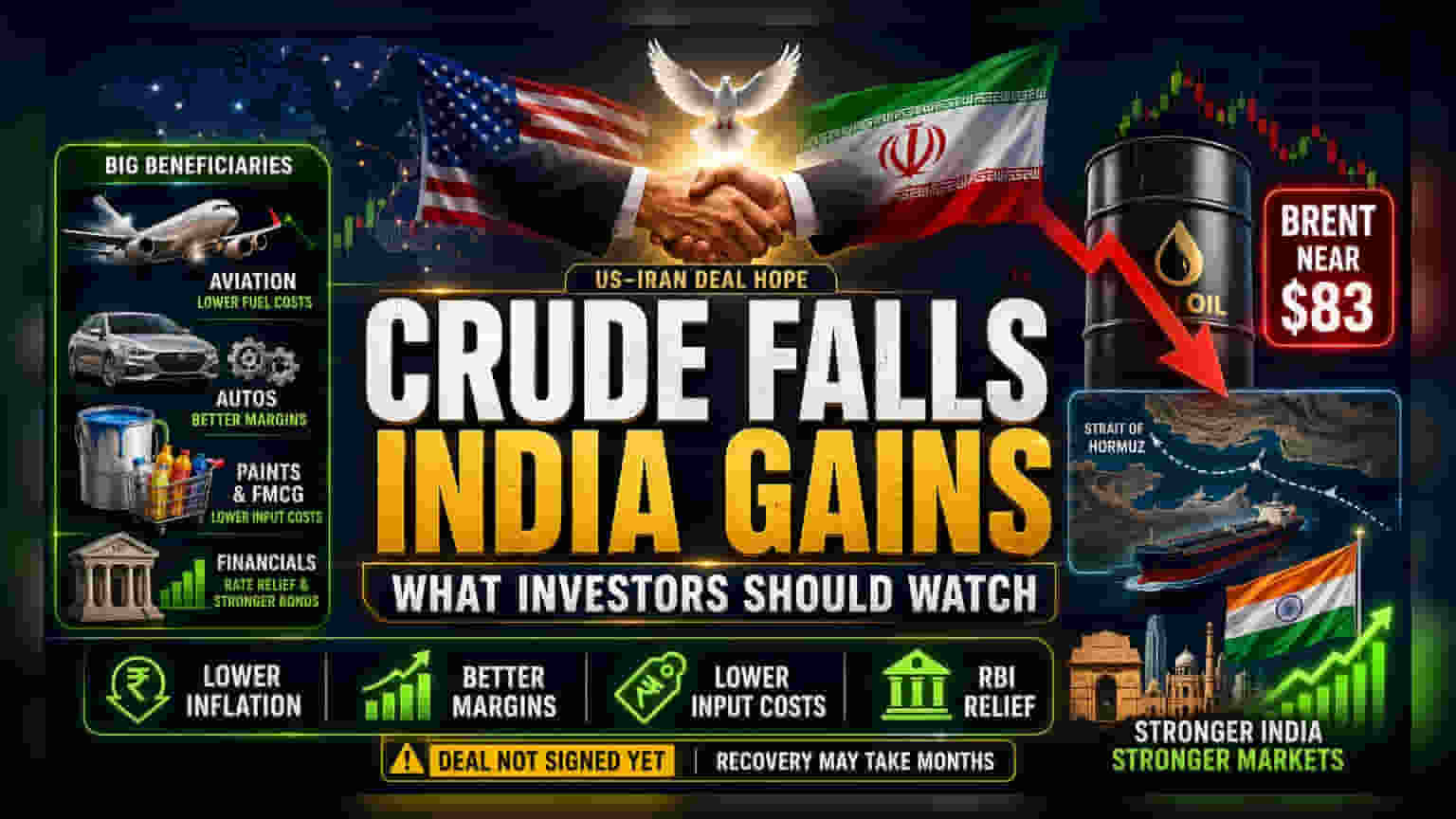


Markets are reacting to reports of a potential US-Iran peace deal scheduled for June 19. With Brent crude prices falling nearly 20% to $83 per barrel, investors are assessing the potential relief for India’s energy-import-heavy economy. Lower crude costs could reduce inflation and improve margins for sectors like aviation, auto, and consumer goods, though the timeline for trade normalization remains a key uncertainty.
What Happened
Global financial markets are adjusting to the news of a potential peace agreement between the United States and Iran, which is expected to be signed on June 19 in Geneva. This development has led to a notable reduction in the "war premium"—the extra cost investors and traders add to the price of oil due to geopolitical uncertainty. As a result, Brent crude oil prices have fallen by nearly 20% from recent levels, currently trading around $83 per barrel. While the agreement is a major diplomatic step, experts note that restoring normal trade flow through the Strait of Hormuz could take several months.
Why This Matters For Investors
For the Indian economy, which imports a vast majority of its crude oil requirements, this is a significant macro-economic shift. When oil prices are high, India's import bill rises, which can weaken the rupee, increase the trade deficit, and drive up domestic inflation. A sustained decline in crude prices can act as a relief valve, easing inflationary pressures and potentially providing the Reserve Bank of India (RBI) more room to manage interest rates. Investors typically view lower oil prices as a positive for sectors that rely heavily on fuel or oil-based raw materials.
Sector-Specific Impacts
The ripple effect of cheaper crude oil is expected to be felt across several key segments of the Indian market.
In the aviation sector, fuel costs account for a massive portion of operating expenses. Lower crude prices could help airlines like IndiGo improve their operating margins if the reduction is passed through to Aviation Turbine Fuel (ATF) costs.
Automobile and auto-ancillary manufacturers are also likely to benefit. Many components, such as rubber and plastics, are derived from petroleum. Lower input costs may ease the pressure on profit margins, reducing the immediate need for price hikes on end products.
Consumer goods and paint companies often use crude-linked derivatives. For firms like Hindustan Unilever or major paint manufacturers, a dip in raw material costs could support better profitability. Similarly, the chemical industry may see a recovery in demand as businesses resume purchases that were previously deferred due to high input costs.
Financial services, including banks and NBFCs, monitor oil prices closely because of their impact on inflation and government bond yields. If lower oil prices lead to a cooler inflation environment, 10-year government bond yields may stabilize or fall, which can positively impact the bond portfolios held by financial institutions.
Infrastructure and Export Context
Companies with significant exposure to the Gulf region, such as L&T and Va Tech Wabag, are also in focus. Stabilized macro-economic conditions in the Middle East could improve client confidence for large-scale infrastructure projects. Additionally, sectors like textiles and hospitality may see secondary benefits, as lower freight costs and improved travel sentiment could support margins and occupancy levels, respectively.
The Reality Check and Risks
While the market reaction reflects optimism, investors should remain aware of the inherent risks. This is a potential deal, and its success depends on complex issues, including Iran's uranium enrichment programs. If the agreement faces hurdles or if geopolitical tensions resurface, the war premium could return quickly, reversing the dip in oil prices.
Furthermore, the "normalization" of trade is not an overnight process. Even with an agreement, logistics and shipping lanes through the Strait of Hormuz may take an estimated three to four months to return to full, efficient operation. Investors should not assume immediate, linear benefits for all companies.
What Investors Should Track
Moving forward, the key monitorables are the actual signing of the agreement and the subsequent timeline for implementation. Investors may want to watch for management commentary from companies in oil-dependent sectors to see how they plan to utilize potential margin improvements. Additionally, keep an eye on retail fuel price adjustments and wholesale inflation data, as these will indicate how much of the oil price drop is actually benefiting the domestic economy.