 Whalesbook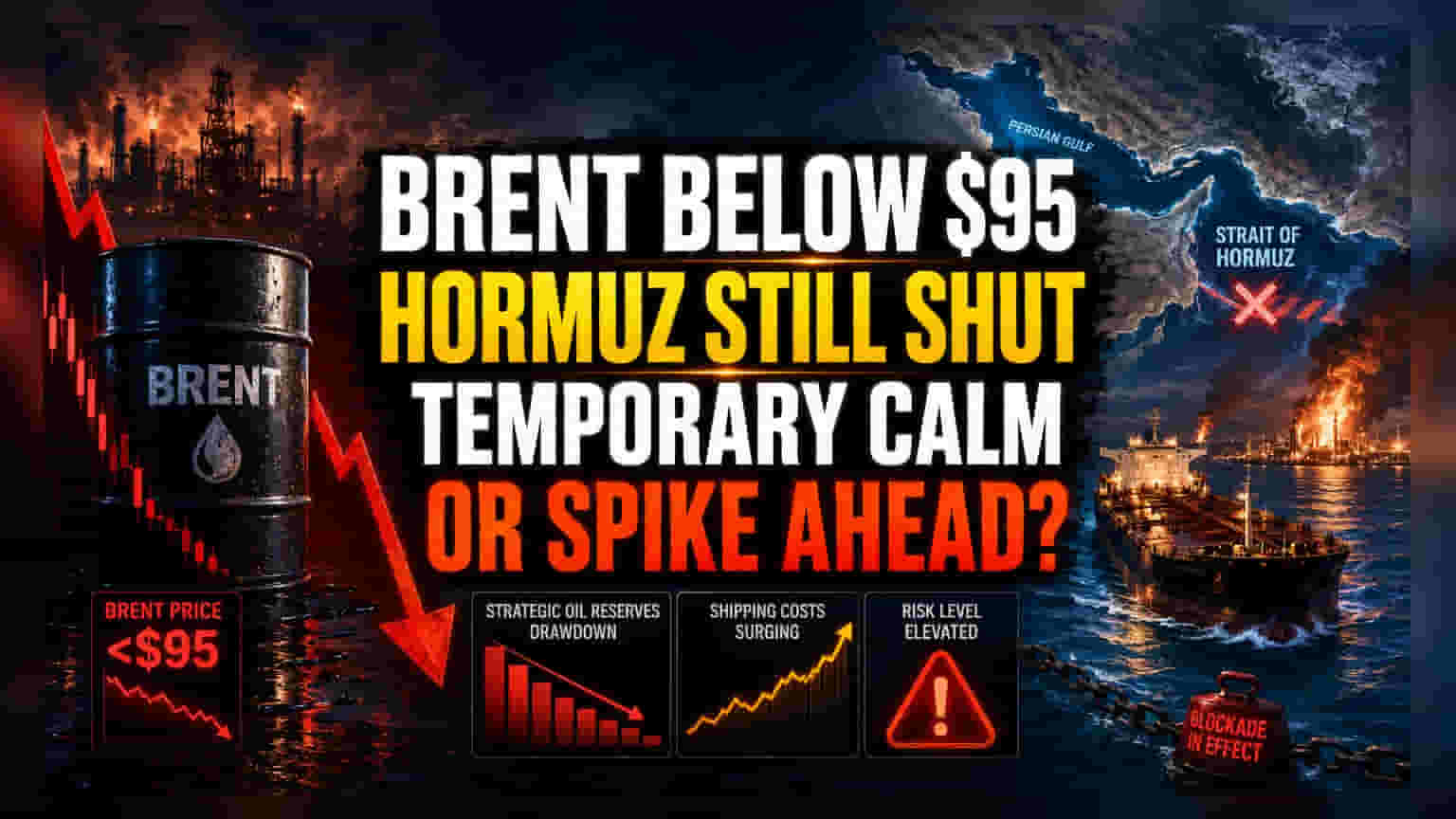


The Inventory Mirage
The recent retreat in Brent crude prices to sub-$95 levels stands in stark contrast to the persistent, three-month closure of the Strait of Hormuz. While market participants appear comforted by the absence of further escalatory headlines, the underlying physical supply data suggests a different story. Commercial and strategic petroleum reserves are being liquidated at a pace not witnessed in two decades, with daily drawdowns now reaching levels that threaten the very floor of global energy security. This rapid consumption of stockpiles is effectively acting as a synthetic supply buffer, temporarily suppressing price discovery while masking the structural deficit created by the blockade.
The Geopolitical Credibility Gap
Financial markets are currently pricing in a high probability of de-escalation, largely driven by political rhetoric. However, the commercial reality for maritime logistics tells a harsher tale. Insurance premiums for vessels traversing the Persian Gulf remain at prohibitive highs, and shipping syndicates are actively avoiding the region despite diplomatic optimism. Even if the passage were to officially reopen tomorrow, the restoration of normal tanker flow would face a significant lag. The reliance on clandestine transit routes, while sustaining some volume, introduces operational friction that keeps the cost of moving barrels from the source to the refinery significantly elevated compared to historical averages.
The Forensic Bear Case
The current pricing model assumes that the global economy can absorb a contraction in energy availability without triggering a broader recessionary feedback loop. This may be a flawed assumption. Unlike previous supply shocks, this event coincides with a period of severe demand-side opacity, particularly regarding Beijing's import behavior. If China is leveraging lower international prices to stealthily rebuild its own internal reserves while officially reporting lower consumption, the global market may be facing a tighter supply squeeze than analysts currently project. Furthermore, the reliance on downstream inventory depletion means the system is rapidly running out of 'emergency' fuel. Should shipping disruptions persist beyond the third quarter, the exhaustion of these buffers will leave the energy sector with no mechanism to dampen price spikes, forcing a violent re-evaluation of current market valuations. The disconnect between falling spot prices and shrinking fundamental supply levels creates a high-beta environment where any reversal in sentiment could trigger a rapid, disorderly move higher.