 Whalesbook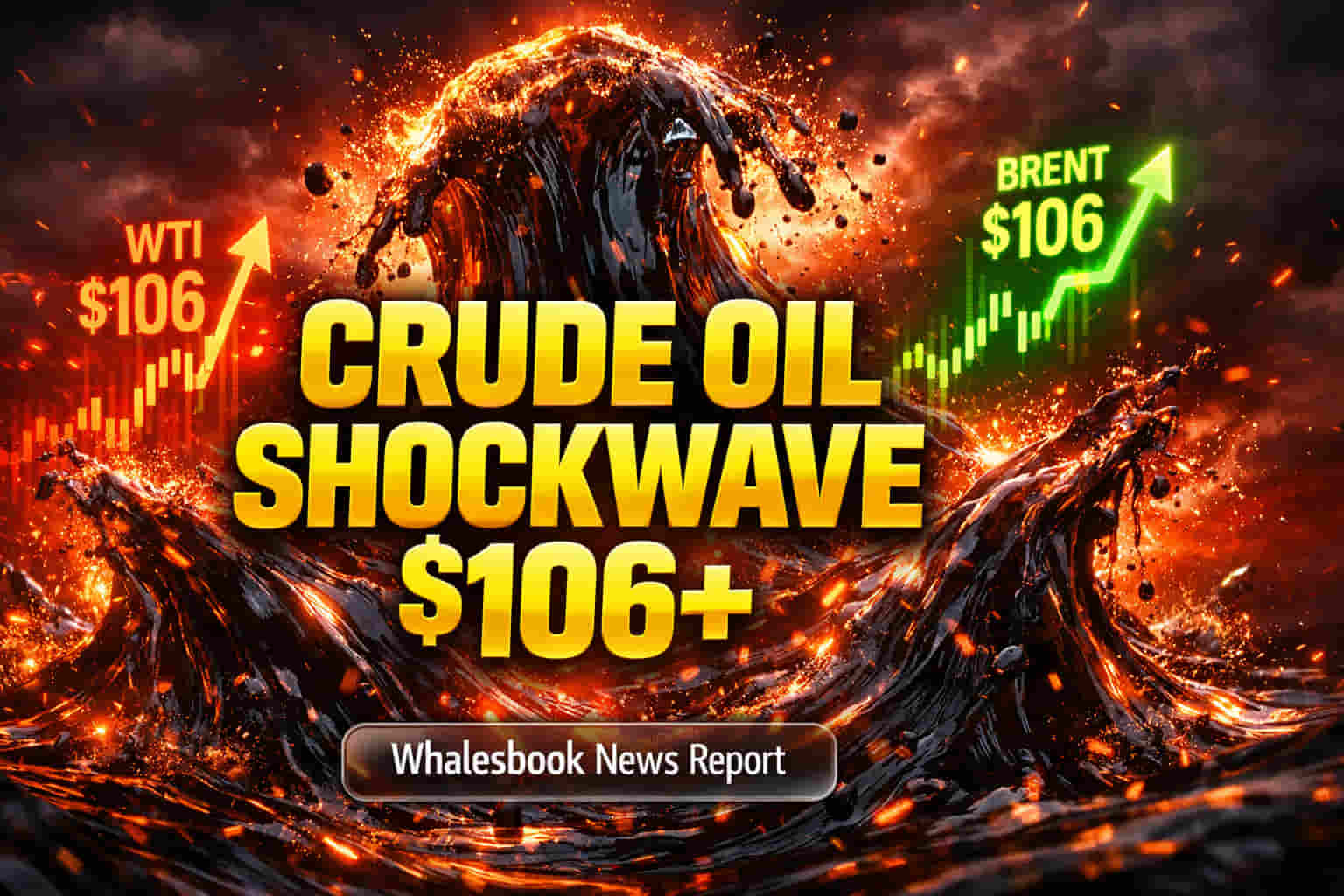


Oil Prices Soar Amid Mideast Tensions
Escalating military actions between Iran, the United States, and Israel have dramatically pushed oil prices above $100 a barrel. West Texas Intermediate (WTI) crude surged 17.23% to $106.56, while global benchmark Brent Crude rose 15.35% to $106.92. These gains mark a sharp increase from Friday's closing prices. The conflict, now in its tenth day, has involved targeted strikes on Iranian military and energy infrastructure, prompting retaliatory actions across the Gulf region and raising concerns about potential disruptions to vital Middle East energy supplies.
Conflict Fuels Supply Fears
The primary driver for this price surge is the direct confrontation and the risk of supply disruptions. Iran's parliamentary speaker warned that continued fighting could cripple its oil sector, affecting both production and exports. The Strait of Hormuz, a key route for global oil shipments, is under intense scrutiny. While Iran maintains the strait is open, threats have been made against vessels linked to the U.S. or Israel if the conflict deepens. These developments have caused market concern, with traders monitoring production facilities, export terminals, and shipping routes handling a large portion of the world's oil. Reports suggest normal shipping flows through the Strait have collapsed, leading major shipping companies to suspend operations and war risk insurance premiums to soar tenfold. Consequently, key energy facilities like Saudi Arabia's Ras Tanura refinery and Qatar's Ras Laffan LNG facilities have seen temporary shutdowns due to attacks or precautionary measures.
Fear Premium vs. Market Reality
Despite the dramatic price surge, a key debate centers on whether the market is overreacting. U.S. Energy Secretary Chris Wright called the rally a "fear premium," suggesting it could last "weeks, not months." He noted that shipments are still moving through the Strait of Hormuz and that U.S. military actions are countering Iran's ability to disrupt shipping. President Donald Trump echoed this sentiment, calling the higher oil costs a "very small price to pay" for global safety and peace, and predicted a rapid price decline once the Iranian nuclear threat is resolved.
This view contrasts with analyst outlooks and market fundamentals. J.P. Morgan Global Research expects Brent crude to average $60/bbl in 2026, citing soft supply-demand fundamentals, though geopolitical risks remain a wildcard. The EIA projects Brent at $56/bbl and WTI at $52/bbl for 2026, forecasting lower prices due to rising global production. The International Energy Agency (IEA) noted the global oil market has had a significant surplus since early 2025, with ample inventories cushioning potential supply disruptions. However, prolonged severe disruptions could shift the market into a deficit.
Major oil companies like ExxonMobil (XOM) and Chevron (CVX) trade at P/E ratios above their historical medians (around 22.37-22.57 for XOM, 28.05-28.56 for CVX), suggesting valuations already reflect high investor expectations. The Energy Select Sector SPDR Fund (XLE) has a P/E ratio around 20.20 or 17.4.
However, underlying risks could support sustained volatility. The actual impact of ongoing and potential future attacks on energy infrastructure remains a critical unknown. Iran's energy infrastructure itself has been targeted, potentially undermining its revenue streams. The widespread disruption in the Strait of Hormuz, though possibly temporary, has already led to operational changes for shipping companies and insurers, acting as a commercial deterrent. The conflict has also affected crucial liquefied natural gas (LNG) facilities, notably Qatar's Ras Laffan, leading to production halts and contributing to price surges in European gas markets. This highlights systemic risks in concentrated energy infrastructure, which could reshape investment patterns and international cooperation. Domestic political considerations also complicate U.S. strategy, as higher energy costs can pose challenges, especially in an election year. Even if the immediate conflict de-escalates, underlying geopolitical tensions and the potential for future flare-ups could maintain a risk premium in oil prices for an extended period.
Outlook: Geopolitics and Prices
Looking ahead, analysts generally expect oil prices to soften in 2026. This forecast is driven by anticipated oversupply and slower demand growth, provided geopolitical tensions do not cause prolonged, substantial physical supply disruptions. However, the market remains highly sensitive to geopolitical developments. The duration and severity of the current conflict, Iran's response, and the actions of other regional players will critically determine future price movements. If disruptions prove more persistent or extensive than expected, current forecasts could be significantly challenged, potentially leading to prices far exceeding current levels.