

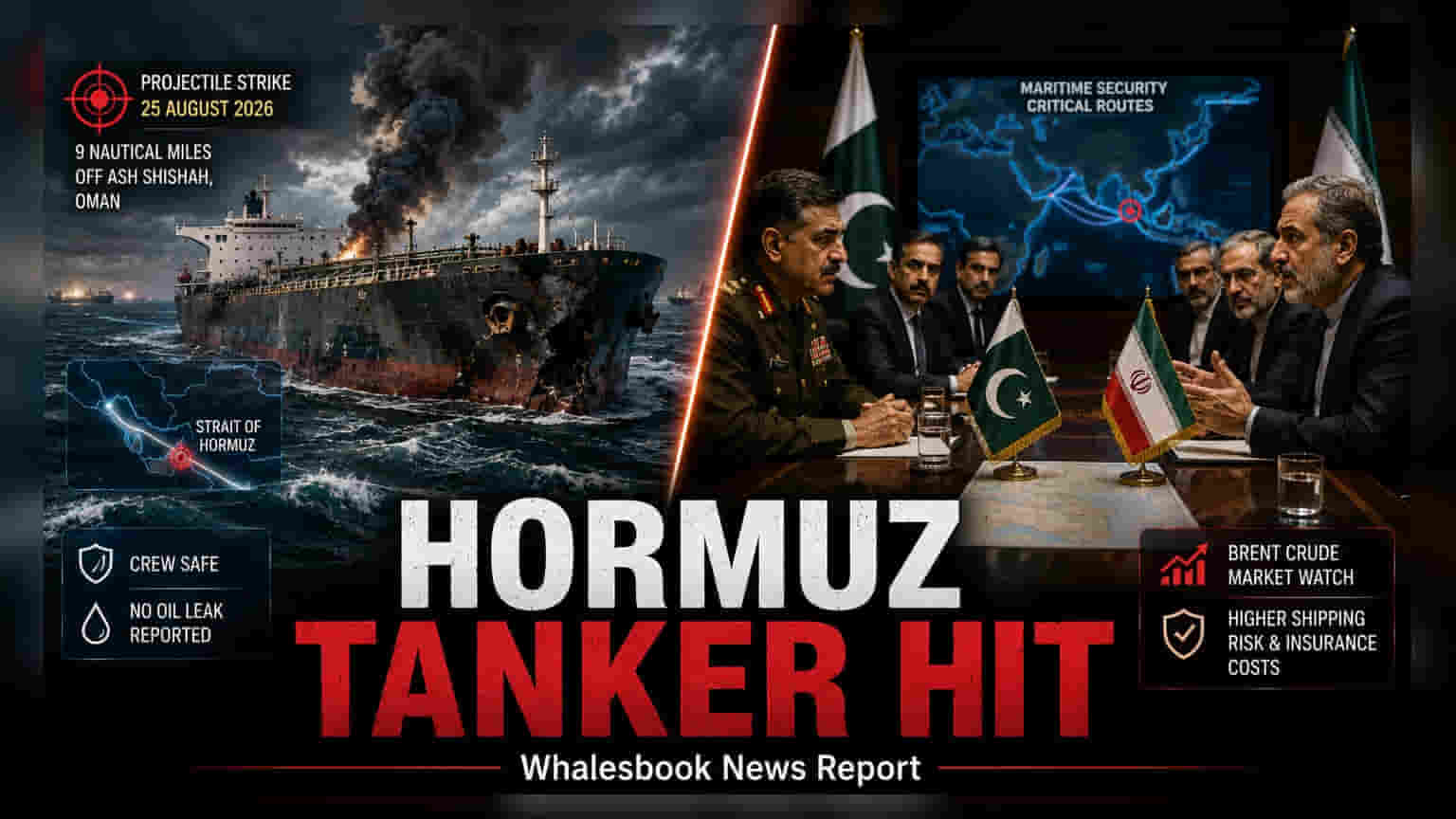
A projectile strike disabled an oil tanker off Oman’s coast on August 25, 2026, raising concerns over transit safety in the Strait of Hormuz. The event coincides with high-level diplomatic talks between Pakistan and Iran regarding regional stability. For investors, the incident highlights potential volatility in crude oil prices and rising shipping insurance premiums.
An oil tanker was disabled following a projectile strike near the Strait of Hormuz on Monday night, August 25, 2026. The incident, which occurred approximately nine nautical miles off the coast of Ash Shishah, Oman, has drawn immediate attention from global maritime safety organizations. The United Kingdom Maritime Trade Operations (UKMTO) confirmed that while the vessel’s engine room sustained damage, the crew remains safe, and there were no immediate reports of environmental impact or oil leakage.
This incident unfolds against a backdrop of ongoing diplomatic efforts to address regional tensions. A high-level Pakistani delegation, led by Army Chief Field Marshal Asim Munir, concluded meetings in Tehran on Tuesday. These talks were focused on de-escalation strategies and securing maritime routes. While the discussions aimed to reduce friction in the region, the attack highlights the persistent operational risks in what is considered one of the world's most critical oil transit bottlenecks.
The Strait of Hormuz is a vital channel for global energy supplies, with a significant portion of the world's traded oil passing through it daily. Any disruption in this area typically influences global commodity markets. Investors and market watchers often track incidents in this waterway for signs of volatility in crude oil prices and potential supply chain bottlenecks. When security risks rise in this region, shipping companies may face higher costs, primarily driven by increases in 'war risk' insurance premiums for vessels operating in the vicinity.
For the Indian market, particularly oil marketing companies (OMCs) and shipping logistics firms, the situation warrants close monitoring. A sustained escalation or perceived risk to shipping lanes could lead to higher freight costs and operational delays. While fuel prices in India are influenced by various global and domestic factors, sustained instability in major oil transit zones often serves as a negative trigger for energy-related stocks due to the potential impact on import costs and profit margins.
Beyond the immediate maritime incident, the broader economic context involves new sanctions targeting Iranian interests, which adds another layer of complexity for international trade. The combination of heightened maritime risk, potential supply chain disruptions, and diplomatic uncertainty creates a cautious environment for sectors reliant on global commodity movement. The key monitorables for the coming days will be updates from global maritime authorities regarding shipping route security, trends in Brent Crude oil prices, and any further diplomatic developments emerging from the Iran-Pakistan talks.