

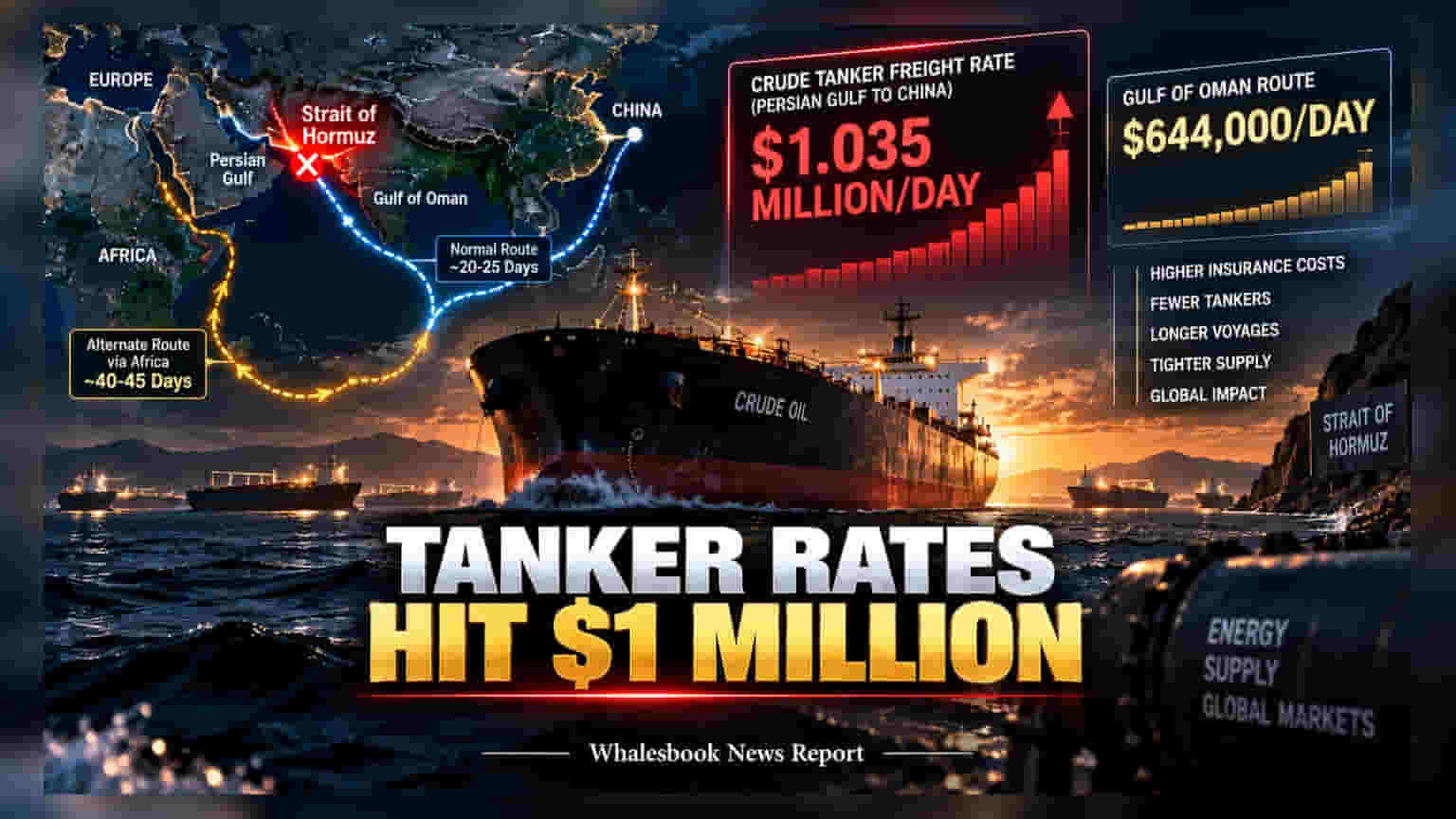
Daily charter rates for oil tankers on the key Persian Gulf-to-China route have crossed $1 million for the first time due to rising security concerns in the Strait of Hormuz. This massive surge in shipping costs, driven by longer voyage times and vessel shortages, is inflating the delivered price of crude oil. For investors, this creates significant inflationary pressure on global energy logistics.
The global shipping industry has hit an unprecedented milestone as the cost to transport crude oil from the Persian Gulf to China surged past $1 million a day. This record-high figure, confirmed by Baltic Exchange data, reflects the extreme premium currently required to navigate regions affected by the ongoing Iran war and associated military risks.
The Cost of Avoiding Chokepoints
The crisis stems from a sharp reduction in available tankers willing to risk transits through the Strait of Hormuz, a critical maritime chokepoint. With insurance premiums and security concerns rising, many ship operators are avoiding the area entirely. Even the alternative route—shipping crude from the Gulf of Oman—is costing roughly $644,000 per day.
This trend creates a supply crunch. When ships are forced to take longer routes, such as navigating around Africa to avoid conflict zones, the duration of each voyage increases significantly. A ship that takes weeks longer to complete a delivery is a ship that cannot be used for other contracts. This effective reduction in the active tanker fleet is driving prices to levels previously unseen in the industry.
Impact on Energy Markets
Despite the skyrocketing freight costs, global demand for crude has remained resilient, with Brent crude prices holding consistently above $100 per barrel throughout September 2026. Refiners, particularly in Asia, have continued to purchase oil because refining margins—the profit made from turning crude into diesel and gasoline—remain high enough to absorb the elevated transportation expenses.
However, this scenario creates a structural risk for the global economy. High shipping costs act as a hidden tax on energy imports. If these freight rates remain at such high levels, the inflationary pressure on end-user products like fuel and transport costs could intensify. Investors are noting this trend in financial markets; for instance, the Breakwave Tanker Shipping ETF (BWET) has seen a performance rise of approximately 3,600% since the start of 2026, reflecting the market’s reaction to the sustained disruption in shipping capacity.
Risks to Watch
The primary concern for the coming months is the volatility of these shipping routes. If security risks continue to prevent vessels from using the most efficient paths, the tanker supply will remain tight, keeping freight costs volatile. Furthermore, any significant cooling in refining margins could change the current math, where refiners pay any price to secure cargo. Investors should track vessel availability, updates on the security situation in the Strait of Hormuz, and whether current refining margins can continue to support these historic transportation costs.