 Whalesbook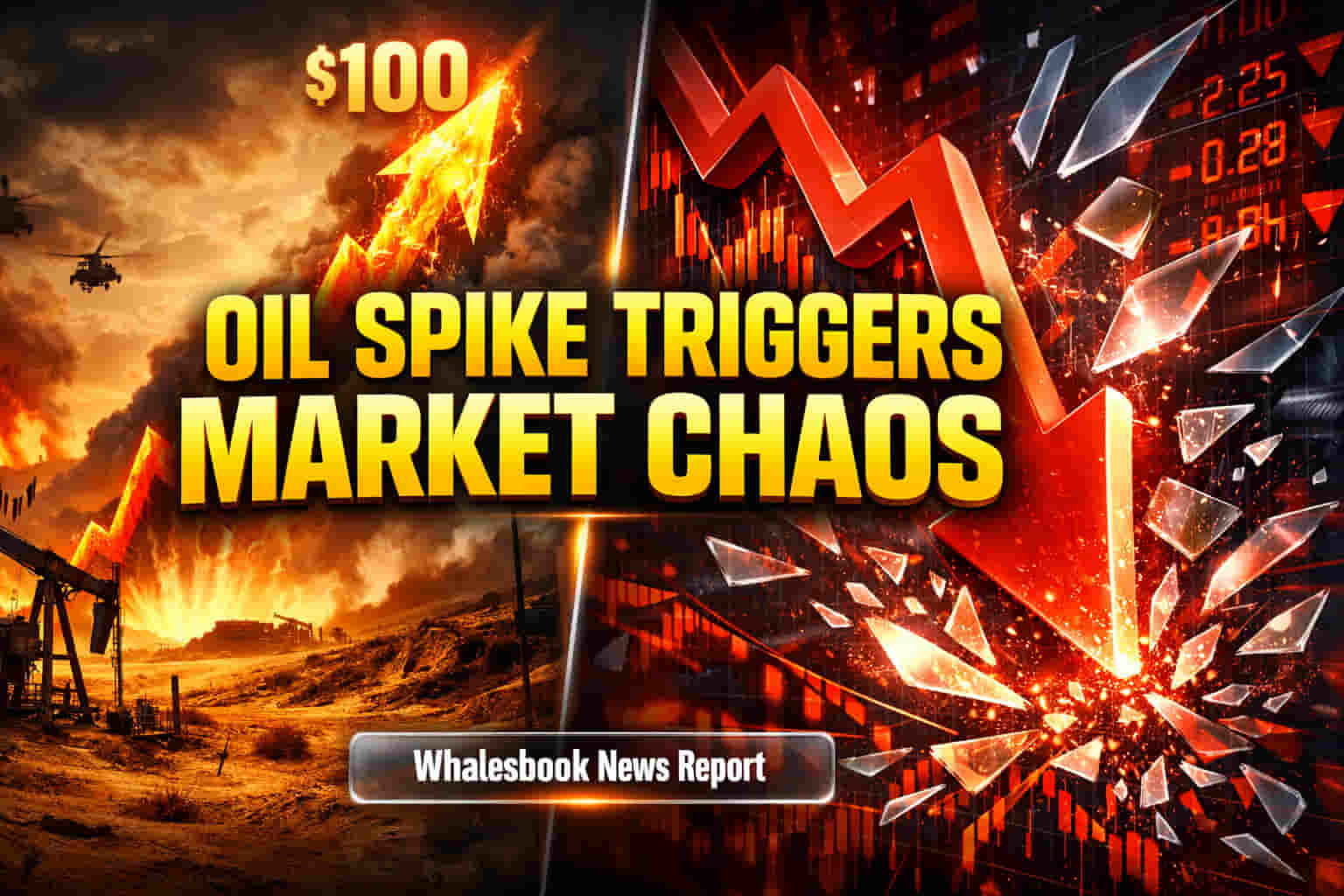


Oil Prices Hit $100 Amid Geopolitical Tensions
Geopolitical tensions in the Middle East have pushed Brent crude oil futures past $100 a barrel, a level not seen since 2022. This jump, following significant gains last week, has led to sharp drops in equity futures. On March 9, 2026, S&P 500 futures were down 1.88% to 6613 points, and Nasdaq 100 futures also fell. Major producers are curbing output, and the critical Strait of Hormuz, a key route for global oil, is effectively closed. This supply shock is raising inflation expectations, pushing benchmark 10-year US Treasury yields up by about 14-20 basis points since the conflict began. The Bloomberg Dollar Spot Index also rose, climbing 0.92% to 98.55 on March 3, as investors sought safety in the dollar.
Markets Reel as Oil Spikes
Cryptocurrencies, sensitive to risk appetite, are also feeling the pressure. Bitcoin dropped below $66,000 on March 9, 2026, losing recent gains, while Ether fell to around $1,900. Equity markets are showing a clear risk-off sentiment. Analysts at JonesTrading cautioned that the 'worst is yet to come in the stock market reaction,' noting that hedge funds are cutting net risk exposure to multi-year lows. This shift comes as rising energy costs threaten to worsen inflation and potentially slow global growth if oil prices stay high. The situation revives concerns about stagflation, echoing the economic challenges of the 1970s.
Stagflation Fears Resurface
The oil price surge comes as the global economy, despite early 2026 acceleration from AI investment and prior easing, still has fragilities. Higher oil prices directly increase inflation. Morgan Stanley Research estimates a 10% oil price rise could boost US headline consumer prices by 0.35% over three months, with sustained high prices causing more significant inflation. This pressure complicates central bank policy, potentially delaying rate cuts and pushing up longer-term Treasury yields. Historically, oil shocks have had lasting impacts; the 1973 oil embargo led to prolonged stagflation, with the S&P 500 taking years to recover even after inflation adjustment. Though energy efficiency has improved, the Strait of Hormuz disruption, cutting off 20% of global supply, presents a major risk. Market valuations were already high: the S&P 500's forward P/E is around 21.2-23.6 (down from 2025 but still elevated historically), and the Nasdaq 100's is 22.43-32.93. ExxonMobil (XOM) trades at a TTM P/E of about 22.57, and Chevron (CVX) at 28.57, with XOM appearing cheaper.
Risks Mount for Investors
This conflict's risk is amplified because it hits a market already dealing with AI-driven changes and potential credit market strains. Unlike past geopolitical shocks, this one poses a broader macroeconomic risk. The 1973 oil crisis, which led to a decade of economic hardship, serves as a warning if sustained stagflation follows. Analyst sentiment is cautious, predicting further market declines and a defensive investor stance. High valuations, especially for the Nasdaq, make markets vulnerable to prolonged inflation and slower growth. This forces the Federal Reserve into a tough position: fighting price pressures without harming economic expansion.
Looking Ahead: Volatility Expected
Market participants expect continued volatility. The Federal Reserve must combat energy-driven inflation without derailing the economy, which showed early acceleration but now faces significant geopolitical challenges. The Middle East conflict's path is the main driver of market sentiment. Prolonged disruptions will likely keep oil prices, inflation, and the US dollar on an upward trend. A defensive market mood is expected to persist until positive news emerges regarding the conflict's duration and its ultimate impact on global growth and asset values.