

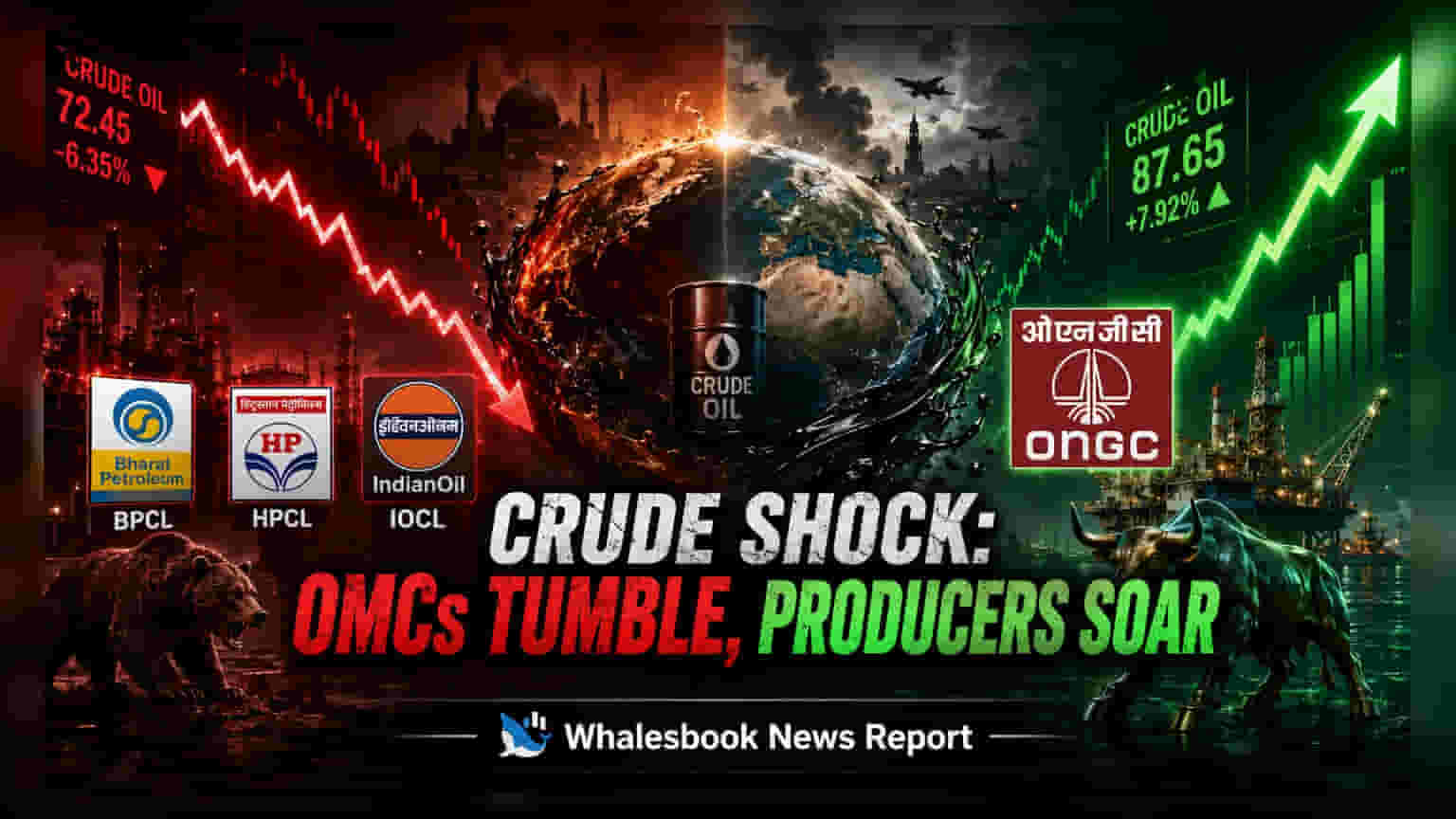
Shares of state-owned refiners BPCL, HPCL, and IOCL dropped by up to 4% on Wednesday as rising crude oil prices squeezed margins. Meanwhile, upstream producers ONGC and Oil India gained 2% each. Investors are closely monitoring how elevated crude costs and potential government intervention in fuel pricing will impact the profitability of marketing companies.
Indian stock markets witnessed a clear split in the energy sector on Wednesday as rising international crude prices created a divergence between oil marketing companies and upstream producers. Bharat Petroleum Corporation (BPCL), Hindustan Petroleum Corporation (HPCL), and Indian Oil Corporation (IOCL) saw their share prices decline by 3% to 4%. In contrast, upstream firms Oil and Natural Gas Corporation (ONGC) and Oil India recorded gains of approximately 2%.
Impact of Rising Crude Prices on Refiners
The price of Brent crude rose to $75.54 per barrel, following US military strikes against Iran and new sanctions on crude sales. For oil marketing companies, higher crude oil prices mean increased costs for purchasing raw materials. Because these companies often have limited ability to pass on the full impact of higher costs to consumers, their profit margins tend to come under pressure. This dynamic is a key reason for the recent market underperformance of these firms, which have seen their stock prices decline by more than 15% so far in 2026, trailing the BSE Sensex's 8.9% drop over the same period.
Upstream Producers Benefit from Price Hikes
Unlike refiners, upstream companies like ONGC and Oil India benefit when global oil prices rise. These firms extract oil and gas, meaning their revenue is directly linked to the market price of the commodity. As Brent crude prices climbed, the market responded positively to these producers, who have managed to buck the broader market trend with gains of up to 4% year-to-date.
Financial Risks and Sector Outlook
Rating agency ICRA has highlighted that sustained high crude prices could lead to increased working capital requirements for OMCs. When under-recoveries—the difference between the cost of fuel and the selling price—rise, these companies may need to increase their short-term debt, which can strain their financial health. Historically, the Indian government has sometimes stepped in to influence retail fuel prices during periods of extreme volatility, which further complicates the outlook for refiner margins.
Investors should track the upcoming quarterly results of these companies to assess the actual impact on their profit margins and debt levels. Additionally, any changes in government policy regarding fuel excise duties or subsidy support will remain a critical factor for the profitability of marketing companies in the coming months.