

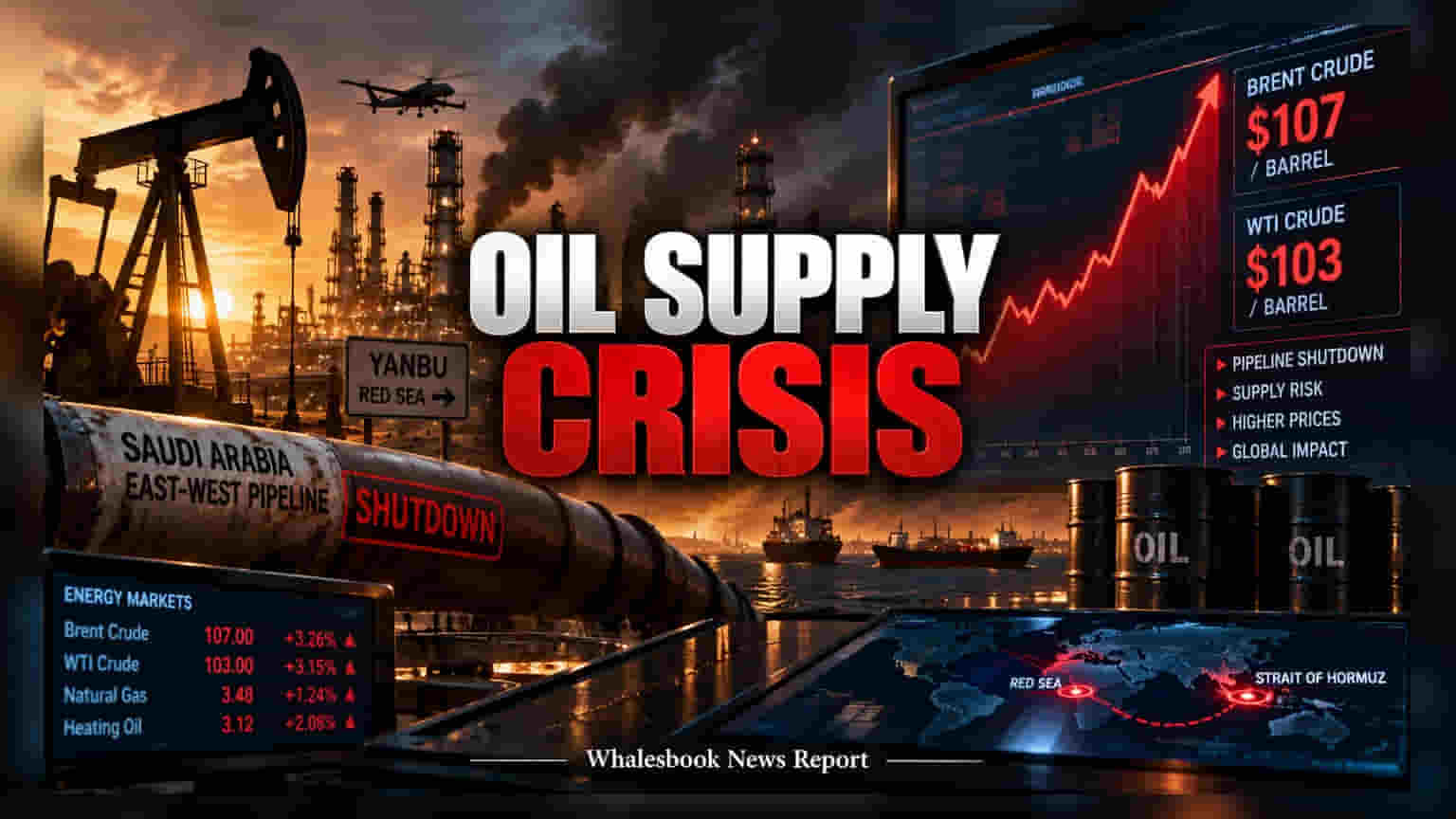
Global crude oil prices rose to approximately $107 a barrel on Tuesday after a drone attack disabled Saudi Arabia's critical East-West pipeline. The disruption threatens 4% of the world's daily oil supply, sparking fears of increased energy costs and supply-side inflation for major importers like India.
Global energy markets are reacting sharply to the shutdown of Saudi Arabia’s critical East-West pipeline, a primary conduit for oil exports. Brent crude futures have climbed to around $107 per barrel, while West Texas Intermediate (WTI) is trading near $103 per barrel. The facility was taken offline following a drone attack that occurred between September 10 and 11, 2026, creating immediate logistical challenges for the kingdom.
The East-West pipeline is strategic because it allows oil to reach the Red Sea port of Yanbu, effectively bypassing the Strait of Hormuz, which is frequently prone to geopolitical tension. With this route currently closed and repair estimates ranging from three to six weeks, the market is bracing for a potential shortfall of up to 4 million barrels per day. This accounts for roughly 4% of the total global oil supply.
For Indian market participants, the primary concern is the potential impact on the national import bill. India relies heavily on crude oil imports, and sustained price increases in global benchmarks often translate into higher inflationary pressure. Investors typically watch the impact on Oil Marketing Companies (OMCs) during such spikes. If these companies cannot fully pass on the increased cost of crude to consumers due to regulatory or political constraints, their profit margins may come under pressure. Conversely, upstream oil producers may see better realization prices, though the net impact often depends on government-mandated taxes and price ceilings.
The broader maritime environment adds to the uncertainty. With vessel traffic already fluctuating and diplomatic efforts to stabilize shipping through the Strait of Hormuz hitting delays, the market is pricing in a 'risk premium.' This means that even without a physical shortage, the fear of supply disruption can keep prices elevated. Additionally, there is the risk of rising insurance premiums and shipping costs for energy vessels operating in the region, which would further inflate the landed cost of crude.
The next important developments for investors to monitor will be the timeline for the pipeline repairs and any official communication from Saudi authorities regarding export capacity. Market analysts will also be watching if the disruption forces a significant drawdown in global inventory levels or if Saudi Arabia can successfully reroute shipments through alternative channels without significant delays. The ongoing geopolitical climate in the Middle East remains a key factor that could sustain volatility in energy prices in the near term.