

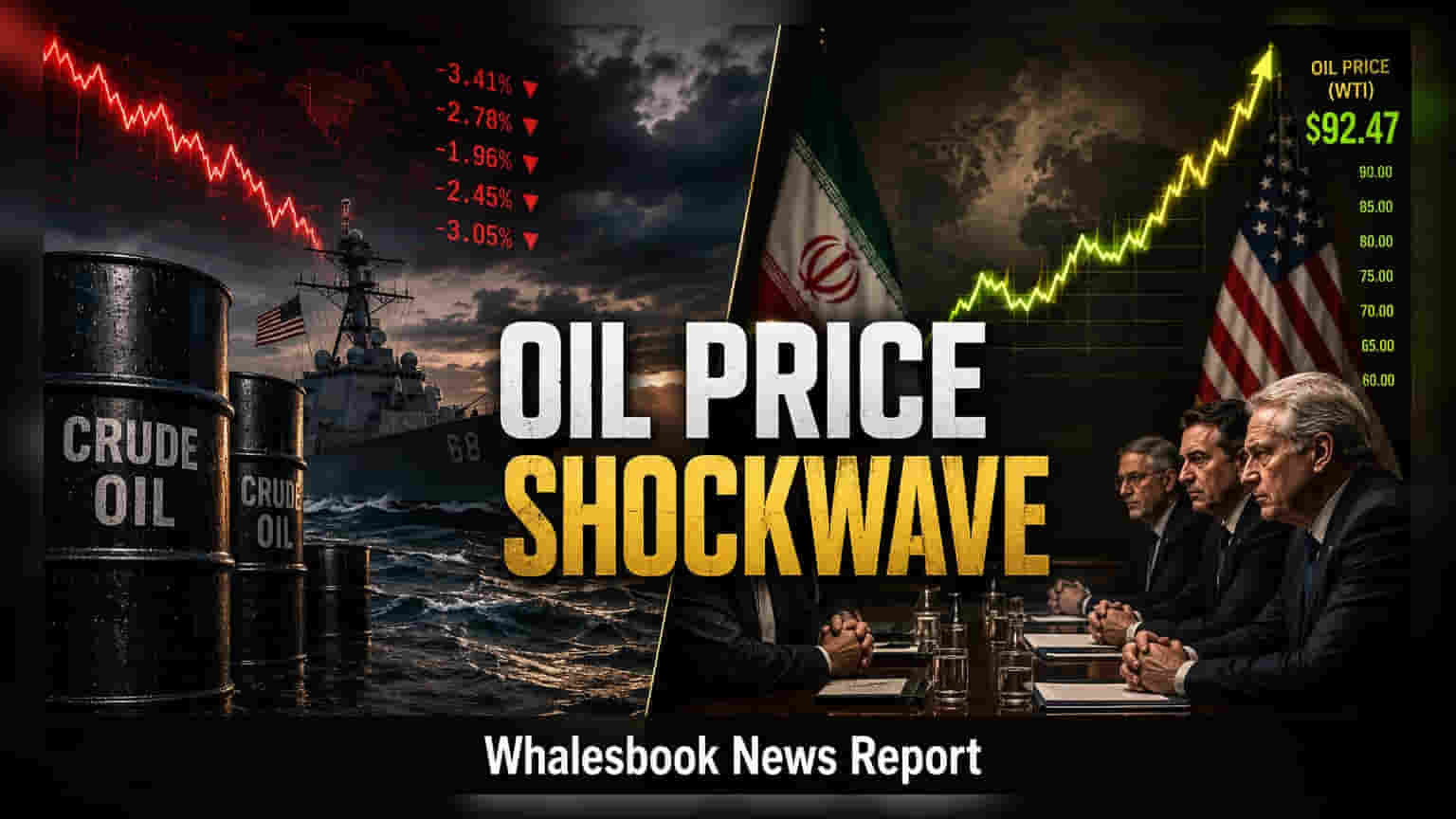
Crude oil prices advanced toward weekly gains of over 4% after the US signaled an indefinite naval blockade against Iran. The escalation, following an attack on two tankers in the Strait of Hormuz on August 13, has renewed fears of global supply disruptions. Investors are monitoring these geopolitical risks as they directly influence energy costs and trade dynamics for major importers like India.
Crude oil prices have maintained an upward trajectory this week, with Brent crude futures settling near $87.19 per barrel and WTI crude trading around $81.75 per barrel. The primary driver for this sentiment is a sharp increase in geopolitical tension, triggered by a warning from the United States regarding a potential indefinite naval blockade of Iran. This development has intensified concerns about the security of critical energy supply routes, specifically the Strait of Hormuz.
Impact on Global Shipping Routes
The Strait of Hormuz, a crucial chokepoint that handles approximately one-fifth of the world’s daily oil and liquefied natural gas supplies, has become a focal point of anxiety. Market sentiment soured further following reports that two vessels linked to the Abu Dhabi National Oil Company (ADNOC) were targeted while transiting the waterway on August 13, 2026. While no injuries were reported, the incident has highlighted the vulnerability of commercial shipping in the region, leading to a decline in traffic through the route.
What This Means for Indian Investors
For Indian markets, rising crude oil prices present a complex scenario. India is one of the world's largest importers of crude oil, meaning higher global prices often translate into a larger import bill and potential pressure on the domestic current account.
Investors typically watch two sides of this equation. For Oil Marketing Companies (OMCs) like Indian Oil, BPCL, and HPCL, a spike in crude prices can lead to margin pressure if retail fuel prices are not adjusted accordingly. Conversely, upstream companies such as ONGC and Oil India may see improved realization on their crude production when global prices rise. However, the broader market concern remains focused on the risk of imported inflation, which can influence interest rate decisions and overall economic sentiment.
Upcoming Monitorables
The market is now preparing for further clarity, with US Treasury Secretary Scott Bessent expected to announce new, unprecedented economic sanctions against Iran next week. This announcement is anticipated to provide insight into the duration and intensity of the current geopolitical standoff.
Beyond the political rhetoric, investors are also tracking inventory data and OPEC’s demand forecasts. While US crude inventories have shown significant weekly increases recently, supply-side fears stemming from the Strait of Hormuz continue to outweigh these storage metrics. The sustainability of the current price levels will depend on whether shipping traffic through the region stabilizes or if the conflict escalates further, creating sustained uncertainty for global energy markets.