

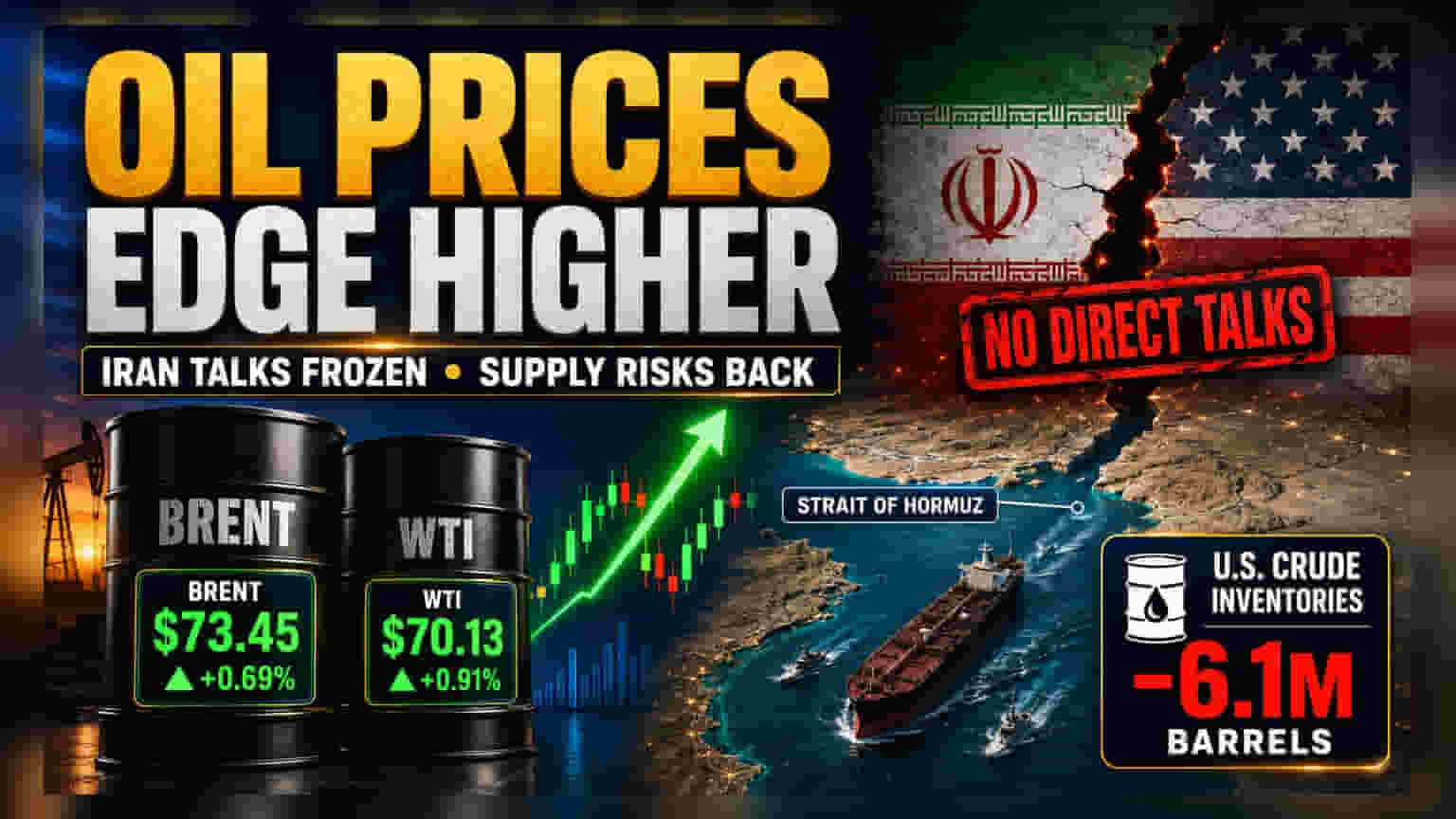
Crude oil prices ticked higher on Wednesday after Iran declined direct negotiations with U.S. envoys. While this keeps geopolitical tensions in focus, oil markets have recently faced their largest quarterly declines in years as concerns over supply disruptions in the Strait of Hormuz have eased.
What Happened
Crude oil prices saw a modest increase during early trading on Wednesday after Iran confirmed it would not hold direct talks with U.S. representatives in Doha. This diplomatic stance has renewed concerns regarding the stability of the interim ceasefire, which was established four months into the ongoing conflict. Following the news, Brent crude futures rose by 0.69% to reach $73.45 a barrel, while U.S. West Texas Intermediate (WTI) crude gained 0.91% to trade at $70.13 a barrel.
The Market Context
This price movement arrives after a period of intense volatility and sharp declines for global oil benchmarks. Brent crude recently recorded its largest quarterly loss since 2008, while U.S. crude saw its steepest quarterly fall since 2020, a year marked by low global demand during the pandemic.
For the first time since the onset of the conflict, market analysts have revised their 2026 price predictions downward. This shift in outlook is largely driven by the normalization of shipping activities in the Strait of Hormuz. U.S. Vice President JD Vance recently stated that Iran would be blocked from imposing transit tolls in the waterway, and reports indicate that oil flows through this critical route have returned to pre-war levels, reducing the immediate fear of global supply shortages.
Supply and Inventory Trends
Beyond geopolitical developments, traders are focusing on inventory data from the United States. According to the American Petroleum Institute, U.S. crude oil inventories fell by 6.1 million barrels for the week ending June 26, with gasoline stocks also showing a decline. This data point is being closely watched as a measure of short-term demand.
What Investors Should Track
For Indian investors, crude oil prices are a significant factor, as they directly impact the country’s import bill, inflation, and the profitability of oil marketing companies. The key monitorable remains the discrepancy between geopolitical tension and supply fundamentals. While diplomatic friction with Iran creates short-term price pressure, the market is currently prioritizing the return of stable shipping volumes through the Strait of Hormuz.
Investors will also watch for the official inventory data release from the U.S. Energy Information Administration, which will provide a more comprehensive view of the supply-demand balance than the preliminary private data. Any further escalation in the conflict or unexpected shifts in U.S. inventory trends will likely drive the next phase of price movement.