

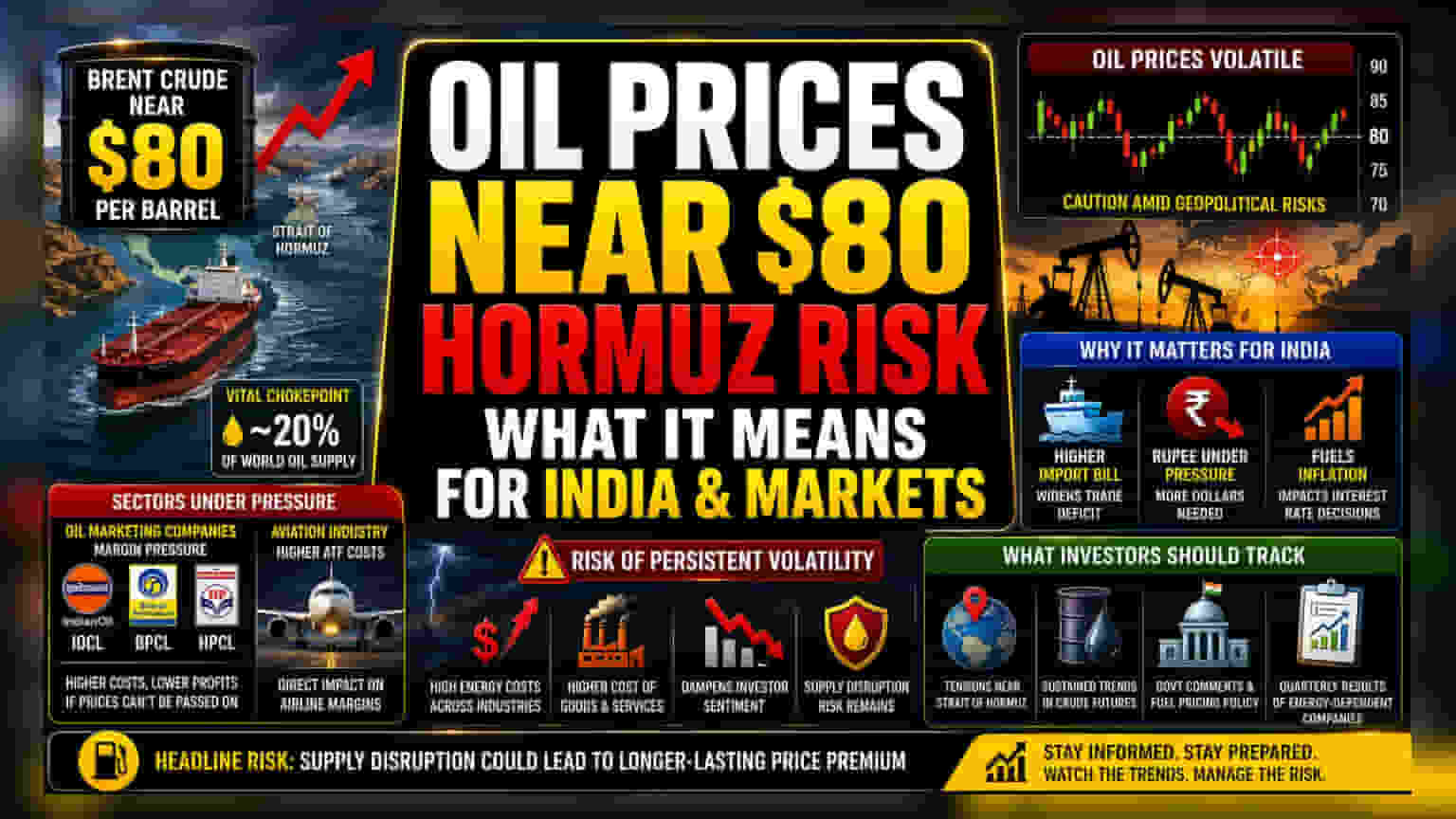
Brent crude is hovering around $80 per barrel as geopolitical tensions rise near the Strait of Hormuz, a critical energy chokepoint. For Indian investors, this trend is important because sustained high oil prices can hurt domestic inflation, pressure the rupee, and tighten profit margins for oil marketing companies and airlines.
What Happened
Global oil prices are seeing volatile trade, with Brent crude holding near the USD 80 per barrel mark. This uncertainty is driven by growing geopolitical risks surrounding the Strait of Hormuz. This narrow waterway is vital for the global energy supply, with reports indicating that approximately 20% of the world's daily oil consumption transits through this single chokepoint. Market sentiment remains cautious as traders assess the potential for supply chain disruptions in the region.
Why This Matters for India
India is one of the world’s largest importers of crude oil, purchasing a significant portion of its energy needs from global markets. When oil prices remain high, it creates a direct risk for the Indian economy. First, a higher import bill can widen the country’s trade deficit. Second, it often puts downward pressure on the Indian Rupee, as more dollars are required to pay for the same amount of oil. Third, high crude prices tend to fuel inflation, which can influence interest rate decisions by the central bank.
Impact on Business Margins
Investors typically watch specific sectors closely when crude oil prices spike. Oil Marketing Companies (OMCs)—such as Indian Oil Corporation (IOCL), Bharat Petroleum (BPCL), and Hindustan Petroleum (HPCL)—often face margin pressure in such environments. If these companies cannot pass on the increased input costs to consumers through higher petrol and diesel prices, their profitability tends to fall. Similarly, the aviation industry faces challenges because Aviation Turbine Fuel (ATF) costs are linked to crude oil prices, which directly impacts the bottom line for airline companies.
The Risk of Persistent Volatility
While equity markets have shown some resilience, history suggests that prolonged oil price spikes can dampen investor sentiment. If energy costs rise and stay high, manufacturing and transportation expenses usually increase across various industries. This can lead to a general rise in the cost of goods and services. For investors, the main risk is that if the geopolitical situation escalates into physical supply blockages, the resulting price premium could become more permanent, rather than just a temporary fluctuation.
What Investors Should Track
Moving forward, the primary monitorable is the duration and intensity of the tensions near the Strait of Hormuz. Markets often overreact to headline news, so sustained trends in crude futures will be more important than single-day movements. Investors should also watch for any official comments on supply security, changes in fuel pricing policies by the government, and the quarterly margin performance of energy-dependent companies.