

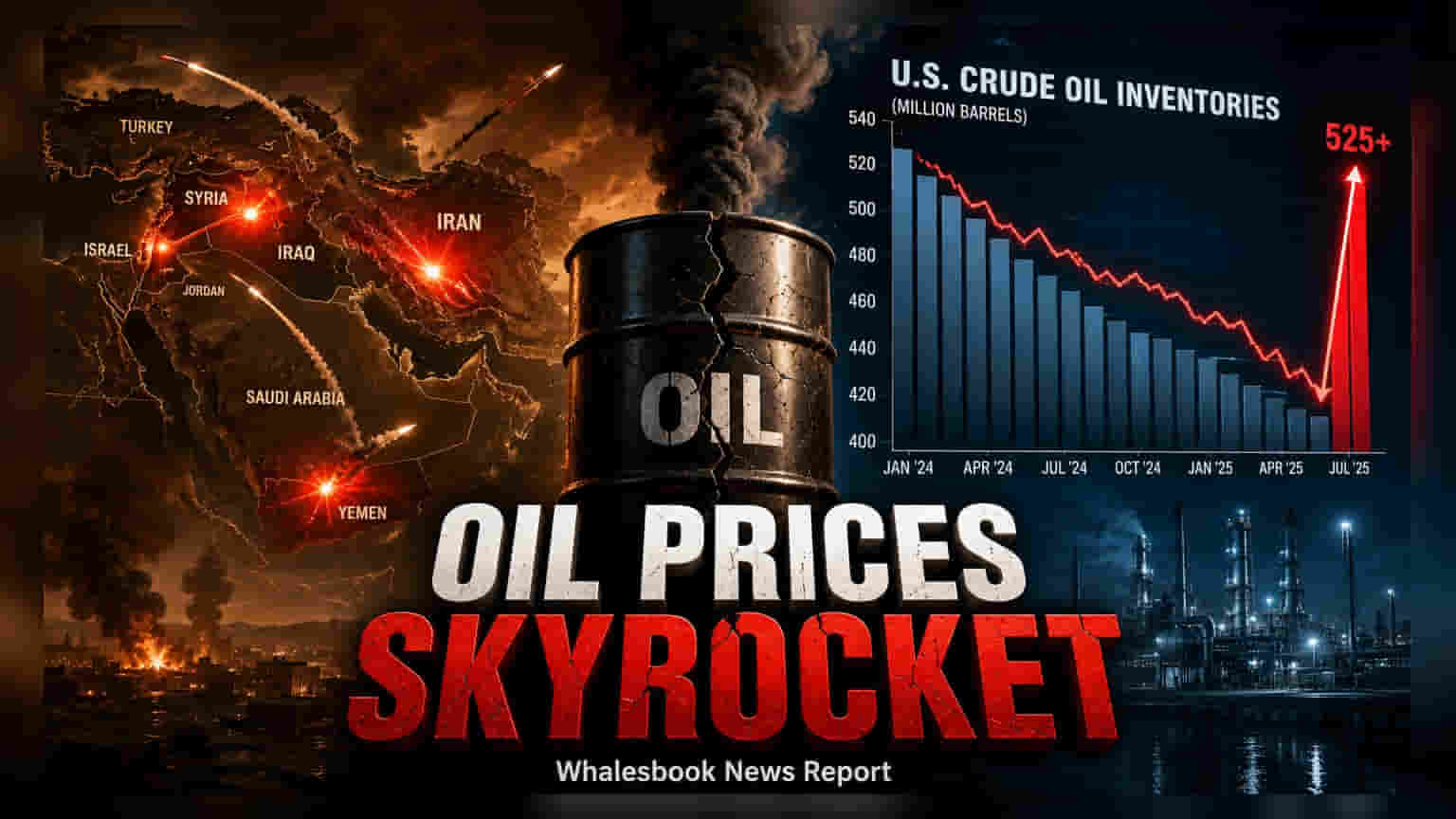
Global oil benchmarks climbed nearly 4% on Wednesday as Middle East tensions intensified following military strikes in Iraq. Simultaneously, a 3.3-million-barrel drop in U.S. crude inventories fueled concerns over supply tightening. For Indian investors, this trend may impact inflation metrics and the import-heavy energy sector.
Global oil prices witnessed a sharp rise on Wednesday, with Brent crude futures climbing 3.9% to $87.39 per barrel and U.S. West Texas Intermediate (WTI) rising 3.8% to reach $82.31 per barrel. This rally follows a spike in geopolitical volatility in the Persian Gulf, where reports of missile interceptions and regional military strikes have heightened fears regarding potential disruptions to energy production and transport routes.
Impact of Supply and Inventory Trends
The upward movement in prices is being driven by both supply concerns and demand-side data. Market participants are reacting to a significant decline in U.S. crude stockpiles, which reportedly fell by approximately 3.3 million barrels during the week ending July 24. A drop in inventories often signals that demand is outpacing supply, leading to increased pressure on available reserves. While the market awaits official confirmation from the Energy Information Administration later today, the preliminary data has already provided a strong catalyst for the current price action.
OPEC+ Policy and Market Sentiment
Beyond immediate geopolitical risks, the sentiment is being supported by potential shifts in OPEC+ production policy. Reports suggest that the coalition may consider delaying planned output increases for three months, starting in October. If implemented, this move would effectively keep more oil off the market, tightening global supply at a time when regional instability is already making investors cautious. This strategy would be a reversal of previous plans to return voluntarily curtailed barrels to the market, potentially keeping price floors higher than they might otherwise be.
Implications for the Indian Economy
For Indian investors, the persistent rise in global oil prices is a significant factor to monitor. India imports a large majority of its crude oil requirements, making the economy sensitive to global price fluctuations. Higher oil prices can lead to increased import costs, which puts pressure on the country's trade balance and the value of the Indian Rupee. Furthermore, sustained high crude prices can influence domestic fuel costs, affecting inflation and the profit margins of sectors that rely heavily on oil and its derivatives, such as paints, chemicals, and transportation. Investors may keep an eye on how these global price trends translate into domestic policy decisions and company earnings in the coming weeks.