 Whalesbook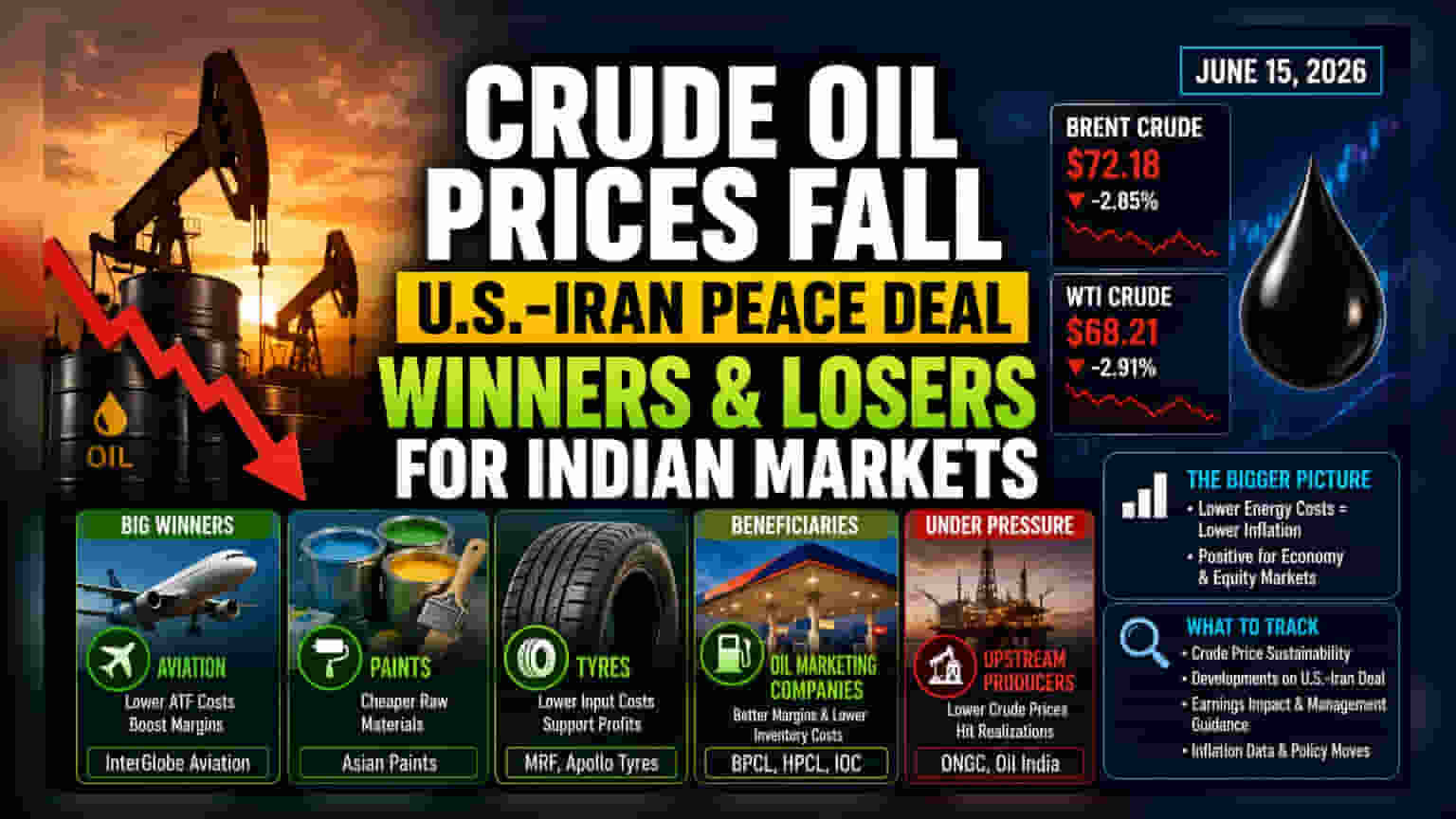


Global crude oil prices dropped on reports of a potential U.S.-Iran peace agreement, easing supply fears. This development triggered a rally in sectors reliant on oil imports, such as aviation, paints, and tyres, while upstream oil producers faced pressure due to lower potential earnings.
What Happened
Global crude oil prices fell on June 15, 2026, following news reports of a potential peace agreement between the United States and Iran. Markets reacted quickly to the prospect of reduced geopolitical tension, which could ease concerns over energy supply disruptions. As oil prices dropped, with benchmarks like Brent and WTI trading lower, investors shifted their focus to sectors that are highly sensitive to energy costs.
Impact on Consumption-Heavy Sectors
For many Indian industries, crude oil is a key raw material. When oil prices fall, these companies generally see a relief in their input costs, which can help improve their profit margins. The aviation sector, including companies like InterGlobe Aviation (IndiGo), is a major beneficiary as aviation turbine fuel is one of their largest expenses. Similarly, the paint and tyre industries—which rely on crude oil derivatives like monomers and synthetic rubber—saw positive movement in their share prices. The expectation is that lower input costs will support profitability if the price decline sustains.
Oil Marketing Companies and Margins
Oil Marketing Companies (OMCs), such as Bharat Petroleum (BPCL), Hindustan Petroleum (HPCL), and Indian Oil Corporation (IOC), also saw their shares rise. For these companies, the cost of crude oil is a major factor in their refining and marketing business. When international crude prices drop, OMCs often experience better marketing margins on fuel sales, provided that local retail fuel prices remain stable or adjust in a way that protects their profitability. Lower crude costs also reduce the amount of working capital these companies need to maintain their inventory.
Pressure on Upstream Producers
While consumers of oil benefited, upstream oil exploration and production companies like ONGC and Oil India faced headwinds. These companies produce and sell crude oil. Their revenue and profitability are directly linked to the price at which they can sell their oil in the global market. When international crude prices fall, their realizations decrease, which can lead to lower profit margins. This explains why these stocks often move in the opposite direction of the broader oil-consuming sector during such market events.
The Bigger Economic Picture
Lower energy costs have a broader positive impact on the economy. Energy prices are a significant component of inflation. When oil prices remain lower, it helps reduce inflationary pressures, which is generally viewed positively by the central bank and the wider equity market. This can provide relief to the economy and potentially reduce the pressure for aggressive interest rate increases, which creates a more favorable environment for equities.
How Investors May Read This
While the market reaction on June 15 was positive for many sectors, investors should maintain a balanced perspective. Crude oil prices are subject to high volatility and depend on global geopolitical developments, supply decisions by OPEC+, and demand trends in major economies like China and the U.S. A temporary dip in prices may not necessarily lead to a long-term improvement in company earnings. The real test will be whether these lower costs translate into actual profit growth in upcoming quarterly results. Furthermore, geopolitical situations can change rapidly, and any reversal in oil prices could quickly impact the sectors that rallied today.
What Investors Should Track
Investors may monitor the sustainability of the price decline in global crude markets and any follow-up developments regarding the reported U.S.-Iran agreement. It will also be important to track company management commentary in the next earnings season to see if they expect lower raw material costs to meaningfully impact their profit margins. Additionally, keeping an eye on the broader inflationary data and central bank policy decisions will provide context on whether the environment remains supportive for equity markets.