

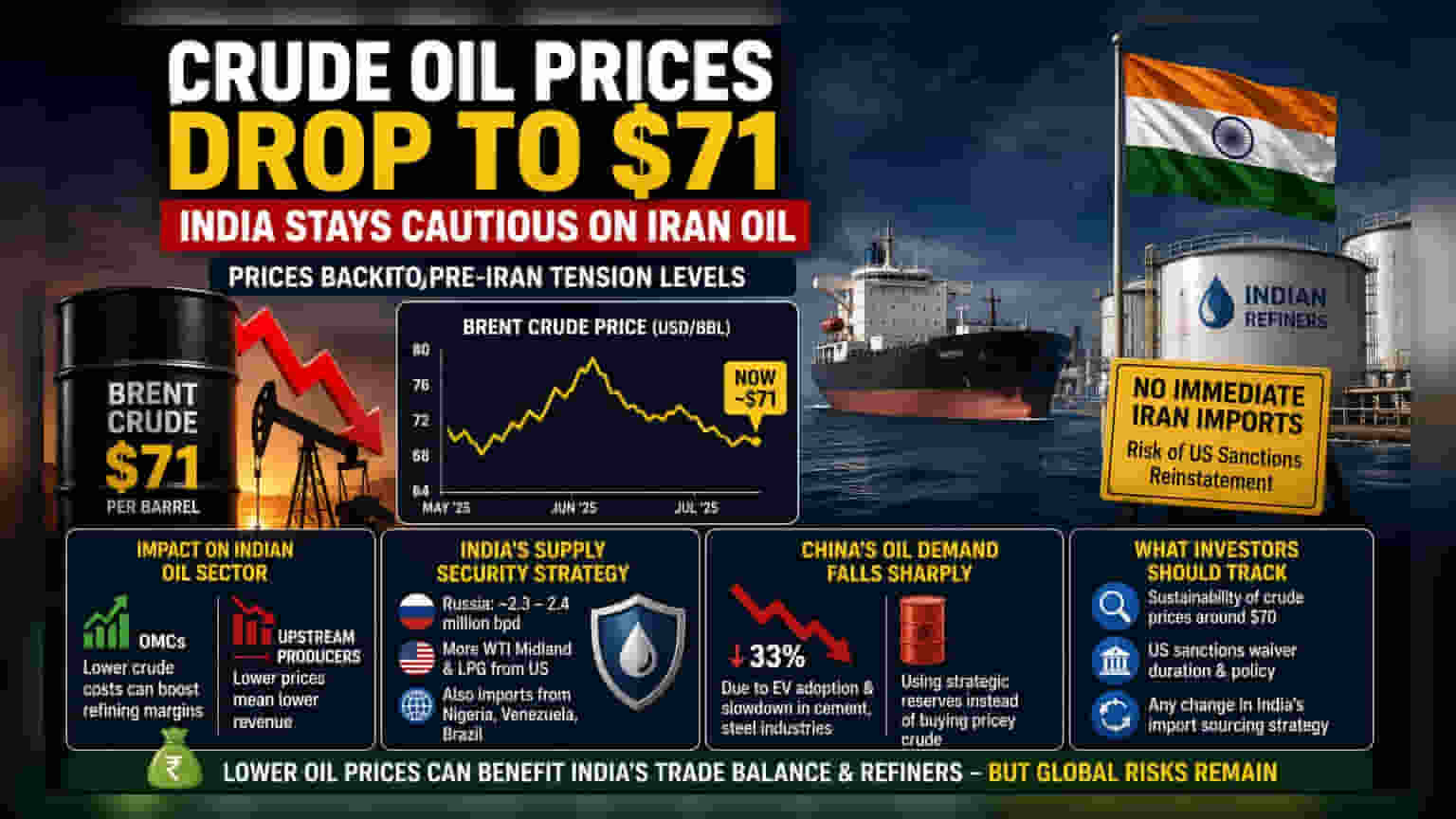
Brent crude has fallen to $71 per barrel, returning to pre-war levels as geopolitical tensions subside. Although Iran is looking to re-enter the market, India is holding off on new purchases due to uncertain US sanctions and sufficient existing inventory. This dip in global crude prices typically shifts the profit outlook for Indian oil marketing companies and upstream producers.
What Happened
Global crude oil prices have receded to approximately $71 per barrel, reaching levels seen before the recent period of geopolitical tension involving Iran. This price correction follows a volatile stretch where oil traded in the $72 to $74 range. Despite Iran signaling a desire to resume crude exports following the temporary lifting of US sanctions, Indian refiners are maintaining a cautious stance. They have chosen not to pursue immediate imports of Iranian crude, citing the potential for US sanctions to be reinstated once the current waiver period ends.
Impact on the Indian Oil Sector
For the Indian oil industry, the trajectory of crude prices is a significant business factor. Generally, lower crude oil prices can benefit Oil Marketing Companies (OMCs) by potentially improving their gross refining margins, as the cost of raw material decreases. Conversely, upstream oil exploration and production companies may see lower revenue realizations when oil prices drop, as their product is sold at lower global benchmarks. The current price stability or decline, if sustained, changes the cost landscape for domestic refiners who have been managing inventory costs amid volatile global energy markets.
India’s Supply Security Strategy
India has secured adequate crude oil supplies to cover its needs through mid-August. This buffer has reduced the immediate need for new procurement. Over recent periods, Indian refiners have successfully diversified their supply sources. This includes reliance on oil from Russia, which has seen its share rise to approximately 2.3 to 2.4 million barrels per day. Additionally, India has increased its procurement of WTI Midland oil and LPG from the United States, alongside imports from Nigeria, Venezuela, and Brazil. This diversified import basket is designed to insulate the country from shocks in any single region.
Global Demand Shifts
The resilience of global oil prices, or their current decline, is also tied to broader consumption trends. Significant data indicates that China, a major consumer, has seen its oil demand fall by nearly one-third. This drop is attributed to the increasing adoption of electric vehicles and a slowdown in industrial sectors like cement and steel. Rather than purchasing expensive global crude, China has reportedly been using its strategic reserves to meet its energy needs, which has altered global trade flows.
What Investors Should Track
The key monitorable for investors is the sustainability of these lower price levels. If Brent crude maintains this price range, it may provide relief to the Indian trade balance and support profitability for downstream refiners. However, the uncertainty surrounding US sanctions policy remains a primary risk factor for global oil supply. Investors will likely look for updates on the duration of these sanctions waivers and whether India changes its import sourcing strategy in response to any shift in global energy policy.