

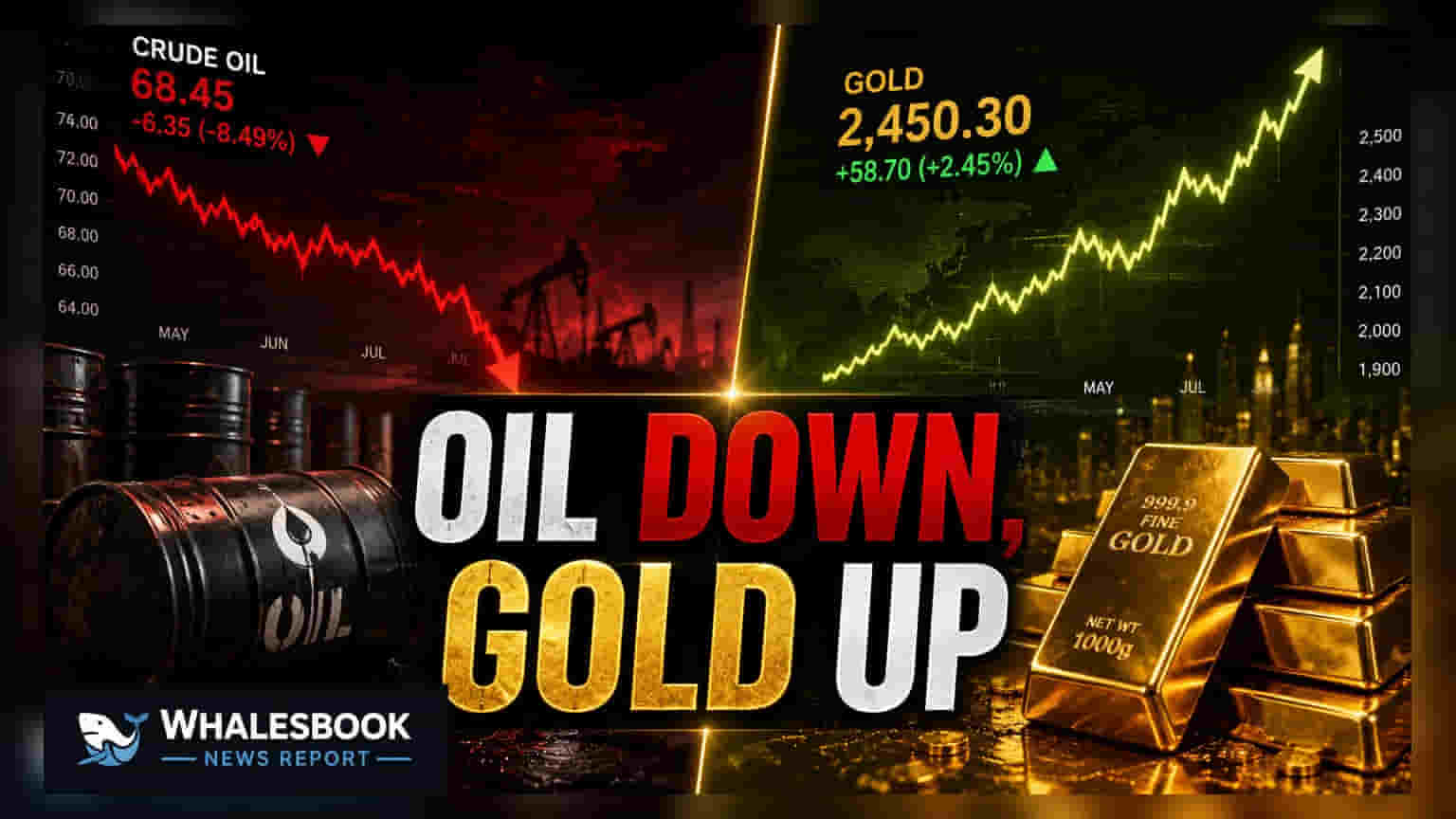
Crude oil prices fell on Monday after OPEC+ members agreed to increase production targets starting in August. For investors, this supply-side shift may impact margins for oil-consuming sectors like aviation, paints, and chemicals. Meanwhile, gold prices remained firm near two-week highs as a weaker U.S. dollar and cooling economic data reduced expectations for aggressive interest rate hikes.
Global crude oil prices moved lower on Monday as the Organization of the Petroleum Exporting Countries and its allies, known as OPEC+, finalized an agreement to boost supply. Starting in August, the group plans to increase output targets, aiming to normalize supply levels as global demand patterns evolve. This move toward higher production is also being influenced by recovering exports from major producers operating through the Strait of Hormuz.
Brent crude futures slipped 24 cents to $71.88 per barrel, while U.S. West Texas Intermediate (WTI) crude saw a marginal decline to $68.58 per barrel. For Indian investors, these commodity movements carry significant weight. Companies in sectors such as aviation, oil marketing, paints, and chemicals rely heavily on imported crude oil. Lower oil prices often help these businesses reduce input costs and improve their operating profit margins. Conversely, any sudden supply disruptions or policy reversals by OPEC+ remain a core risk that can lead to price volatility.
Gold Market Trends and Dollar Weakness
While oil faced downward pressure, the gold market saw continued support. Spot gold prices held near a two-week high, following a weekly gain of over 2% in the previous period. August delivery U.S. gold futures rose 1.5% to $4,186.80 per ounce. This upward trend in precious metals is primarily linked to the weakening U.S. dollar index, which recently touched a two-week low. The dollar’s decline follows economic data from the United States showing a softer-than-expected labor market, which has led investors to pull back on bets for aggressive interest rate hikes by the Federal Reserve.
Silver also showed strength, rising 1.1% to $63.12 per ounce, while platinum and palladium saw modest gains. The inverse relationship between the U.S. dollar and precious metals continues to be a primary driver for these assets. As the dollar softens against major global currencies, including the Euro, gold often becomes a more attractive hedge for international investors.
Investors looking ahead will monitor the upcoming Federal Open Market Committee (FOMC) meeting minutes. These minutes are expected to provide further clarity on the path of U.S. monetary policy, which will influence both the dollar index and commodity pricing. For domestic markets, the key monitorable remains how oil price fluctuations affect the rupee-dollar exchange rate and India's import bill, as these factors directly influence inflation trends and corporate earnings for energy-dependent companies.