

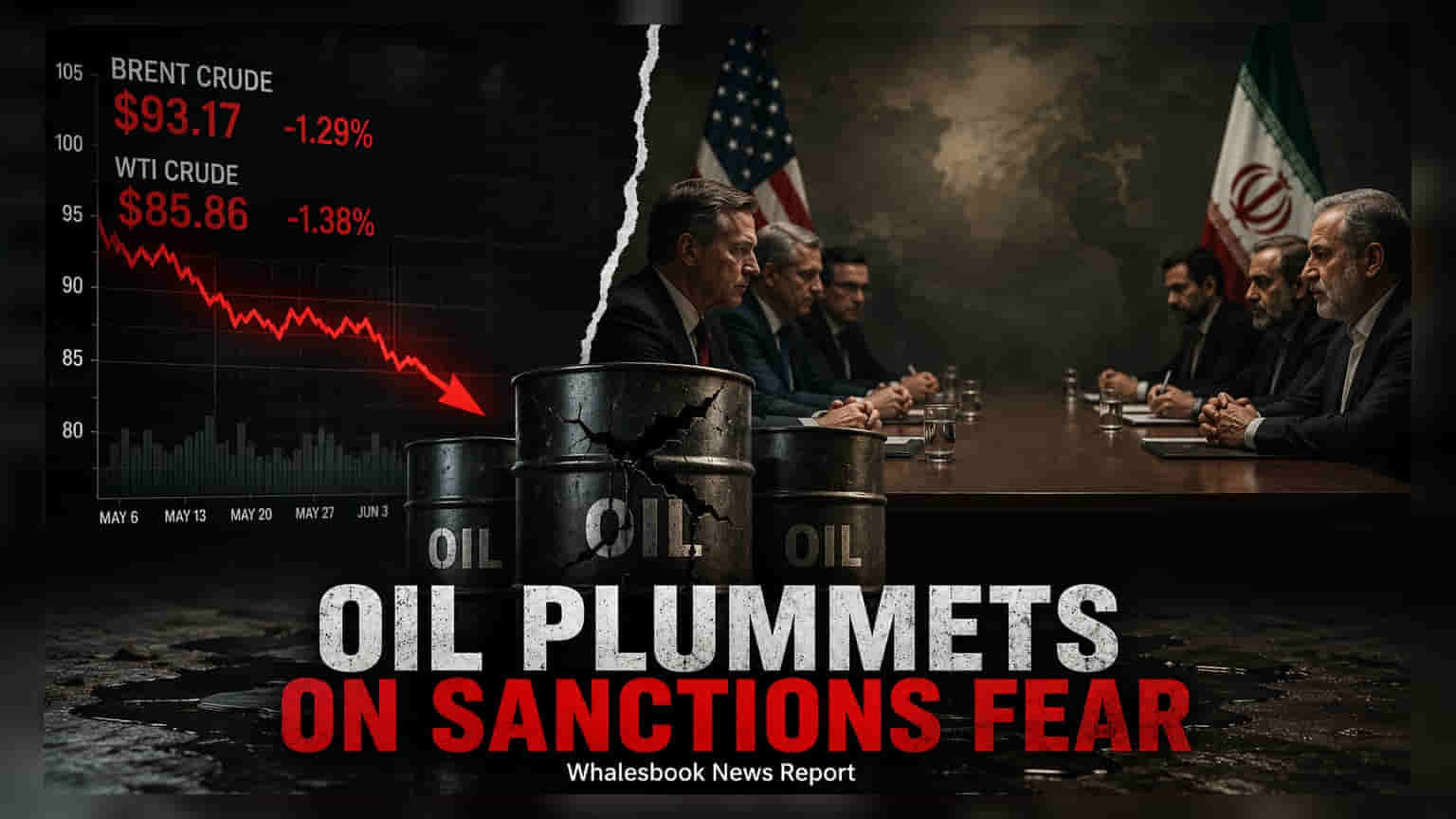
Global oil prices slipped over 1% on Monday as investors took profits ahead of expected new US sanctions on Iran. For India, a major energy importer, geopolitical tensions near the Strait of Hormuz create uncertainty that could impact domestic inflation and input costs for oil-dependent sectors.
Global crude oil prices retreated on Monday, with Brent crude futures sliding 1.29% to $93.17 per barrel and US West Texas Intermediate (WTI) falling 1.38% to $85.86 per barrel. The decline follows a two-week rally that saw prices climb more than 5%, driven largely by stalled peace negotiations between the US and Iran, which have heightened concerns over energy supplies.
Market participants are currently practicing caution, taking profits after the recent surge as they wait for an announcement from US Treasury Secretary Scott Bessent. The market is bracing for what has been described as a new package of strict economic sanctions against Iran. This uncertainty is magnified by the importance of the Strait of Hormuz, a critical maritime passage through which approximately one-fifth of the world’s oil supply flows. Any significant disruption to this route could lead to sudden volatility in energy prices.
For Indian investors, the situation serves as a reminder of the country's dependence on global energy markets. India imports a significant portion of its crude oil requirements. When geopolitical tensions threaten to disrupt supply chains or cause sudden spikes in crude prices, it typically exerts pressure on the Indian rupee and can increase the import bill.
From a corporate perspective, sustained higher oil prices are often viewed as a headwind for energy-intensive industries. Sectors such as aviation, paints, chemicals, and logistics, which rely on oil or oil derivatives as key raw materials, often see their profit margins come under pressure when fuel costs rise unexpectedly. While the current dip offers some temporary relief, the long-term impact on profitability depends on whether global supplies face actual disruption.
The immediate monitorable for the market is the specific detail of the US sanctions package expected to be unveiled today. Investors may also track how major oil-producing nations respond and whether tensions in the Persian Gulf escalate or de-escalate in the coming days. The ability of the market to absorb these geopolitical shocks without sustained price spikes will be key to determining the impact on broader economic indicators like inflation and corporate earnings in the energy-importing nations.