

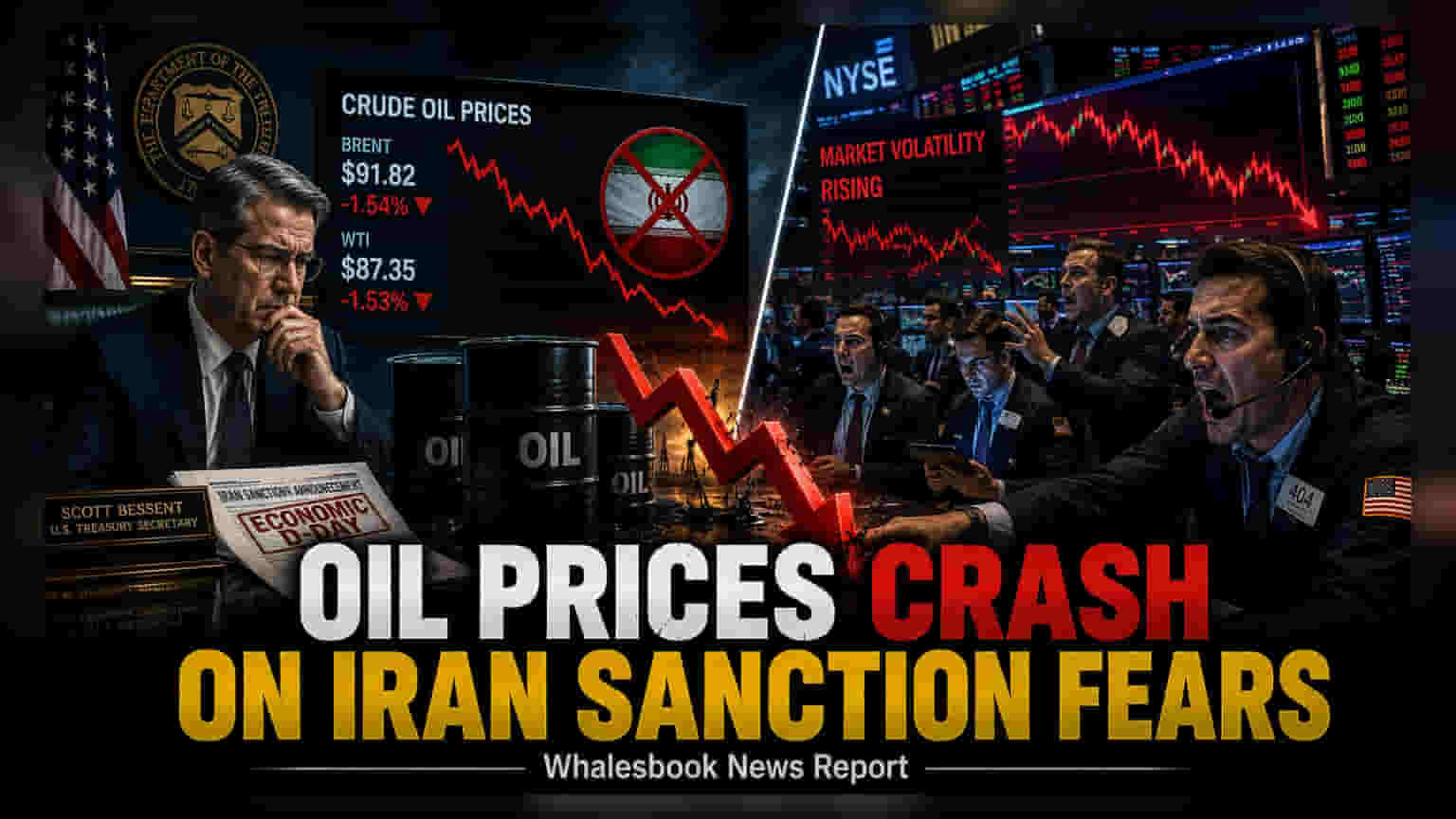
Global crude oil futures fell approximately 1.5% on Monday as investors anticipated the U.S. government's announcement of stringent new economic sanctions against Iran. U.S. Treasury Secretary Scott Bessent has described the upcoming measures as an 'economic D-Day.' Market participants are focused on the geopolitical situation, as rising tensions threaten to disrupt energy transit through the Strait of Hormuz.
Global crude oil prices retreated on Monday morning, with both Brent and West Texas Intermediate (WTI) futures declining by roughly 1.5%. The downward movement follows two weeks of gains, as investors shifted to a defensive stance ahead of a major policy announcement regarding Iran. The market sentiment is currently driven by uncertainty surrounding the potential for global energy supply disruptions.
Anticipation of 'Economic D-Day'
U.S. Treasury Secretary Scott Bessent is scheduled to announce a comprehensive package of sanctions against Iran at 2 p.m. EDT (1800 GMT). The administration has characterized these upcoming measures as an "economic D-Day" and the "toughest sanctions in history." By targeting Iran's economic lifelines, the U.S. aims to exert maximum financial pressure to avoid large-scale military involvement.
However, the prospect of aggressive sanctions has introduced significant volatility into energy markets. Traders are assessing how these measures will impact Iran's ability to export oil and whether they will trigger a wider geopolitical response that could restrict supply chains.
Strait of Hormuz and Geopolitical Risks
The tension has been amplified by statements from Iranian officials. Mohsen Rezaei, secretary of Iran's National Security Council, warned that nations supporting the U.S. sanctions may face retaliation and identified them as adversaries. A primary concern for global energy markets is the security of the Strait of Hormuz, a critical maritime chokepoint for global oil transit. Recent disruptions in this area have already raised concerns among energy importers regarding the long-term stability of shipping routes.
Impact on Indian Markets
In India, the Multi Commodity Exchange (MCX) reflected the global downward trend, with September crude oil futures trading lower during the morning session. Since India is a major importer of crude oil, fluctuations in global prices directly influence the country’s import bill, inflation levels, and the profitability of oil marketing companies.
Investors should monitor the official details of the U.S. sanctions announcement, specifically whether they contain clauses that directly restrict oil flow or impact regional shipping routes. The primary monitorable for the energy sector will be the stability of transit through the Strait of Hormuz and whether the sanctions lead to a measurable reduction in global supply or are largely priced into the market.