 Whalesbook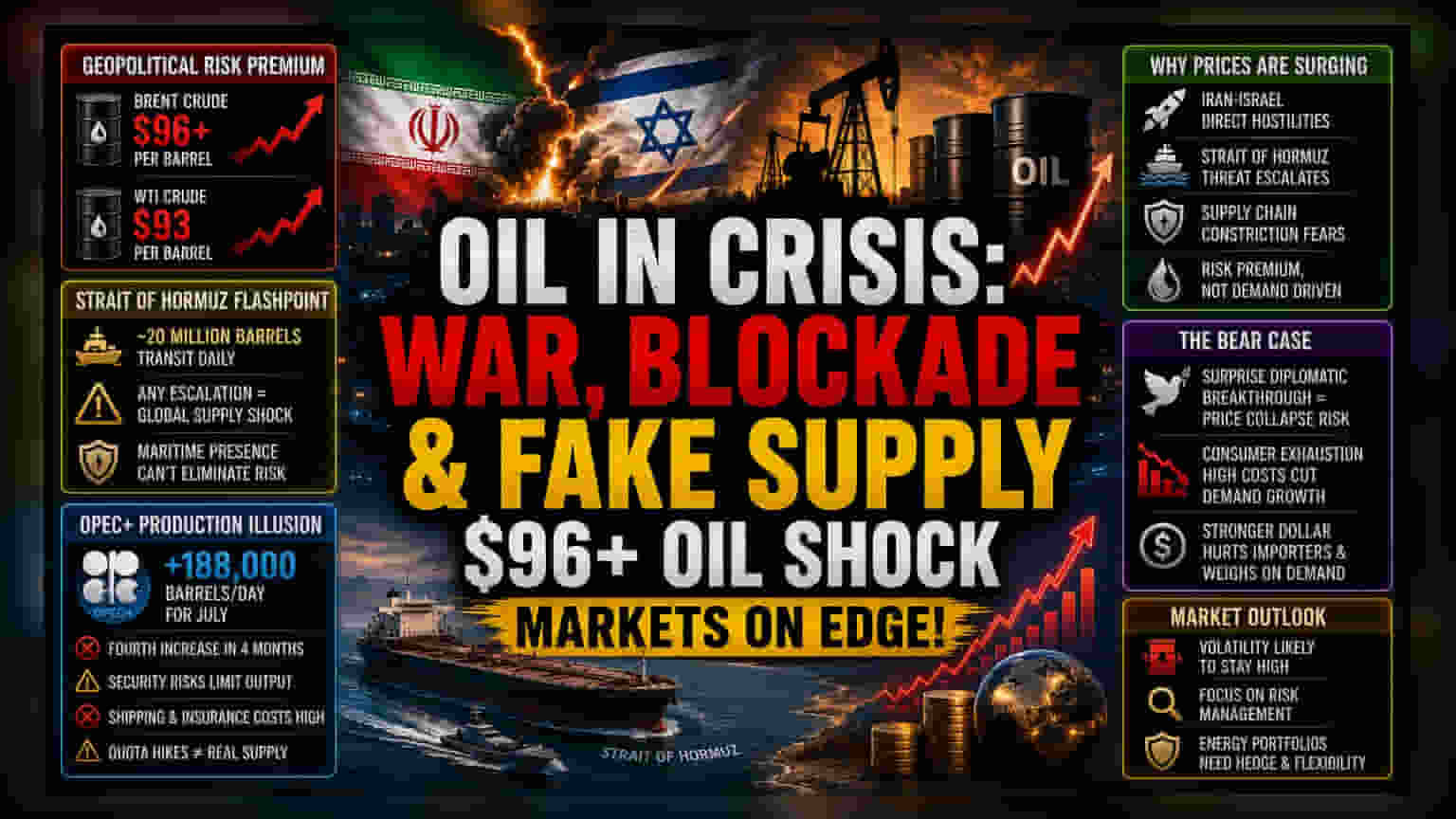


The Geopolitical Risk Premium
Global energy markets are currently experiencing a significant decoupling from traditional inventory-led pricing. The recent surge in Brent crude to over $96 per barrel and West Texas Intermediate (WTI) to near $93 follows renewed direct hostilities between Iran and Israel. This price action is not driven by consumption data or refinery demand, but by the re-emergence of a severe geopolitical risk premium. With the fragile April ceasefire effectively discarded after Iranian missile barrages targeting northern Israel, traders are pricing in a high probability of prolonged supply-chain constriction.
The Strait of Hormuz Flashpoint
Market sensitivity remains anchored to the Strait of Hormuz, which continues to function as the primary structural vulnerability for global energy flows. Even with the US-led maritime presence attempting to ensure freedom of navigation, any escalation creates an immediate, reflexive bid for oil futures. Historical data from early 2026 suggests that the market is acutely sensitive to even minor disruptions in this corridor, which remains the single most critical chokepoint for global LNG and crude exports. The persistent fear is that further kinetic exchanges will force a formal, sustained blockade, pushing prices well beyond the current volatility bands and potentially inducing the kind of acute supply shortages characterized in recent months.
OPEC+ and the Production Illusion
OPEC+ ministers recently approved a production quota increase of 188,000 barrels per day for July, marking the fourth such adjustment in as many months. However, institutional analysts note that this policy is largely performative. The ability of core Gulf producers to meet these targets is severely constrained by the physical security risks in the Persian Gulf and the reality that shipping insurance premiums and transit hurdles remain prohibitively high. This "business-as-usual" approach from the cartel—prioritizing incremental quota hikes while regional war persists—fails to address the reality of disrupted oil fields and stranded exports.
The Bear Case and Structural Fragility
From a risk-averse institutional perspective, the market is currently overextended. The bear case rests on the potential for a rapid, surprise diplomatic breakthrough that could cause prices to collapse as quickly as they surged. Furthermore, the global consumer is showing clear signs of exhaustion; higher energy costs are accelerating a shift in household spending patterns, which could lead to a demand-side shock if oil prices maintain current levels for a full fiscal quarter. Management of energy-intensive portfolios must also account for the volatility in currency markets, specifically the impact of a stronger dollar on import-dependent economies, which adds a secondary layer of downward pressure on global demand forecasts.