

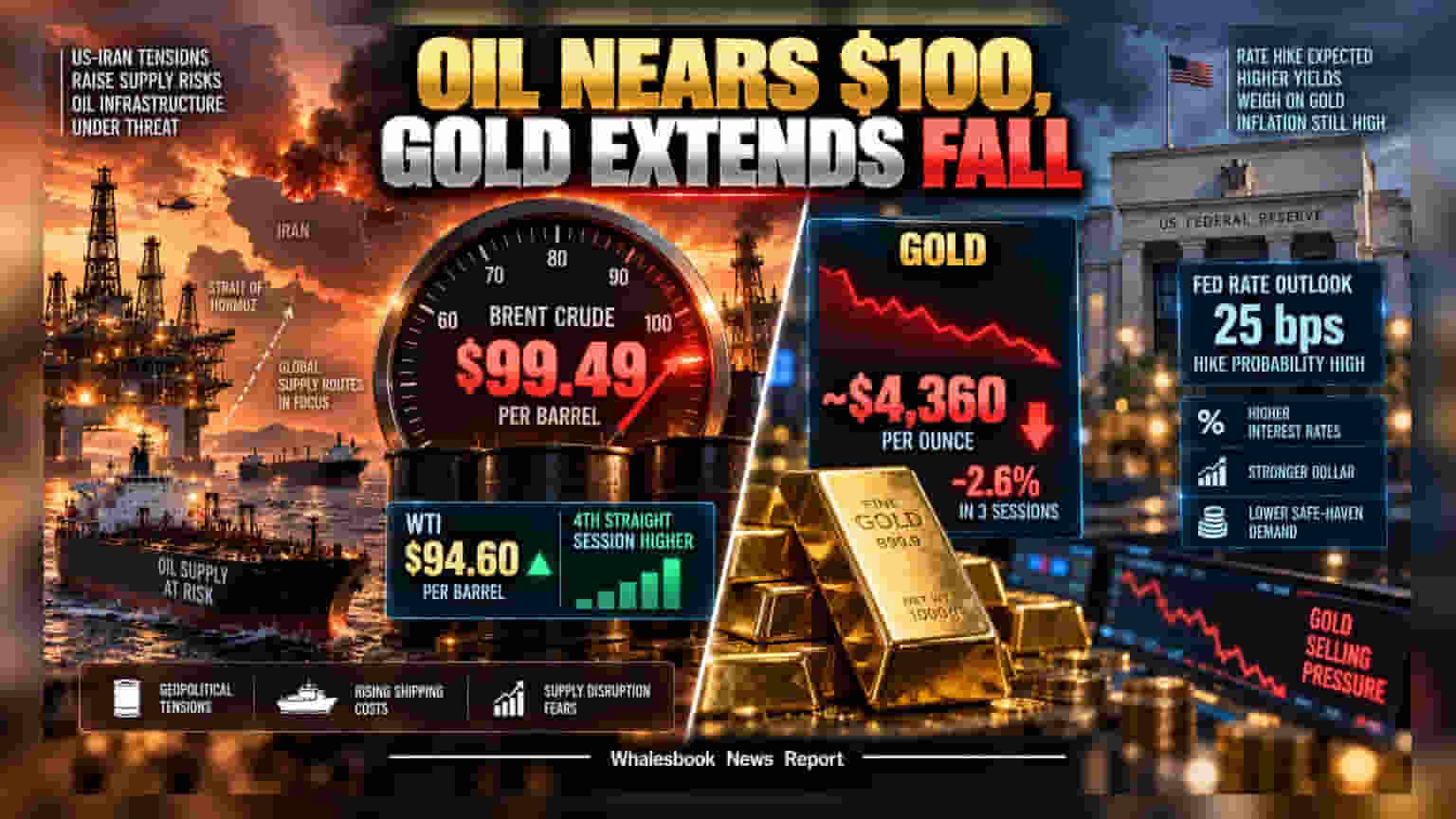
Global commodity markets diverged on September 9, 2026, as crude oil extended its rally to a fourth straight day due to heightened US-Iran conflict. Meanwhile, gold prices retreated to $4,360 an ounce as market sentiment shifted toward expecting further interest rate hikes by the US Federal Reserve.
Global oil prices continued their upward climb on September 9, 2026, with Brent crude reaching $99.49 a barrel and US West Texas Intermediate climbing to $94.60. This marks the fourth consecutive day of gains for crude, as the market reacts to escalating tensions between the US and Iran. Recent reports of attacks on military assets and oil infrastructure in the Gulf have raised concerns about potential disruptions to global oil supply, tanker routes, and shipping. This supply-side fear is currently the primary driver pushing crude prices toward the $100-a-barrel threshold.
For Indian investors, the rise in crude oil prices is a significant macroeconomic signal. Since India imports a large majority of its oil requirements, sustained high prices directly impact the country's import bill. This pressure often feeds into domestic inflation, puts downward pressure on the Indian rupee against the US dollar, and increases operating costs for companies in transport, manufacturing, and chemical sectors. When fuel prices remain high, profit margins for these companies may come under pressure unless they can successfully pass on these costs to consumers.
In contrast to the oil rally, gold prices have struggled, trading near $4,360 an ounce after a 2.6% decline over the last three sessions. Usually, gold acts as a safe haven during times of geopolitical conflict, but that dynamic has shifted in the current environment. Investors are increasingly focused on the possibility of a 25-basis-point interest rate hike by the US Federal Reserve at its upcoming September meeting. As the probability of a rate hike remains elevated, the appeal of holding gold—which earns no interest—decreases compared to bonds or savings accounts that offer yield.
The divergence between oil and gold highlights a split in market priorities. Oil is reacting primarily to the risk of physical supply shortages caused by the Middle East conflict. Conversely, precious metals are reacting to inflation expectations and the potential for a tighter monetary policy in the US. Investors are weighing the risk of supply disruptions against the risk that high energy costs will force central banks to keep interest rates higher for longer to control inflation.
Moving forward, the primary monitorables for investors will be any updates on the US-Iran conflict and official statements regarding the Federal Reserve's interest rate decision. If oil prices remain elevated near $100, it may continue to challenge inflationary control efforts, while volatility in precious metals will likely track incoming US inflation data and commentary from central bankers.