 Whalesbook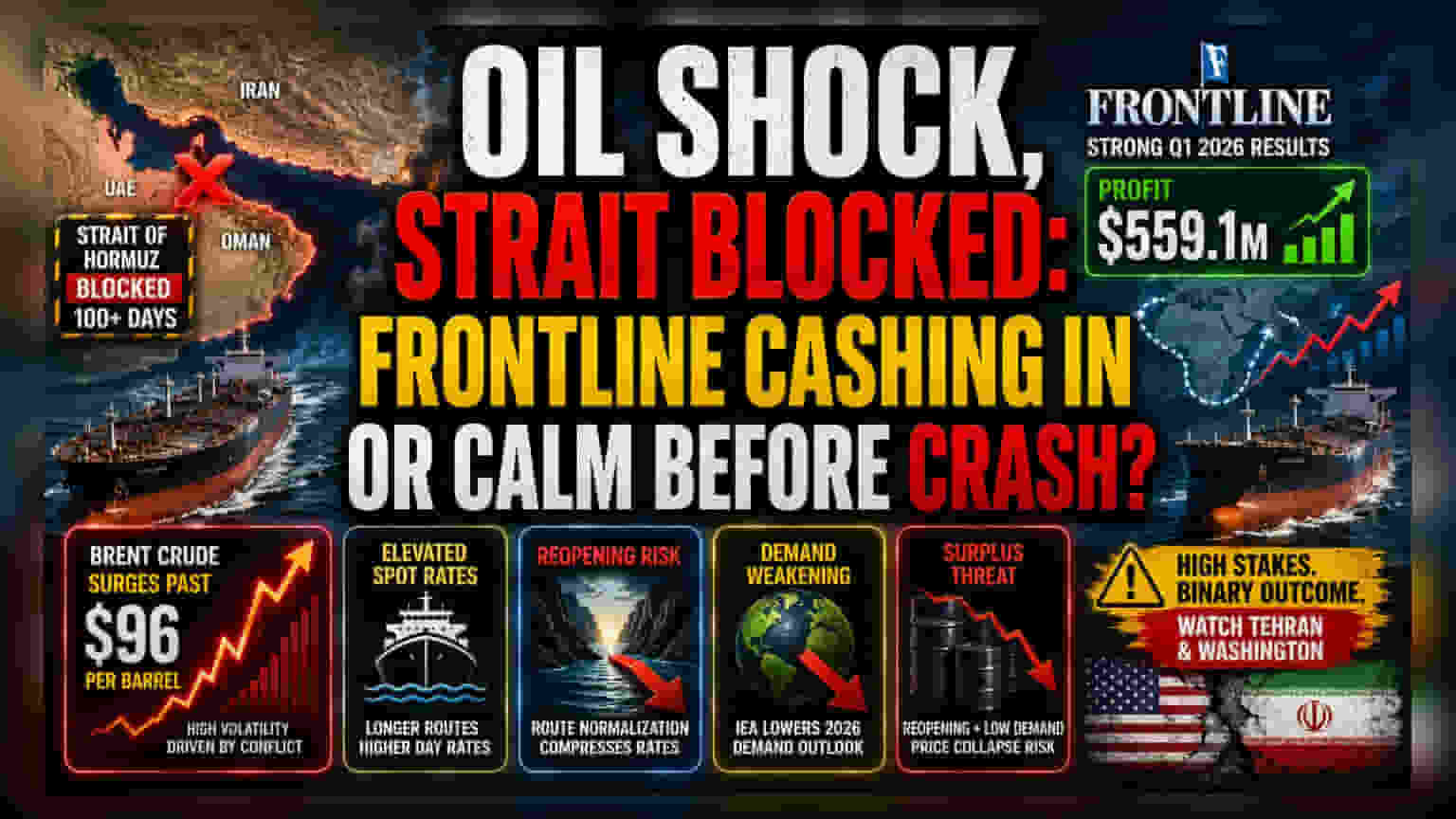


The Geopolitical Supply Shock
The narrative of an impending "oil flood" ignores the current reality on the ground. As of June 8, 2026, the Strait of Hormuz remains a restricted maritime chokepoint, with commercial traffic lingering at a fraction of pre-conflict volumes. While recent diplomatic overtures between Washington and Tehran have periodically sparked short-term price relief, these moves have repeatedly collapsed, often due to escalations involving regional proxies such as Hezbollah in Lebanon. The persistent closure, now exceeding 100 days, has moved beyond a logistical supply shock into a structural challenge for global energy security, with Brent crude recently surging past $96 per barrel following renewed regional hostilities.
The Valuation and Logistics Gap
Frontline (FRO) currently operates within this high-tension environment, reporting strong Q1 2026 results with a profit of $559.1 million. The company’s ability to generate cash remains tied to the current environment of elevated spot rates, which have been supported by the longer trade lanes necessitated by the Hormuz disruption. Investors should note that the market is currently pricing in a "logistical risk premium." Should the Strait reopen, the sudden normalization of shipping routes could rapidly compress the day rates that have recently supported record dividend payouts. Frontline’s reliance on cyclical spot rates for its current cash flow makes it acutely sensitive to any sudden changes in the status of the waterway.
The Forensic Bear Case
The market’s optimism regarding a swift restart of 10,000 oil wells may be fundamentally misplaced. While infrastructure has suffered less immediate damage than in past conflicts, a restart is not merely a matter of flipping a switch. Long-term field integrity and the logistical hurdles of re-establishing export volumes at scale remain significant risks. Furthermore, the global demand picture is softening; the International Energy Agency has already revised its 2026 demand outlook downward, warning of a potential contraction. If the Strait reopens during a period of reduced global consumption, the resulting surplus could lead to a sharp price collapse, placing severe pressure on producers and the tanker firms that currently benefit from supply-side constraints.
The Future Outlook
Fitch Ratings and other analysts maintain a base-case scenario projecting a potential reopening by late July, which would likely pivot the market toward an oversupply condition by the fourth quarter of 2026. However, the path remains binary and highly sensitive to political messaging from both the White House and Tehran. Until a concrete, durable memorandum of understanding is reached, energy markets will likely remain trapped in a high-volatility regime, where news-driven rallies are as frequent as fundamental-driven corrections.