

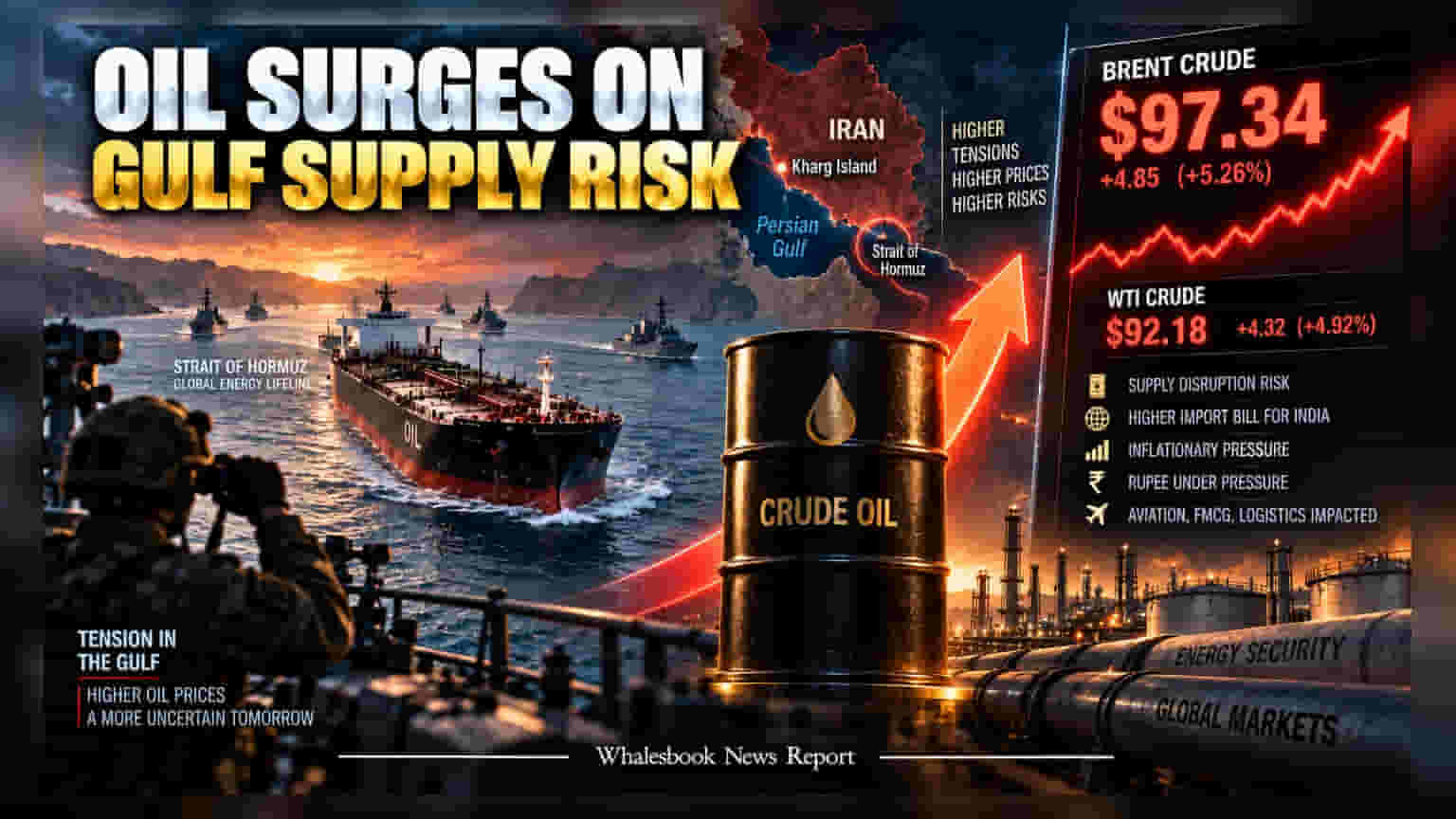
Brent crude has climbed above $97 per barrel following military escalation in the Persian Gulf, raising concerns about global supply chains. For India, a country that imports about 85% of its crude, this price surge creates headwinds for the rupee, inflation, and corporate profitability. Investors are now watching how potential shipping disruptions in the Strait of Hormuz will affect energy costs.
Global oil prices have moved higher as military clashes between the US and Iran intensified, raising the risk of prolonged supply disruptions in the Persian Gulf. Brent crude is now trading above $97 a barrel, while West Texas Intermediate (WTI) has crossed the $92 mark. The jump follows reports of US strikes on Iranian oil tankers near Kharg Island, a critical export hub, and retaliatory threats from Iran regarding the safety of shipping lanes.
Why This Matters for Global Supply
The Strait of Hormuz, a narrow waterway through which a significant portion of the world's oil is shipped, has become a focal point of risk. Traders are adding a geopolitical risk premium—the extra cost investors pay for the possibility of future trouble—to current prices. Analysts at major institutions like Goldman Sachs have revised their year-end price forecasts upward by $5, citing the likelihood that shipping disruptions could persist well into 2027 if the diplomatic and military impasse continues.
The Impact on the Indian Economy
For India, the surge in crude prices represents a direct economic challenge. As the country relies on imports for nearly 85% of its crude oil requirements, a sustained rise in global energy prices increases the national import bill. This puts downward pressure on the Indian rupee, as more foreign currency is needed to pay for the same amount of oil.
Furthermore, higher crude prices often act as an inflationary trigger. If energy costs remain elevated for an extended period, it complicates the central bank’s effort to manage domestic price stability, as fuel costs eventually trickle down to transportation and utility charges.
Sectoral Pressure Points
Indian investors are focusing on how this rise in input costs might affect corporate profitability. Several sectors are particularly vulnerable to oil price spikes:
- Aviation: Jet fuel (ATF) is a major expense for airlines. Higher crude prices directly inflate operating costs, which can squeeze profit margins unless airlines successfully pass these costs to customers through higher ticket prices.
- FMCG and Paints: These industries rely on petroleum-based derivatives for packaging and raw materials. Additionally, higher diesel prices increase the cost of logistics and distribution, which can weigh on quarterly earnings.
- Logistics: With fuel being the primary variable cost, transport and fleet operators face immediate pressure on their operating margins during periods of rising oil prices.
What Investors Should Monitor
While headline news about military exchanges often causes immediate volatility, the long-term impact on the stock market will depend on actual shipping data. The primary monitorable is the volume of oil flowing through the Persian Gulf. If reports confirm that tanker traffic is significantly constrained or if insurance premiums for shipping in the region spike further, crude prices could remain at these elevated levels regardless of military developments. Investors are also tracking the rupee’s movement against the dollar and future management commentary from fuel-intensive companies regarding their ability to manage these rising costs.