

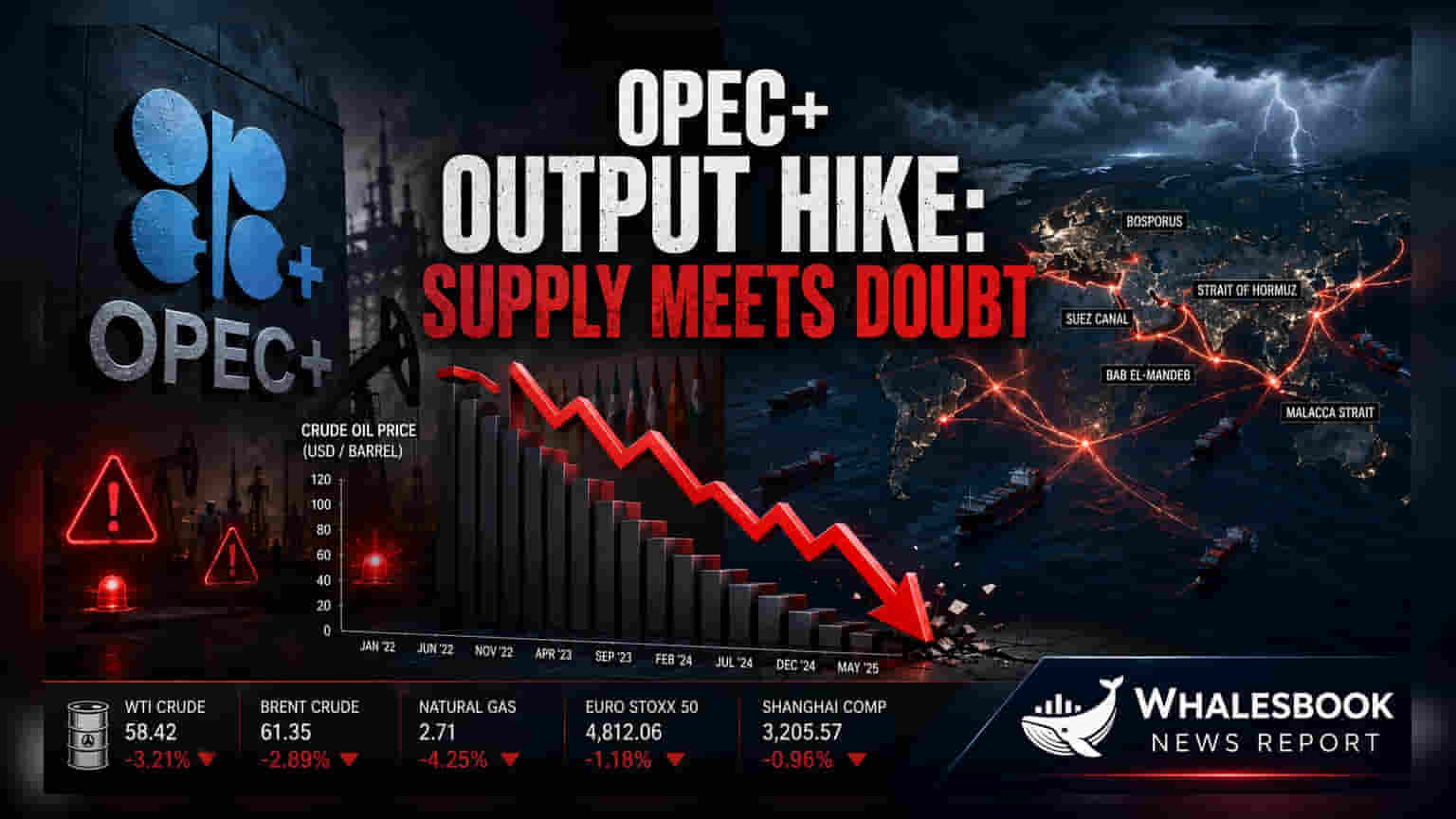
OPEC+ will increase crude oil production quotas by 188,000 barrels per day starting in August, continuing a five-month trend of supply expansion. For investors, the focus shifts to whether geopolitical tensions in the Strait of Hormuz will limit physical supply and if lower prices can revive demand from China, the world's largest importer.
OPEC+ has announced plans to increase its collective crude oil production quotas by 188,000 barrels per day for August. This decision marks the fifth straight month of production hikes, bringing the cumulative increase since April to nearly 800,000 barrels per day. The news has impacted global energy markets, with Brent crude futures trading lower at approximately $71.72 a barrel in early Asian trade on Monday, reflecting a shift in market sentiment toward potential oversupply.
Geopolitical Risks and Logistics
While the group has committed to higher production targets, the actual delivery of this oil remains uncertain due to ongoing geopolitical instability in the Middle East. The Strait of Hormuz, a critical maritime route for global energy, remains a point of high tension following recent actions involving the United States, Israel, and Iran. While major producers like Saudi Arabia and the United Arab Emirates have invested in alternative pipelines and export routes to bypass these risks, regional export volumes have struggled to return to pre-escalation levels. Industry data from Kpler indicates that June exports were measured at 9.62 million barrels per day, significantly lower than the 18.4 million barrels per day average recorded in the three months prior to the height of recent tensions. While there has been a slight improvement in July, the inability of other global regions to fully cover this supply gap highlights the vulnerability of current energy logistics.
Impact of China's Import Slowdown
Beyond supply logistics, the market is closely watching demand signals from China, the world’s largest importer of crude oil. Import data for June showed a decade-low of 5.84 million barrels per day, with July figures currently trending even lower. This reduced appetite has added downward pressure on oil prices, as traders weigh the increased supply from OPEC+ against the lack of consistent buying activity from Chinese refiners. Market observers are now looking for a potential recovery in purchases by smaller, independent Chinese refiners who may return to the market to take advantage of lower prices. However, state-owned entities are expected to maintain a cautious stance, with analysts suggesting their import levels might not see significant growth until the fourth quarter of the year. Investors in energy-related sectors may monitor these import trends and geopolitical developments in the Strait of Hormuz, as both factors will determine if the increased supply effectively balances the global market or leads to a prolonged price correction.