 Whalesbook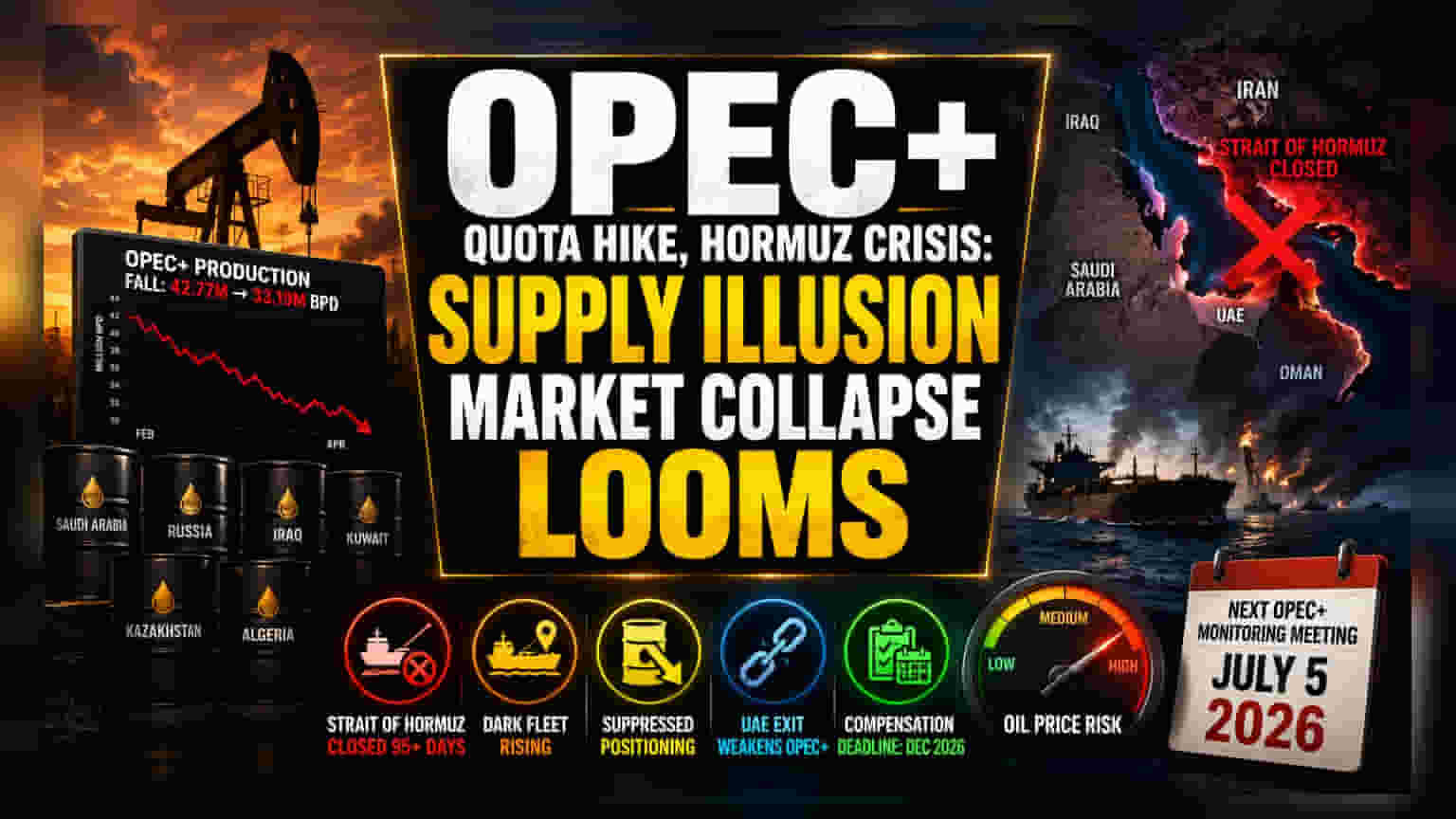


The Illusion of Supply Expansion
The recent decision by the core seven OPEC+ members—Saudi Arabia, Russia, Iraq, Kuwait, Kazakhstan, Algeria, and Oman—to increase production quotas by 188,000 barrels per day for July is fundamentally disconnected from the operational realities of the global energy market. While the alliance portrays this as a step toward normalizing supply, it masks a systemic production collapse. Data indicates that average daily output for the group plummeted from approximately 42.77 million barrels in February to just 33.19 million barrels by April, largely due to export blockades and conflict-driven infrastructure risks. Consequently, this modest quota increase functions primarily as a psychological anchor for market sentiment rather than a tangible mechanism to alleviate the world's most acute supply crisis.
The Strait of Hormuz Deadlock
The persistence of the Strait of Hormuz closure remains the defining factor for oil prices, effectively neutralizing the impact of any upstream quota adjustments. With critical energy transit largely halted for over 95 days, the geopolitical risk premium has become a structural component of the current price environment. Market analysts observe that even if OPEC+ were to fully unwind voluntary cuts, the physical capacity to move that crude to major consumers remains trapped behind military blockades and heightened conflict risk. Shipping firms are increasingly utilizing "dark" transit strategies—turning off transponders to evade detection—which only serves to obscure true liquidity and heightens the volatility of the global energy supply chain.
The Bear Case: Structural Vulnerability
The fundamental thesis for a market downturn rests on the potential for a sudden, binary resolution to the maritime crisis. Should the Strait of Hormuz reopen unexpectedly, the current environment of suppressed financial positioning and extreme war-risk premiums could evaporate, triggering a rapid swing from artificial scarcity to significant surplus. Furthermore, the alliance faces an internal credibility crisis. The recent departure of the United Arab Emirates has eroded the bloc's collective leverage, transitioning the sector into a more fragmented, competitive landscape. Member countries such as Iraq and Kazakhstan continue to struggle with quota compliance, further complicating the alliance's ability to exert unified control over global price floors. The extension of compensation deadlines through December 2026 highlights the ongoing failure of the group to reign in overproduction among its own ranks.
Forward Guidance and Market Sentiment
Looking toward the remainder of 2026, the market is trapped in a state of high-stakes binary uncertainty. While current Brent crude valuations remain elevated due to the ongoing logistical shock, major rating agencies and institutional observers emphasize that the lack of material damage to regional oil infrastructure implies that a swift recovery in supply is physically possible. Investors should focus on the monthly Joint Ministerial Monitoring Committee meetings, where the alliance will attempt to balance the need for revenue through production increases against the looming threat of a demand-side contraction caused by sustained high prices. The next check-point for compliance and policy adjustment is scheduled for July 5, 2026, though effectiveness will remain tethered to the diplomatic status of the regional conflict.