 Whalesbook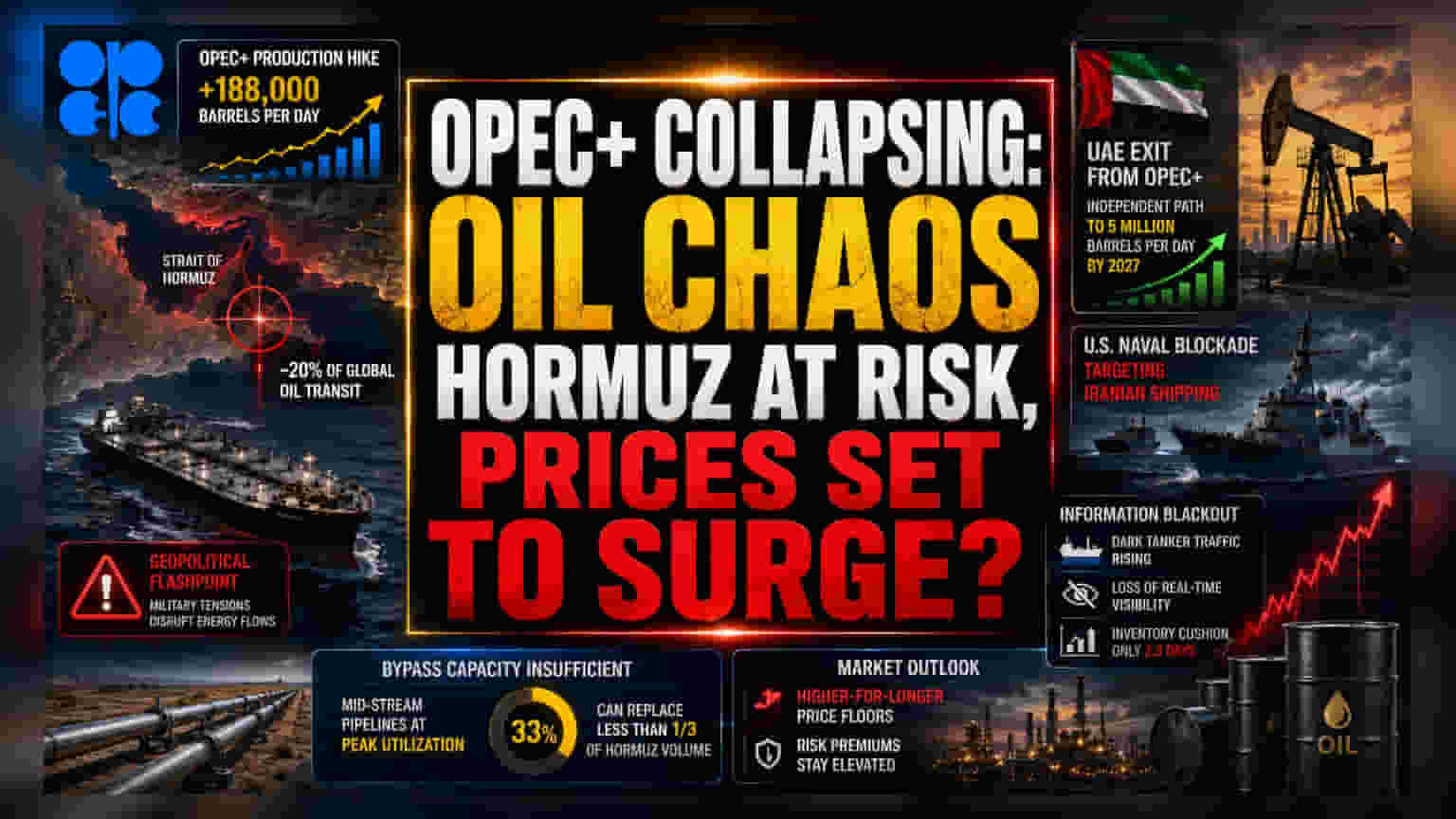


The Illusion of Supply Management
The latest efforts by OPEC+ to authorize marginal production increases appear disconnected from the reality of global energy transit. While the cartel is discussing an incremental hike of approximately 188,000 barrels per day, this quota adjustment fails to address the foundational disruption in the Persian Gulf. With the Strait of Hormuz functioning as a flashpoint for military hostilities between Iran and the U.S.-Israel coalition, nearly 20% of global seaborne oil transit remains effectively constrained. This disconnect between paper production targets and physical delivery capacity has left energy markets in a state of high-risk volatility that simple quota adjustments cannot resolve.
Structural Fragility and the Post-UAE Era
The withdrawal of the United Arab Emirates from the cartel has fundamentally undermined OPEC+ as a cohesive entity. As the UAE pivots toward an independent strategy to maximize its internal production capacity—targeting 5 million barrels per day by 2027—it removes one of the few members capable of exerting influence through spare capacity. This exit, combined with the U.S. naval blockade of Iranian shipping, has shredded the credibility of the cartel’s historical compensation frameworks. Markets are no longer pricing in OPEC+ cohesion; they are pricing in the inability of these states to guarantee flow through the world’s most critical maritime choke point.
The Forensic Bear Case: Information Breakdown
Beyond the headline geopolitical risks, the current energy landscape suffers from a systemic degradation in data transparency. The rise of dark tanker traffic and the loss of real-time visibility into oil transit represent a permanent impairment of energy price discovery. Institutional inventories are currently operating with razor-thin cushions—estimated by some analysts to cover merely 2.3 days of excess consumption—meaning any further military escalation or persistent pipeline bottleneck will likely trigger extreme price spikes. Furthermore, the reliance on mid-stream pipelines as a substitute for Hormuz throughput is mathematically insufficient; even at peak utilization, these bypasses cannot replace more than one-third of the lost maritime volume.
Future Outlook and Market Guidance
Market expectations for a return to historical price ranges are increasingly decoupling from current supply-side constraints. With global refinery demand softening in areas like China, but geopolitical risk premiums staying stubbornly high, the consensus among analysts is that the energy sector has entered a structural regime shift. Unless there is a sustained restoration of passage through the Strait of Hormuz, the market expects higher-for-longer price floors, as the cost of insurance and alternative shipping logistics continues to cannibalize margins across the industrial supply chain.