

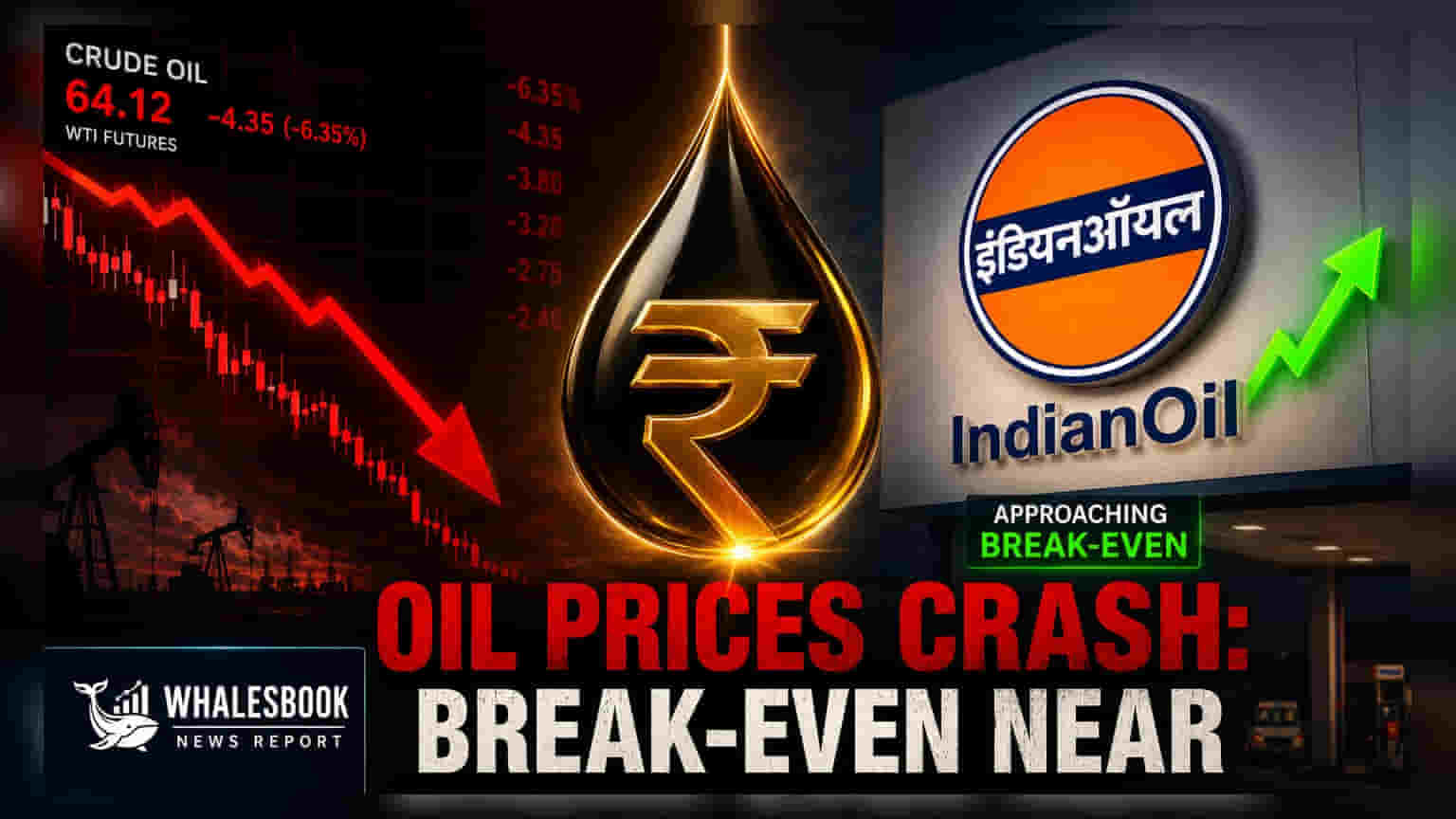
State-run oil marketing companies may reach break-even on petrol and diesel sales within ten days as global crude prices fall. This shift follows a challenging quarter where these firms absorbed over ₹75,000 crore in losses. Investors are now watching whether improved margins will lead to retail price cuts or a focus on recovering past financial hits.
Public sector oil marketing companies are approaching a turning point as global crude oil prices pull back to approximately $72 per barrel. With the Indian crude oil basket also easing to around $67-68 per barrel, these firms are nearing a break-even point on the retail sale of petrol and diesel. This threshold, which could be met within the next week if current global price levels hold, marks a potential recovery after a period of intense financial pressure.
Financial Recovery and Under-Recoveries
The industry faced significant headwinds in the first quarter of the current financial year, with collective losses surpassing ₹75,000 crore. These losses were driven by high procurement costs for crude oil, which were not fully passed on to consumers. While petrol and diesel margins are set to improve, companies still face under-recoveries on domestic LPG cylinders, where losses remain at approximately ₹500 per unit. For investors, the ability of these companies to recoup these massive accumulated losses will be the primary focus over the next six to twelve months. Achieving consistent profitability will depend on the stability of global crude prices and the extent of any future retail price adjustments.
OPEC+ Output and Supply Impact
Global supply dynamics are shifting as the OPEC+ alliance continues to ramp up production. The group recently authorized an increase of 188,000 barrels per day for August, representing the fifth consecutive monthly hike since the onset of the conflict in West Asia. This increase in global supply is a supporting factor for major importers like India, which sources nearly 90% of its crude requirements from overseas. Lower crude costs typically help ease the pressure on India’s import bill and can assist in the restocking of strategic petroleum reserves. However, the eventual impact on OMC profitability and retail pricing remains subject to government policy and the volatility of global commodity markets. Investors may continue to track the interplay between international crude price trends and the companies' operating margins in upcoming quarterly reports, as these will dictate the speed of financial stabilization.