 Whalesbook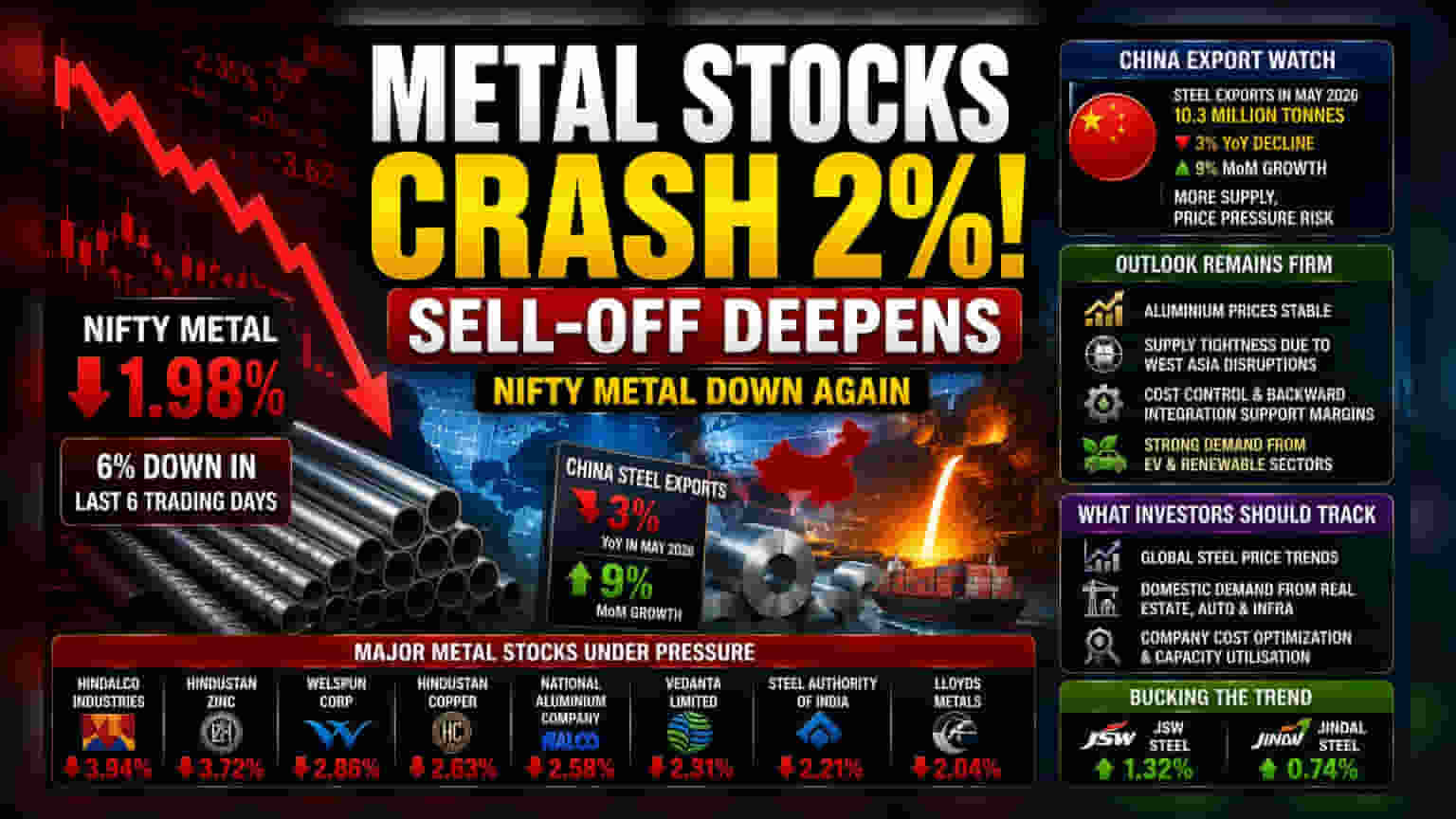


Indian metal stocks saw a sharp decline today as the Nifty Metal index fell 2%, continuing a six-day losing trend. The selling pressure is largely tied to recent data on Chinese steel exports, which investors monitor for impacts on global pricing and margins. Despite this recent dip, the sector has still outperformed the broader market significantly so far this year.
What Happened
Indian metal stocks faced a broad sell-off on Wednesday, with the Nifty Metal index sliding nearly 2% during the trading session. This decline marks a continuation of a rough patch for the sector, which has dropped 6% over the last six trading days. Among individual stocks, major players like Hindalco Industries and Hindustan Zinc were particularly affected, each shedding up to 4% of their value. Other metal companies, including Welspun Corp, Hindustan Copper, National Aluminium Company, Vedanta, Steel Authority of India, and Lloyds Metals, also saw declines between 2% and 3%.
The China Export Connection
Investors are closely watching China’s export data, as it often sets the tone for global metal prices. Reports indicate that China’s steel exports in May 2026 decreased by 3% compared to the previous year, totaling 10.3 million tonnes. However, when looking at the monthly trend, these exports grew by 9%. This rise in monthly exports often triggers concerns among investors that an increase in cheap supply could lead to global price pressure. When global prices fall, it can shrink the profit margins of Indian companies that compete in international markets.
Performance Trends
Despite the current weak sentiment, the broader trend for the year remains positive. While the Nifty 50 index has struggled with a decline of over 10%, the Nifty Metal index has still managed to gain roughly 14% year-to-date. This suggests that while the sector is facing short-term volatility, it has been more resilient than the rest of the market throughout the year. Some companies, such as JSW Steel and Jindal Steel, showed resilience today by erasing early losses and trading in the green, indicating that not all players are being impacted by the sentiment in the same way.
Outlook on Profitability
While stock prices are reacting to global data, the underlying business outlook for the first quarter of fiscal year 2027 remains firm. Analysts point to several supporting factors. Prices of aluminium have remained stable, which helps companies maintain margins. Furthermore, supply chain disruptions in West Asia are causing global supply tightness, which can sometimes benefit domestic producers. Additionally, internal cost-control measures—such as backward integration, where companies produce their own raw materials rather than buying them—are helping to protect profits. The demand from specific sectors like electric vehicles and renewable energy infrastructure continues to provide a foundation for long-term growth.
What Investors May Read This
The recent dip reflects the market’s sensitivity to global trade numbers. Investors often react quickly to data from China because it is the world’s largest producer and consumer of metals. When Chinese exports rise, it can create an oversupply in the global market, leading to lower prices for everyone. However, for Indian investors, the focus remains on domestic demand. If Indian infra and construction spending continues to be strong, domestic steelmakers may find support even if global prices are volatile.
What Investors Should Track Next
Moving forward, investors may want to watch several key indicators. First, monitor any changes in global steel price benchmarks. Second, keep an eye on domestic demand figures from key sectors like real estate, auto, and infrastructure, as these will determine how much of their capacity companies can effectively use. Finally, pay attention to company-specific announcements regarding cost-optimization projects, as these efforts are critical to maintaining profit margins when commodity prices are unpredictable.