

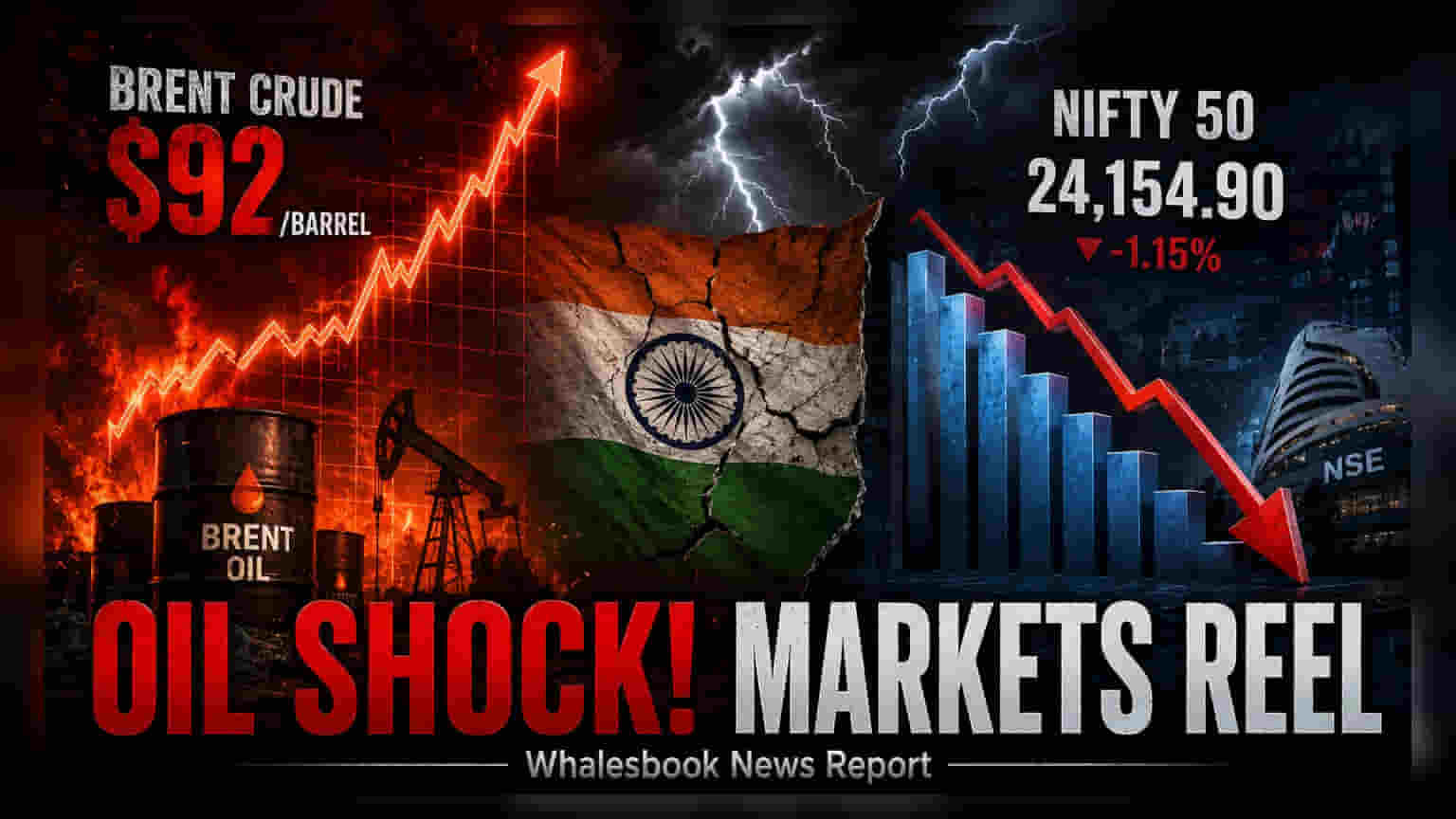
The Nifty 50 faces selling pressure, ending six straight sessions in the red, as Brent crude approaches $92 per barrel. Geopolitical tensions in the Strait of Hormuz and rising global bond yields are dampening investor confidence. Investors are closely watching how these energy and interest rate risks impact India's inflation and foreign fund flows.
Indian markets started Wednesday under pressure, with the Nifty 50 attempting to find a floor after falling for six consecutive trading sessions. On Tuesday, the index closed at 24,154.90, reflecting a cautious mood as traders assess the impact of rising global energy prices and interest rate trends.
The primary concern for the market right now is the sharp rise in Brent crude oil prices, which have climbed toward the $92 per barrel mark. This jump is largely fueled by heightened geopolitical tensions in the Strait of Hormuz, a critical waterway for global energy supplies. As a net importer of crude, India faces a direct economic impact when oil prices rise. Higher energy costs often translate into a wider current account deficit and increased inflationary pressure, which can complicate the central bank's ability to manage interest rates.
Global financial markets are also reacting to a sustained rise in bond yields. The US 30-year Treasury yield has been reported near 5.32%, a level that typically draws capital away from emerging market equities toward safer fixed-income assets. This shift creates a headwind for Indian stocks, as foreign investors often become more selective during periods of high global yields. While provisional data showed foreign institutional investors purchased Rs 1,652 crore worth of shares on Tuesday, the broader trend for the year has seen consistent selling, adding to the current volatility.
Technically, the Nifty 50 has been trading below its 50-day exponential moving average. For traders and investors, this is a key level often used to gauge medium-term momentum. When a major index stays below this average, it often indicates that the market is in a corrective phase and requires a positive catalyst or stabilization in global cues to reverse the trend.
Sector performance remains a focal point for investors. Industries that are sensitive to fuel costs, such as aviation and oil marketing companies, often see their profit margins come under pressure when crude prices spike. Conversely, the banking and financial sector is watching the trajectory of bond yields, as these shifts influence borrowing costs and investment portfolio values.
The immediate path for the market will depend heavily on the evolution of the US-Iran conflict. Investors will likely monitor whether there is any de-escalation in the Strait of Hormuz or if the geopolitical stalemate persists. In the coming days, the market's ability to hold current support levels, alongside oil price movements and foreign fund flows, will be the most important monitorables.