

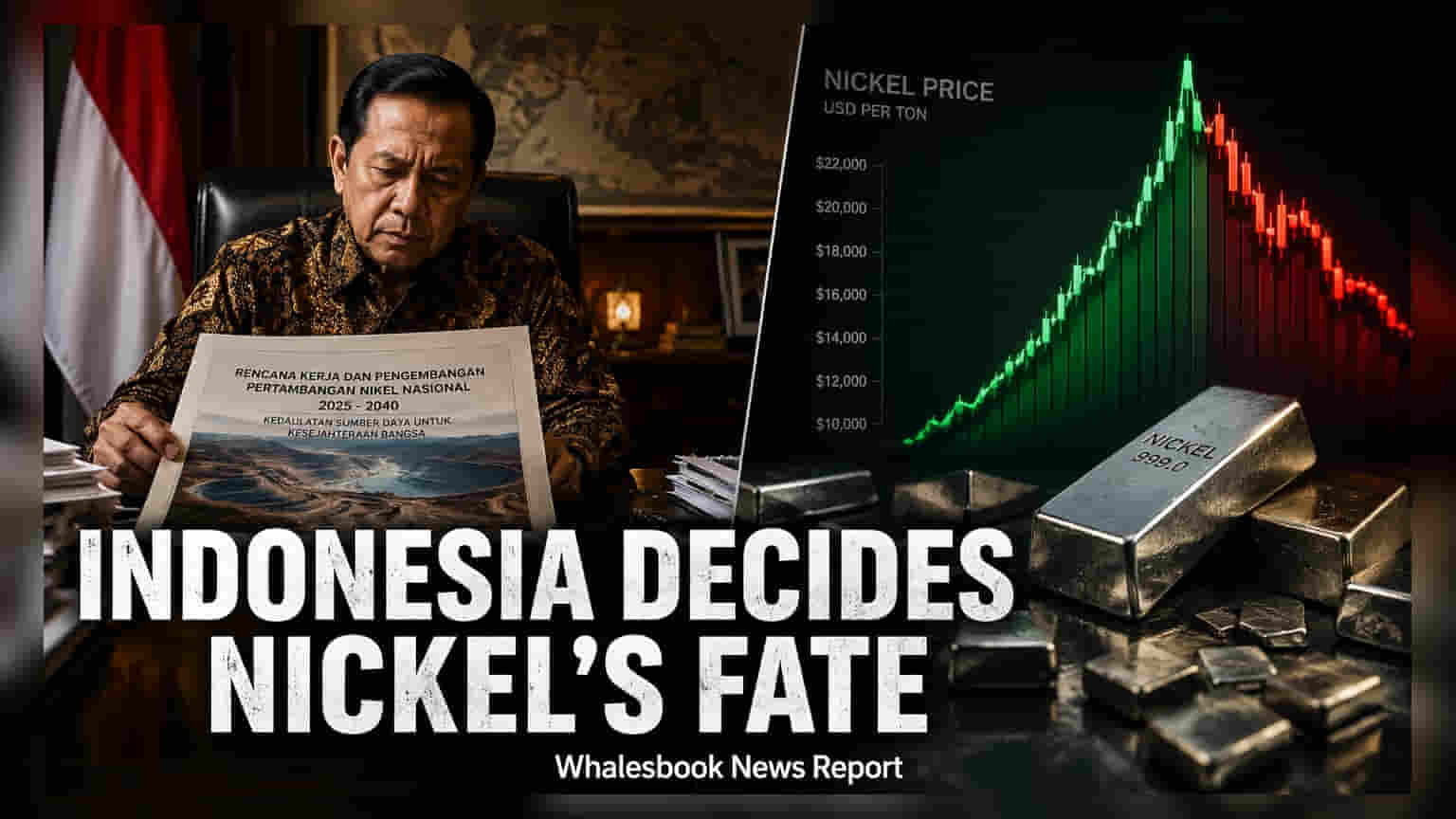
Nickel prices may come under pressure as Indonesia considers increasing its 2026 mining quota to 360 million tonnes. This policy shift is expected to ease supply constraints, impacting costs for stainless steel and EV battery manufacturers. Analysts are watching these developments as a potential factor in global price moderation for the second half of 2026.
Detailed Coverage
Global nickel markets are currently focused on potential policy changes in Indonesia, which serves as one of the world's largest suppliers of the metal. Reports indicate that the Indonesian government is weighing an increase in its 2026 mining work plan and quota, known locally as RKAB, to approximately 360 million tonnes. This would be a substantial rise from the current quota of 250 million to 260 million tonnes.
Impact on Market Supply and Pricing
For investors and companies tracking the metals sector, this potential quota hike represents a significant change in supply dynamics. Nickel is a vital raw material used primarily in the production of stainless steel and electric vehicle (EV) batteries. If confirmed, an increase in the mining quota would likely ease current supply restrictions that have contributed to price volatility earlier this year. Analysts at the Australia's Office of the Chief Economist have projected that nickel prices may average around $17,500 per tonne in 2026, though market participants expect some price moderation in the second half of the year if the supply of nickel ore expands.
Divergent Analyst Forecasts
While price forecasts vary, research agencies remain cautious regarding long-term trends. BMI, a unit of Fitch Solutions, recently adjusted its 2026 price estimate to $17,000 per tonne, up from a previous projection of $16,600 per tonne, following a strong performance in the first half of the year. Despite this, experts anticipate that the global market may continue to face a surplus, which could limit significant price rallies. The nickel market has seen prices fluctuate recently, with current levels hovering near $16,950 per tonne.
Strategic Monitorables for Investors
Beyond the Indonesian quota decision, other factors continue to influence the metal's price. Concerns regarding the production of high-pressure acid leach output, often due to raw material shortages like sulfuric acid, have historically caused temporary supply disruptions. Investors should track how Indonesia manages its mining permits in the coming weeks, as the final decision on the 360-million-tonne quota will be the most critical trigger for market direction. Furthermore, the overall demand from the stainless steel sector and the pace of EV adoption will dictate whether the market surplus remains persistent throughout the remainder of 2026.