

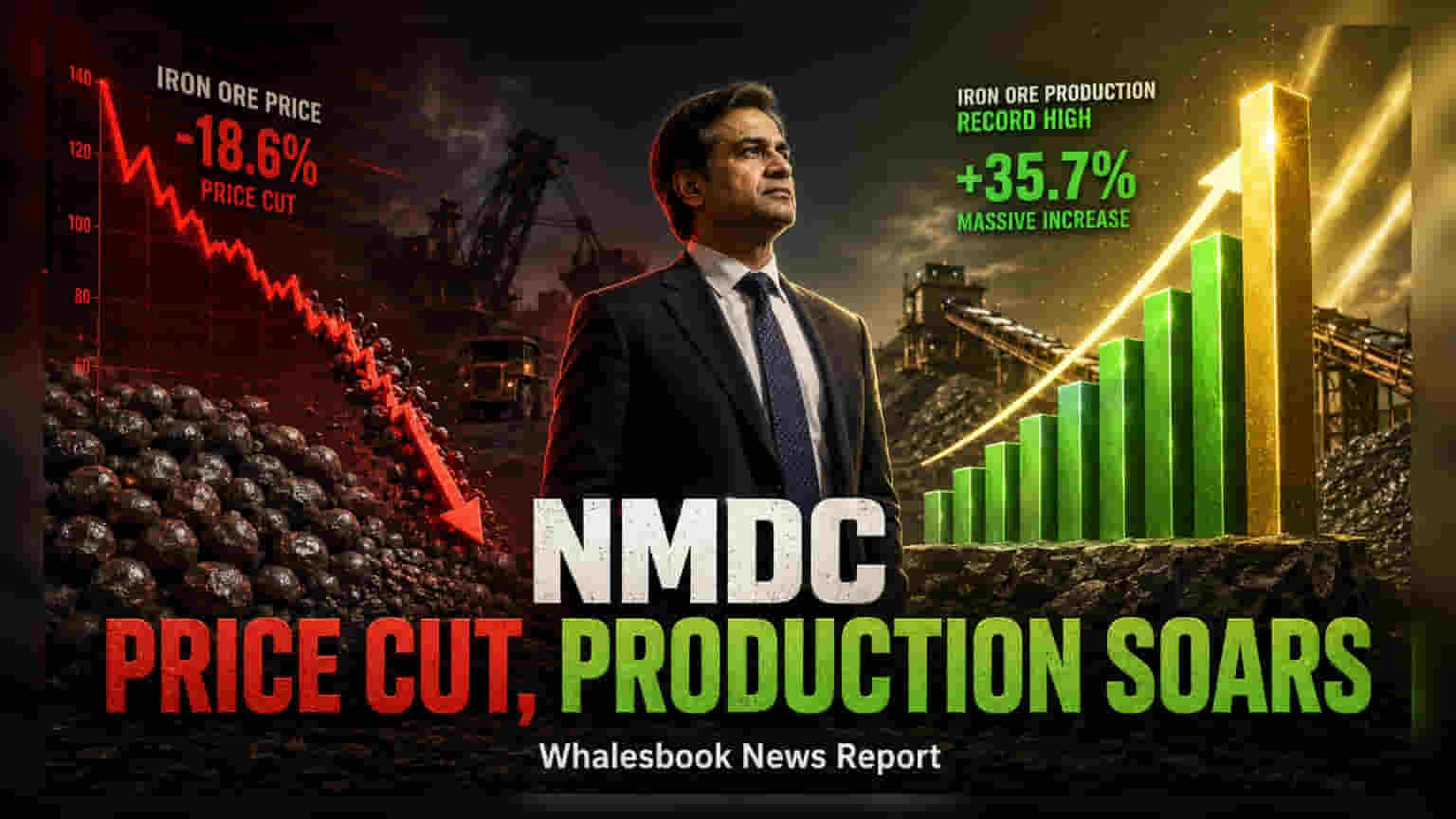
NMDC has reduced the price of its iron ore lump and fines by ₹200 per tonne effective August 8, 2026. While the company achieved a record 31% year-on-year growth in July production, the price cut highlights the competitive nature of the commodity market. Investors should monitor how these pricing decisions influence profit margins amid shifting global steel demand and operational costs.
NMDC Limited, India’s state-owned iron ore producer, has revised its pricing structure for iron ore products effective August 8, 2026. The company has reduced the price of lump ore (65.5 per cent, 10-40 mm) to ₹5,250 per tonne, down from ₹5,450 in the previous month. Similarly, the price for fines (64 per cent, -10 mm) has been set at ₹4,500 per tonne, a decrease from ₹4,700. These prices are quoted on a Free on Rail (FOR) basis and do not include additional taxes and statutory fees.
The price adjustment follows a period of robust operational performance for the company. In July 2026, NMDC recorded its strongest-ever production for the month, with output climbing 31% year-on-year to 4.06 million tonnes. For the first four months of the 2026 fiscal year, covering April through July, the company achieved a cumulative production of 19.16 million tonnes, with total sales reaching 15.15 million tonnes.
Impact on Margins and Demand
For investors, the central tension lies between production volume and profit margins. While high production figures indicate operational efficiency and strong mining capacity, price reductions often reflect the company's response to prevailing market demand from steel manufacturers. If steel prices remain under pressure or if demand softens, the company may lower its selling prices to ensure its inventory continues to move. This strategy can directly impact the company’s operating margins, as lower selling prices may not always be offset by the volume of sales, especially when input costs like fuel, electricity, and explosives remain significant.
The iron ore sector is highly sensitive to the broader economic cycle. NMDC’s financial performance is closely tied to the health of the steel industry, both in India and internationally. External factors, such as fluctuations in global iron ore pricing and regulatory changes regarding mining leases or royalties, remain important risks to monitor. Furthermore, any significant shift in Chinese steel demand can indirectly influence global pricing benchmarks, which in turn impacts the competitive landscape for Indian iron ore producers.
Strategic Expansion
Beyond its core iron ore business, the company is also looking to diversify its asset base. A delegation from the company recently engaged with officials in Argentina to discuss potential investments and partnerships in the exploration and development of copper and other strategic minerals. This move is part of a long-term strategy to expand the company’s footprint beyond its traditional iron ore business.
Moving forward, investors will be watching for the company's next production and sales updates to see if the volume growth remains strong enough to balance the reduced pricing. Additionally, management commentary regarding the outlook for the steel industry and any updates on capital spending for new mining projects will be key indicators for the company’s future financial health.