

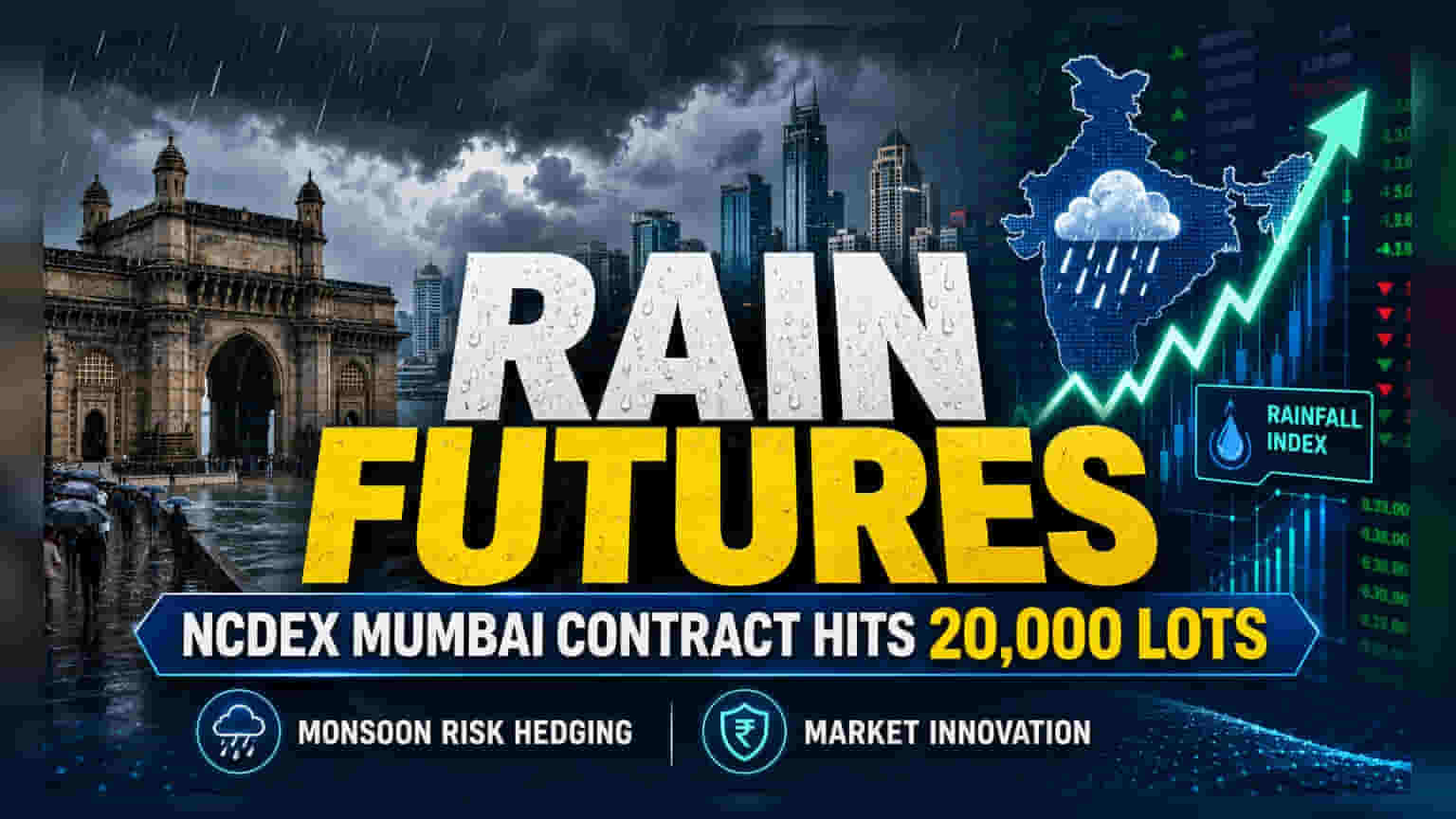
India's first rainfall futures contract on the NCDEX, known as RAINMUMBAI, recorded 20,000 lots traded in its first month. This financial tool allows businesses to hedge against monsoon rainfall variations in Mumbai. While trading volume is growing, the market is still learning how to effectively use these derivatives to manage weather-related business risks.
What Happened
The National Commodity & Derivatives Exchange (NCDEX) has reported that its new rainfall futures contract, RAINMUMBAI, saw 20,000 lots traded during its first month. The instrument is designed to track rainfall deviations from the city’s long-period average rather than total rainfall. This means traders and businesses can hedge against the risk of the monsoon being either too dry or too wet compared to historical averages. Daily volumes have been steady, with peaks surpassing 2,000 lots in a single day, signaling initial market interest in this new category of derivative.
How Weather Futures Work
Unlike traditional insurance, which covers specific physical damages caused by weather events like floods, weather futures are financial contracts that pay out based on an index. In this case, if the actual rainfall varies from the expected average, the payout is calculated based on that difference. For example, a business that loses revenue when it rains less than expected might buy a futures contract to offset that potential loss. This allows companies, such as those in agriculture, construction, or event management, to lock in a hedge against the uncertainty of the monsoon.
Why Investors Should Understand This
For most stock market investors, these contracts are not a direct investment product but a signal of how the market is maturing. The ability to hedge weather risk can stabilize earnings for monsoon-sensitive companies. If businesses begin to use these tools effectively, it could reduce the negative impact of erratic weather on their bottom lines. However, this is a sophisticated financial product. The challenge for the market is that weather patterns are complex, and valuing these contracts requires specialized knowledge that combines meteorological data with financial analysis.
The Risks Involved
Investors and participants should be aware that weather derivatives carry specific risks. The primary concern is 'basis risk,' which happens when the rainfall measured at the designated weather station does not perfectly match the impact on a specific business's operations. Furthermore, liquidity remains a hurdle. As a new product, the number of buyers and sellers is still developing, which can make it harder to enter or exit positions at desired prices. There is also the challenge of market education, as participants shift from traditional methods like insurance to derivatives.
What Investors Should Track
As this market evolves, the key factor to watch is the growth in trading liquidity. Consistent increase in volumes indicates that the product is becoming a reliable tool for risk management. Additionally, monitor how different industries adopt these contracts over the next few seasons. If more corporations begin to use RAINMUMBAI to hedge their financial risk, it may serve as an indicator of growing institutional comfort with climate-risk management tools in India.