

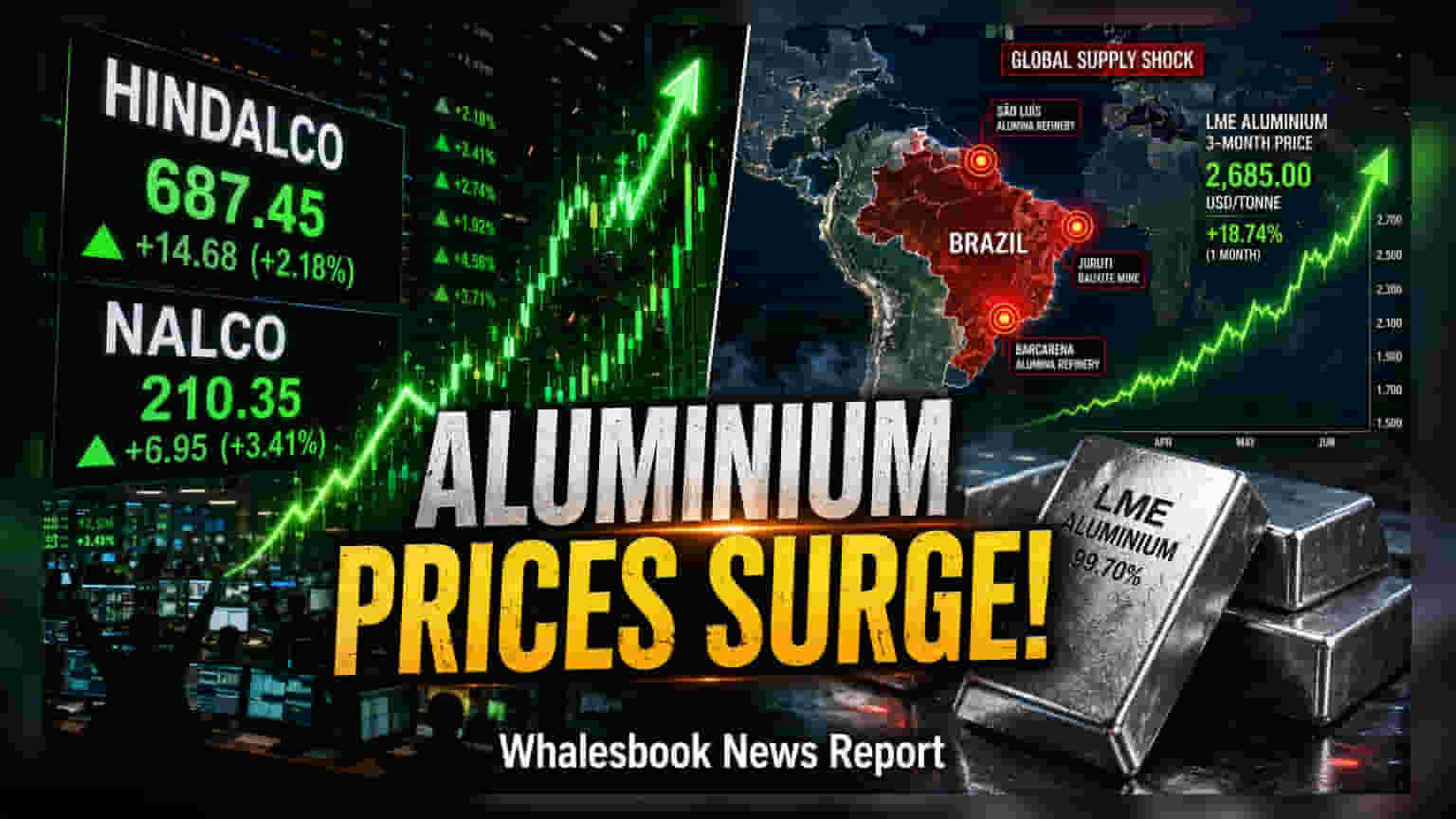
Shares of NALCO and Hindalco Industries surged on Wednesday after production at Brazil’s Alunorte alumina refinery was cut by 50% due to gas supply shortages. This global supply disruption pushed aluminium prices to a seven-week high. As integrated producers with captive raw materials, Indian companies like NALCO and Hindalco are positioned to benefit from potentially higher selling prices while maintaining stable production costs.
Shares of National Aluminium Company Ltd (NALCO) and Hindalco Industries saw a sharp rise on August 12, 2026, as news of a production cut at a major Brazilian alumina refinery triggered a rally in global metal prices. NALCO shares climbed 8.8% to ₹422.20 in early trade, while Hindalco Industries gained 3.7% to reach ₹1,087.95 on the NSE.
The upward movement follows an announcement by Norway-based Norsk Hydro, which reported that its Alunorte alumina refinery in Brazil has reduced operations to 50% of its capacity. This reduction, caused by natural gas supply disruptions, has fueled concerns over a global alumina shortage. Alumina is the primary raw material needed to produce aluminium. As one of the world's largest refineries, any output reduction at Alunorte ripples through global markets, driving aluminium prices on the London Metal Exchange to their highest level in seven weeks, trading around $3,382 per tonne.
For Indian investors, the rally highlights the advantage of vertical integration in the aluminium sector. Both NALCO and Hindalco operate as integrated producers, meaning they control the entire process from bauxite mining to alumina refining and final metal smelting. When global aluminium prices rise due to a supply crunch, these companies do not face the same immediate cost pressure as smelters that depend on buying alumina from external markets. With their own raw material sources, they can keep their production costs relatively stable while their finished metal commands a higher market price, which can potentially improve profit margins.
NALCO, a public sector entity, runs its Damanjodi refinery and Angul smelter with captive bauxite mines, allowing it to remain self-reliant. Hindalco, with its extensive aluminium capacity, also benefits from its upstream integration, which helps buffer its balance sheet against sudden spikes in spot raw material prices.
However, investors should consider the broader risks involved in this commodity-driven rally. The duration of the Alunorte production cut remains uncertain, and the company has noted potential financial impacts due to increased spot gas costs. For the Indian companies, while higher prices are supportive, sustained high costs for energy and raw materials remain a factor. There is also the risk of demand-side cooling; if metal prices remain elevated for too long, it could affect buying appetite from sectors like automotive and construction.
The key monitorable for shareholders in the coming weeks will be the timeline for Alunorte to return to full production and whether global aluminium prices can maintain these levels or if they will face pressure from broader geopolitical and energy market volatility.