

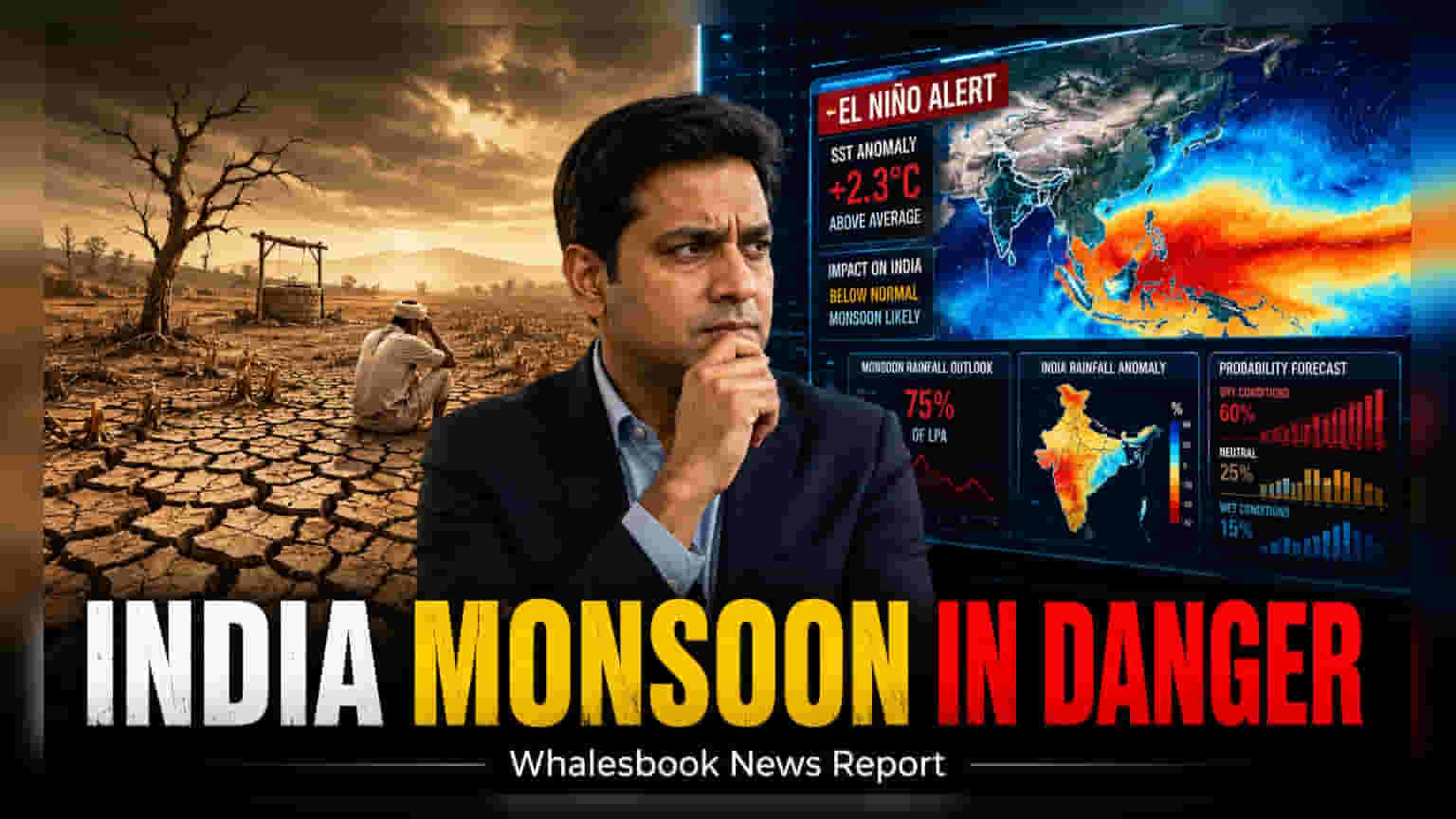
India's 2026 South-West monsoon faces potential challenges following a sluggish start, raising concerns for agricultural production. The interplay between El Niño and the Indian Ocean Dipole remains a critical factor for rainfall distribution. Investors are tracking how potential moisture deficits may impact food inflation, crop yields, and the performance of rural-focused companies.
Detailed Coverage
The 2026 South-West monsoon season has begun with significant uncertainty, as weather patterns show signs of stress that could impact India's broader economy. Meteorologists and analysts have pointed to the influence of El Niño, a climate phenomenon often associated with suppressed rainfall across the Indian subcontinent. Because the monsoon is the lifeblood of India's rural economy, a weak or uneven distribution of rain often leads to pressure on agricultural output and food prices.
Climate Drivers and Rainfall Risks
Beyond El Niño, the Indian Ocean Dipole, or IOD, is emerging as a critical secondary factor. The IOD refers to the difference in sea surface temperatures between the western and eastern parts of the Indian Ocean. When the IOD is positive, it can sometimes counteract the dry conditions brought on by El Niño. However, the current interaction between these two complex drivers makes long-term forecasting difficult, leading to potential volatility in rainfall expectations. For industries ranging from fast-moving consumer goods to fertilizers and tractors, the predictability of rainfall is vital for estimating demand in rural markets.
Impact on Agricultural and Economic Stability
If the monsoon remains weak throughout the season, the primary risk for the Indian economy is a potential rise in food inflation. Reduced rainfall can lower the yield for major kharif crops, which necessitates careful management of food stocks and supply chains. Companies in the consumer sector often see their sales growth correlate with rural income levels, which are directly tied to harvest success. Consequently, a shortfall in rain can lead to margin pressure for companies that depend on high-volume rural consumption, as lower purchasing power may dampen demand for discretionary products.
Monitoring Seasonal Indicators
Investors typically watch for updates from the India Meteorological Department and private forecasting agencies throughout the season to adjust their outlook on sector performance. Key monitorables over the coming weeks include regional rainfall distribution maps and reservoir levels, which serve as early indicators of water availability for the subsequent rabi sowing season. While early monsoon data is often subject to rapid change, the continued influence of global climate indicators will remain the primary lens through which market analysts evaluate rural demand and potential inflationary pressures in the months ahead.