 Whalesbook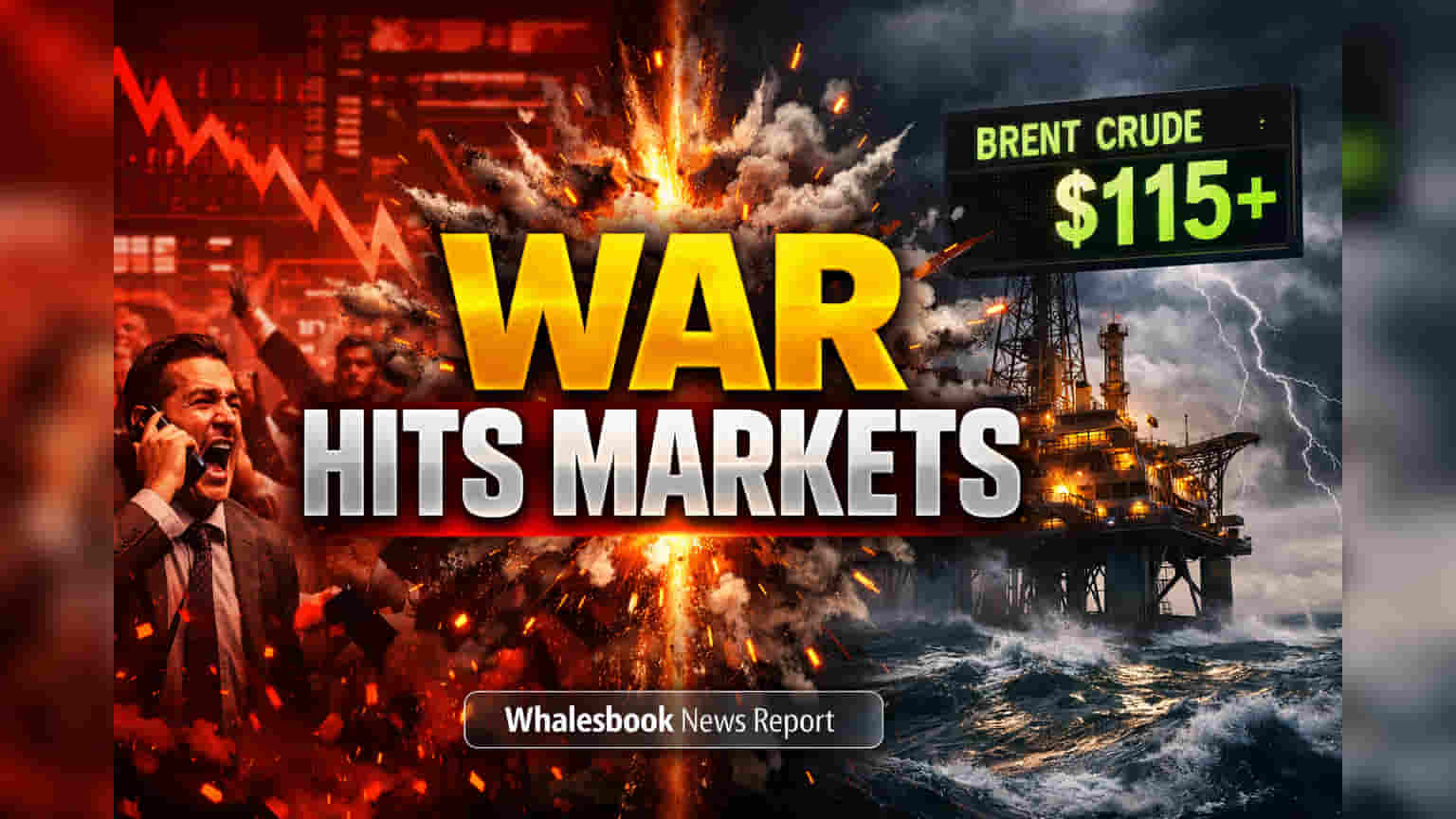
Oil Prices Surge Amid Geopolitical Risk
Brent crude oil is trading above $115 a barrel, up over 48% monthly and about 54% year-on-year as of March 29. This sharp rise, driven by disruptions to oil production and transit routes like the Strait of Hormuz, has reignited inflation fears. Aluminum prices have also climbed by around 6%. Such commodity price shocks often precede periods of slow economic growth alongside high inflation, commonly known as stagflation.
Global Markets Tumble as Risk Appetite Fades
Equity markets worldwide have seen sharp declines. The S&P 500 has fallen 7.4% since the Iran conflict began on February 28, as of March 27, and is now about 9% below its January peak. The Nasdaq 100 fell into correction territory, closing more than 10% below its recent high by March 26. Asian markets are also down, with Japan's Nikkei 225 dropping as much as 5.3% and South Korea's Kospi index experiencing significant volatility and sharp declines. U.S. equity futures mirrored this risk-off sentiment, retreating around 0.5%.
Fed Signals Inflation Concerns, Rate Cuts Diminish
The Federal Reserve kept its benchmark federal funds rate between 3.50%-3.75% in its March meeting. However, February's year-over-year CPI at 2.4% remains above the Fed's 2% target. This persistent inflation, worsened by the oil shock, has significantly reduced expectations for rate cuts. Interest-rate swaps now indicate no chance of a cut this year, with some analysts even anticipating a hike before year-end. Treasury yields have risen, with the 10-year note reaching 4.44% by March 27, its highest level since July 2025.
Market Divided: Energy Gains, Valuations Stretch
The commodity surge has created a divided market. The energy sector has performed well, up 18% month-to-date, while defense stocks have also risen on heightened geopolitical risks. In contrast, consumer discretionary sectors have faced pressure from rising fuel costs and recession fears. Valuations are a concern; the S&P 500's trailing twelve-month P/E ratio stands at about 28.26 as of March 23, well above its modern-era average of 20.6. The Kospi index, despite recent volatility, trades at a 2026 P/E of 8.8 times.
Outlook Clouded by Geopolitical and Economic Risks
The current geopolitical escalation poses a risk of extended supply disruptions, further fueling inflation and potentially pushing economies into stagflation. The Federal Reserve faces the challenge of controlling inflation while supporting economic growth, creating an uncertain environment. While some analysts project a 28.9% rise in the S&P 500 over the next twelve months based on aggregate target prices, this optimism is limited by current market conditions and sector-specific pressures. The historical pattern of oil shocks leading to bear markets and recessions highlights the risk of steeper declines, particularly if the conflict continues. The Nasdaq 100's break below its 200-day moving average is a bearish technical signal, often preceding further investor selling. Investors now see a landscape where even traditional safe assets like bonds are facing pressure due to rising yields, and credit spreads have begun widening. The market's current trajectory following the Iran war is seen by some as similar to the Kuwait war, suggesting more downside may be ahead.
Volatility Expected Amid Uncertainty
Industry analysts forecast significant upside for the S&P 500 over the next year, but they face a market increasingly dominated by geopolitical uncertainty and policy shifts. The path forward depends on conflict de-escalation, stable energy prices, and central banks' ability to manage inflation without causing a severe recession. For now, volatility is expected to remain high as markets process these competing forces.