 Whalesbook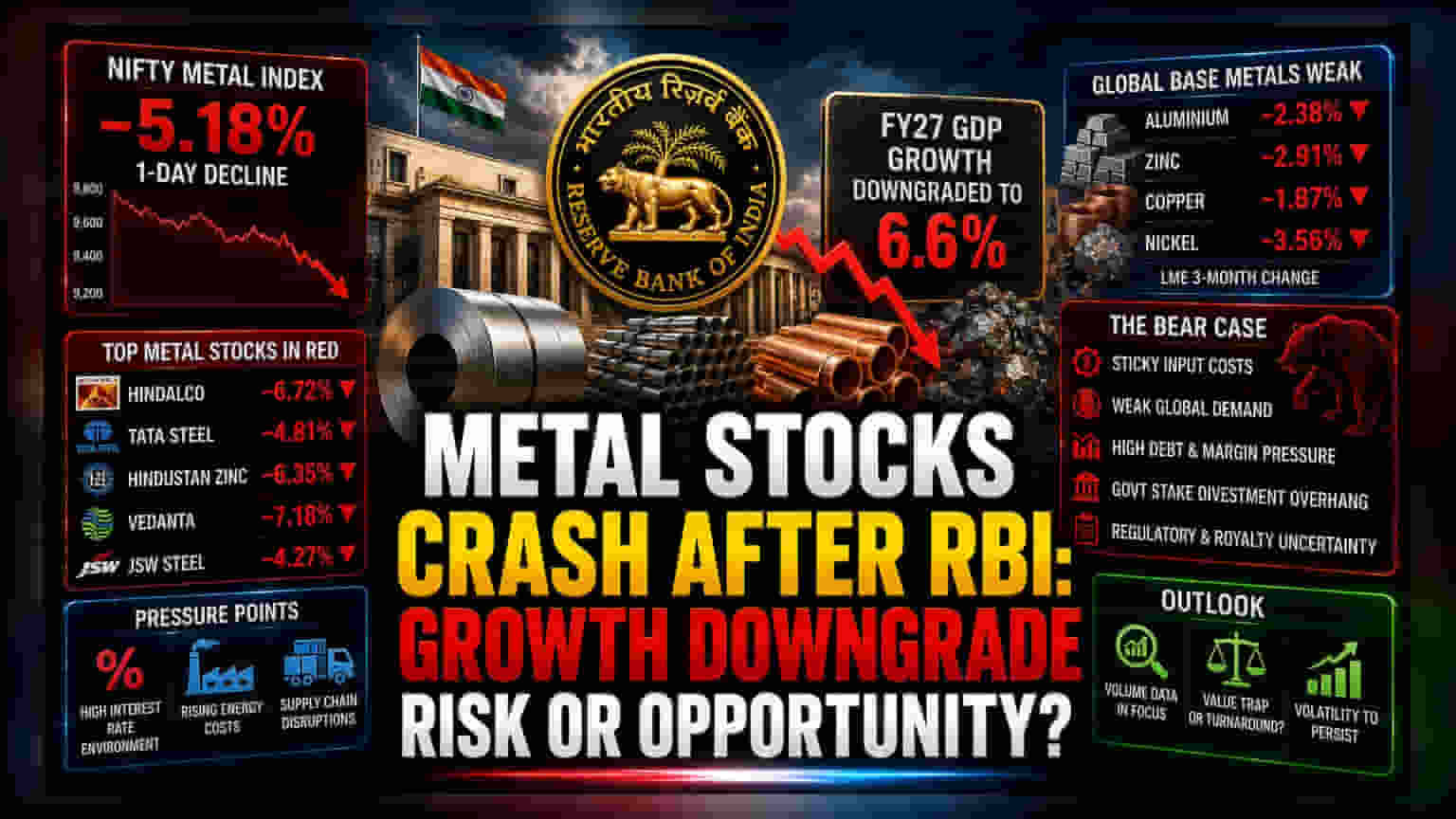


The Valuation Gap
The sharp correction in domestic metal equities reflects more than just a reactionary response to the central bank’s latest monetary policy update. While the headline decline in the Nifty Metal index captures the immediate volatility, the underlying weakness stems from a widening disconnect between domestic production costs and sliding global base metal benchmarks. With the Reserve Bank of India maintaining a neutral stance while explicitly downgrading the FY27 GDP growth outlook to 6.6%, the market is pricing in a prolonged period of suppressed industrial demand. This contraction in the growth forecast directly threatens the volume-led recovery that many large-cap metal firms had previously baked into their fiscal projections.
Sectoral Divergence and Global Headwinds
Unlike the more resilient banking or pharmaceutical sectors, Indian metal producers are uniquely vulnerable to the dual pressure of sticky input costs and weakening international demand. Companies such as Hindalco and Tata Steel are currently navigating a environment where global supply chain instability, particularly in energy procurement, continues to erode operating margins. Furthermore, the aggressive sell-off in Hindustan Zinc and Vedanta was exacerbated by technical selling pressure tied to reports of a potential government stake divestment. This creates a supply overhang that often discourages institutional buying until the regulatory clarity improves. When measured against historical performance from the same period last year, the current sector-wide drawdown shows higher sensitivity to interest rate announcements, signaling that investors are losing patience with capital-intensive firms that hold significant debt loads in a high-rate environment.
The Forensic Bear Case
The aggressive downward move in mid-cap names like NALCO and SAIL serves as a warning sign for broader market risk appetite. These firms often function as proxies for domestic infrastructure spending; a decline in their valuation suggests that expectations for government-led capital expenditure are cooling. Furthermore, management teams at these companies have historically struggled to manage debt-to-equity ratios during economic slowdowns, making them susceptible to margin compression when industrial output cools. Unlike their global counterparts that may have successfully hedged against energy volatility, several of these domestic players remain heavily exposed to fluctuating global fuel prices, leaving them with little room to absorb the impact of a stagnating GDP growth trajectory. Regulatory uncertainty regarding mineral royalties and government divestment plans remains a persistent governance risk that often results in a valuation discount compared to global mining peers.
Future Outlook
Market participants are now closely monitoring the upcoming quarter's volume data to see if the domestic demand floor can hold firm despite the central bank's bleak outlook. While brokerage consensus remains cautious, the primary focus for analysts is whether current price levels offer a value opportunity or if further compression is required before the sector reaches a bottom. Expect continued volatility until global commodity markets show signs of stabilization or the Reserve Bank provides clearer guidance on future liquidity measures.