 Whalesbook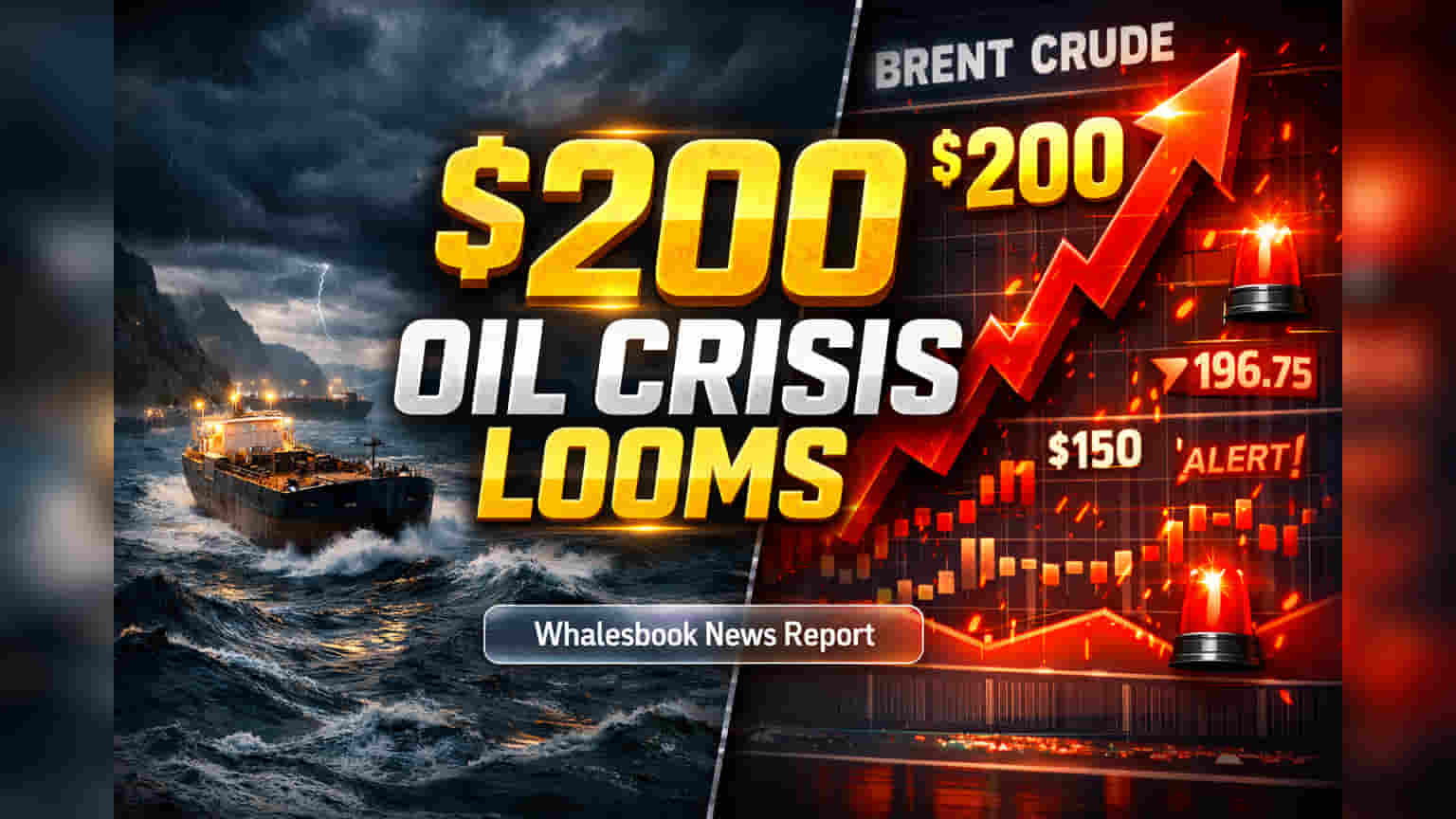
Macquarie's $200 Oil Price Warning
Macquarie Group has issued a stark warning: crude oil prices could skyrocket to an unprecedented $200 a barrel. This dire prediction is tied to a potential prolonged conflict involving Iran that could keep the critical Strait of Hormuz shut well into the second quarter. Analysts put this worst-case scenario at a 40% probability.
Traders Bet on Sharp Brent Crude Rally
The market is showing significant signs of unease. Traders are actively positioning for a sharp rise, betting that Brent crude will breach $150 a barrel by the end of April. Open interest in April call options at $150 has jumped nearly tenfold, signaling strong expectations of a near-term price shock. This anticipated surge would surpass Brent's 2008 record of $147.50.
The Strait of Hormuz: A Geopolitical Chokepoint
The Strait of Hormuz, a vital chokepoint for global oil flows, is at the center of the concern. Tehran's actions are seen as curtailing supply, amplifying fears of a widespread energy crisis. Even tentative diplomatic signals have done little to calm derivatives markets, where traders are positioning for further volatility.
Economic Impact of Soaring Oil Prices
A sustained climb to $150 or $200 oil would dramatically alter the global economic landscape. Oil spending, which hovers around 2.5-3% of global GDP at current levels, could nearly double. This would push oil spending into the historically dangerous 5-6% of global GDP zone, potentially derailing economic expansion and forcing a wholesale repricing of budgets and supply chains. The duration of any price spike, not just its level, will determine the lasting economic harm.