

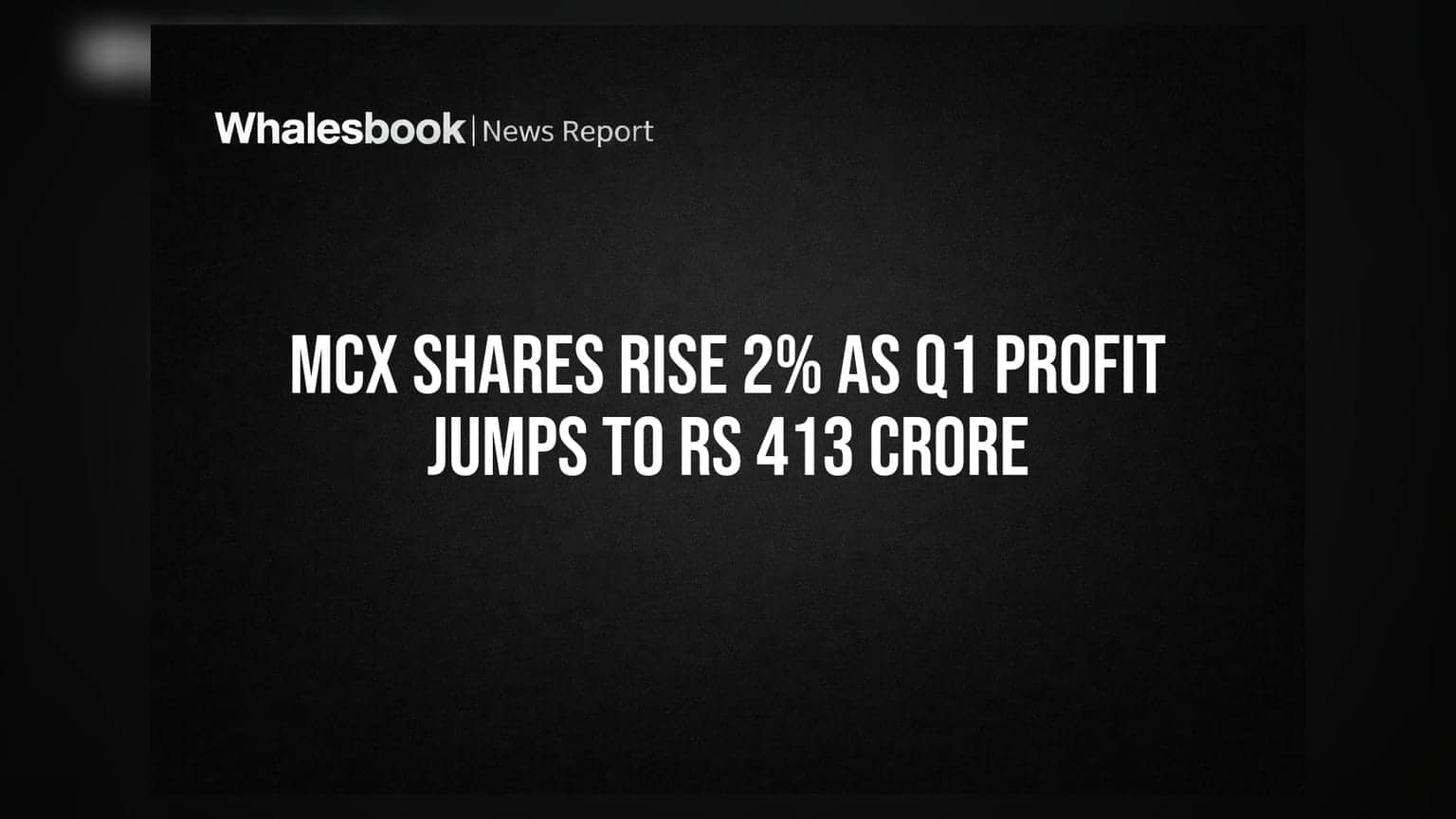
Multi Commodity Exchange of India (MCX) shares gained 2.22% to Rs 2,696.60 after reporting strong Q1 FY27 results. The exchange saw its operational revenue grow by nearly 88% year-on-year, driven by higher trading volumes. Investors are noting the company's debt-free balance sheet and the recent dividend announcement.
Multi Commodity Exchange of India (MCX) shares traded higher on Monday, rising 2.22% to Rs 2,696.60. This stock movement follows the company's financial results for the quarter ending June 30, 2026, which showed a sharp increase in both revenue and profit compared to the same period last year.
The company reported an operational revenue of Rs 702 crore for the first quarter of the 2027 fiscal year. This marks a year-on-year growth of approximately 88%. Net profit also rose significantly, reaching Rs 413 crore. The strong performance was largely driven by a surge in transaction activity and higher commodity price volatility, which typically leads to more trading on the exchange platform.
MCX maintains a strong balance sheet, operating effectively as a debt-free company. This lack of borrowing costs supports its profitability, as the company does not need to set aside significant cash for interest payments. For shareholders, the company has announced a dividend of Rs 8.0 per share, which was approved in May 2026. The record date for this dividend payment is set for August 28, 2026.
While the recent growth figures are strong, investors often look at whether such high levels of trading activity can be sustained. The revenue of an exchange is closely tied to market volumes. If commodity price movements stabilize or trading activity slows down, it could lead to lower transaction revenue in future quarters.
Beyond market volume, the company also faces risks related to regulatory changes. As the primary platform for commodity derivatives in India, MCX is sensitive to policy decisions by market regulators regarding trading limits, product types, or transaction taxes. Any major shift in these regulations can directly influence trading sentiment and volumes on the exchange.
Technological infrastructure remains another important area for the business. Because the exchange processes a large volume of trades in real-time, it must continuously invest in its platform to handle periods of high market stress and avoid service disruptions. Investors will likely monitor the sustainability of these profit margins and trading volumes in the coming quarters to see if the growth momentum continues.