

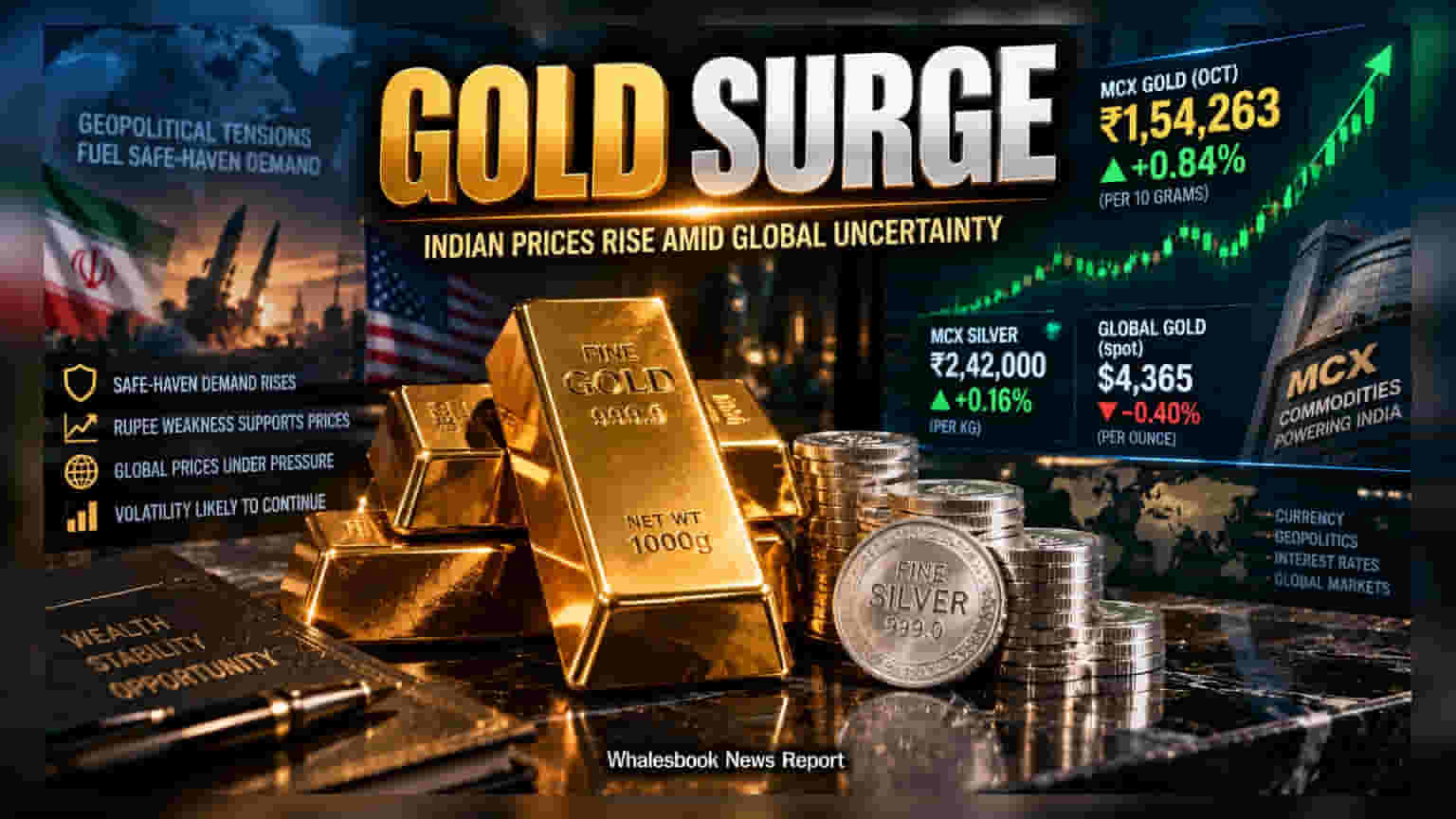
Indian gold futures on the MCX climbed 0.84% to ₹1,54,263 per 10 grams on September 21, even as international prices fell. This domestic rise highlights a decoupling from global markets, driven by geopolitical instability in the Middle East and the weakening of the rupee against the dollar. Investors are weighing these regional risks against shifting U.S. Federal Reserve policies.
Gold futures on the Multi Commodity Exchange (MCX) in India showed resilience on September 21, rising 0.84 percent to settle at ₹1,54,263 per 10 grams for the October contract. This movement stands in contrast to the global trend, where gold prices experienced a decline. In international markets, spot gold prices were reported near $4,365 per ounce, reflecting a decrease of about 0.40 percent during the early trading session.
Factors Behind the Price Gap
The domestic price rise while global rates dipped highlights a common phenomenon in the Indian bullion market. Gold prices in India are not only influenced by international spot rates but also by the value of the Indian rupee against the U.S. dollar and domestic import duties. When the rupee loses value against the dollar, gold—which is imported—becomes more expensive in rupee terms. This currency depreciation often cushions the impact of falling global prices for domestic investors.
Furthermore, heightened geopolitical tensions between the United States and Iran have increased the demand for gold as a safe-haven asset. Historically, investors turn to gold during times of conflict because it is seen as a store of value when other investments become risky. While the U.S. Federal Reserve’s recent monetary policy adjustments typically exert downward pressure on gold—because gold does not pay interest, making it less attractive when interest rates are high—the urgency caused by regional conflicts has temporarily offset these factors in the Indian market.
Silver Maintains Steady Momentum
Following the trend in gold, silver prices in India also saw an uptick. Silver futures traded at ₹2,42,000 per kilogram, marking a 0.16 percent rise from the previous session’s close. While gold often moves based on safety concerns, silver is also heavily influenced by industrial demand. Investors often watch both metals to gauge broader commodity sentiment, as precious metals sometimes act as a hedge against inflation and economic uncertainty.
What Investors Should Monitor
The current price environment remains volatile. Investors are looking at two major forces: the interest rate path set by the Federal Reserve and the intensity of the conflict in the Middle East. If global central banks maintain higher interest rates for a longer period, gold may continue to face pressure. However, any significant escalation in regional geopolitical tensions could continue to provide a floor for prices. Moving forward, updates on the Rupee-Dollar exchange rate, central bank liquidity trends, and further developments in the U.S.-Iran situation will be the most important factors for gold and silver price discovery in the Indian market.