

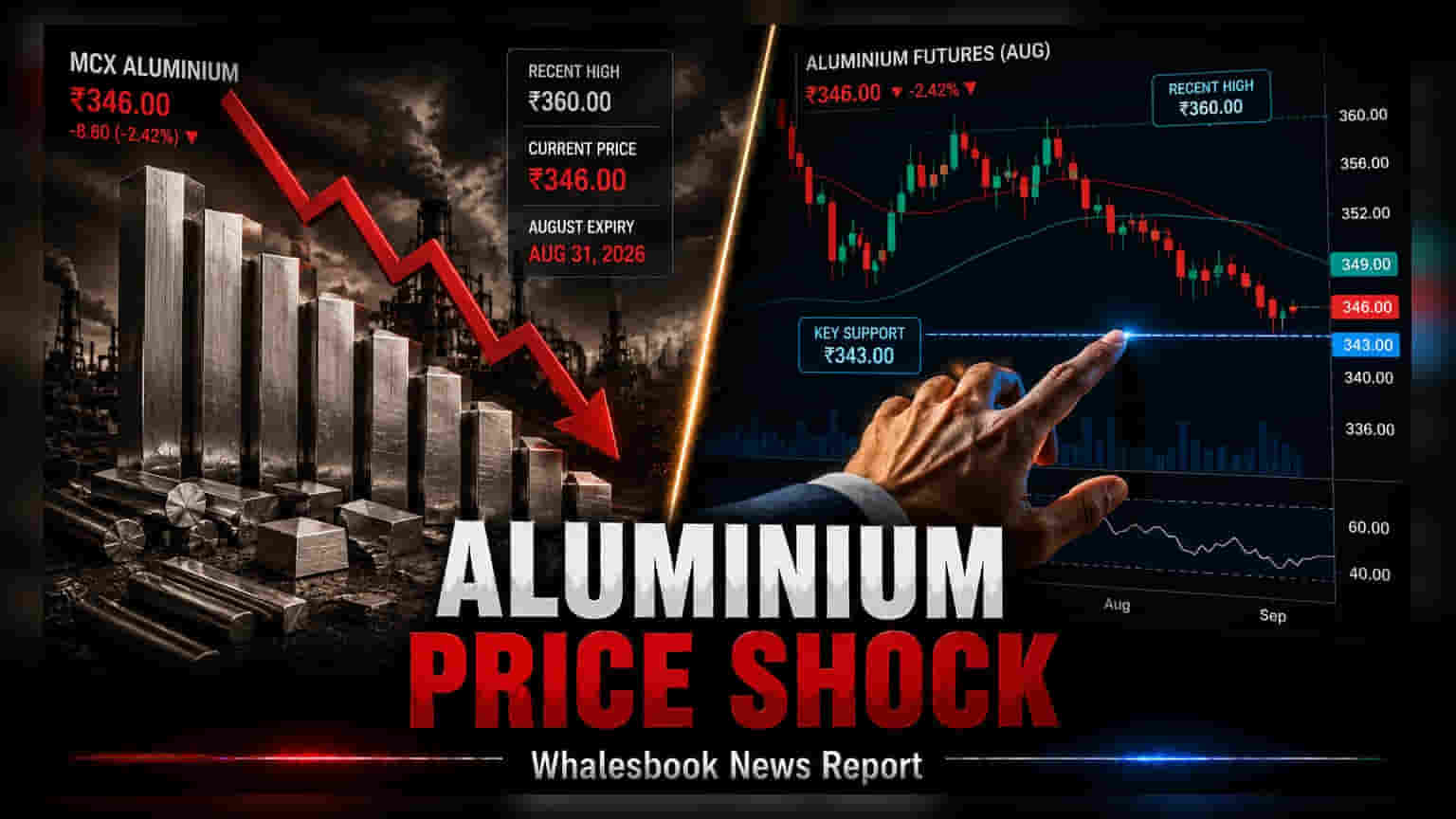
MCX Aluminium futures have pulled back to trade near ₹346 per kg after a recent peak. Market participants are closely watching the ₹343 level, which serves as a critical support zone, while global supply dynamics from major producers like China and the Middle East continue to influence price sentiment.
Aluminium futures on the Multi Commodity Exchange (MCX) are currently navigating a sensitive period as prices test a key technical support level. After reaching a recent high of nearly ₹360 per kg earlier in August, the metal has witnessed a pullback, with the August contract currently trading around the ₹346 per kg mark. This shift in price momentum has drawn attention to the ₹343 level, which analysts and market participants identify as a critical floor for the near term.
The price of industrial metals like aluminium is deeply linked to global supply and demand dynamics, rather than domestic factors alone. Current market sentiment is being shaped by production data emerging from major global hubs, including China and the Middle East. Increased production volumes from facilities in the Middle East, such as those operated by major aluminium producers, have historically exerted pressure on international prices. Since MCX prices often mirror trends on the London Metal Exchange (LME), any fluctuation in global supply, combined with the strength of the U.S. dollar, directly impacts domestic contract pricing.
For investors and market participants, the ₹343 level is significant because it represents a point where buyers have previously stepped in to stabilize the price. If the contract maintains this level, it could signal a period of consolidation or a potential rebound toward the ₹349–₹352 range. However, a failure to defend this support zone might lead to a change in the short-term trend, potentially inviting further selling pressure.
It is important for market participants to remember that commodity futures are highly sensitive to external global cues. Unlike equity investing, where company fundamentals drive value, futures contracts are influenced by cyclical production cycles, international trade policies, and macroeconomic shifts. The August contract is also nearing its expiry on August 31, 2026, which often leads to increased volatility as participants roll over their positions to the next month.
Investors monitoring this space should look for clarity on global supply updates and any shifts in the U.S. dollar, as these are the primary drivers for price volatility in the coming days. The ability of the contract to hold above the ₹343 level will be the primary indicator of whether the recent downward pressure will ease or continue.