

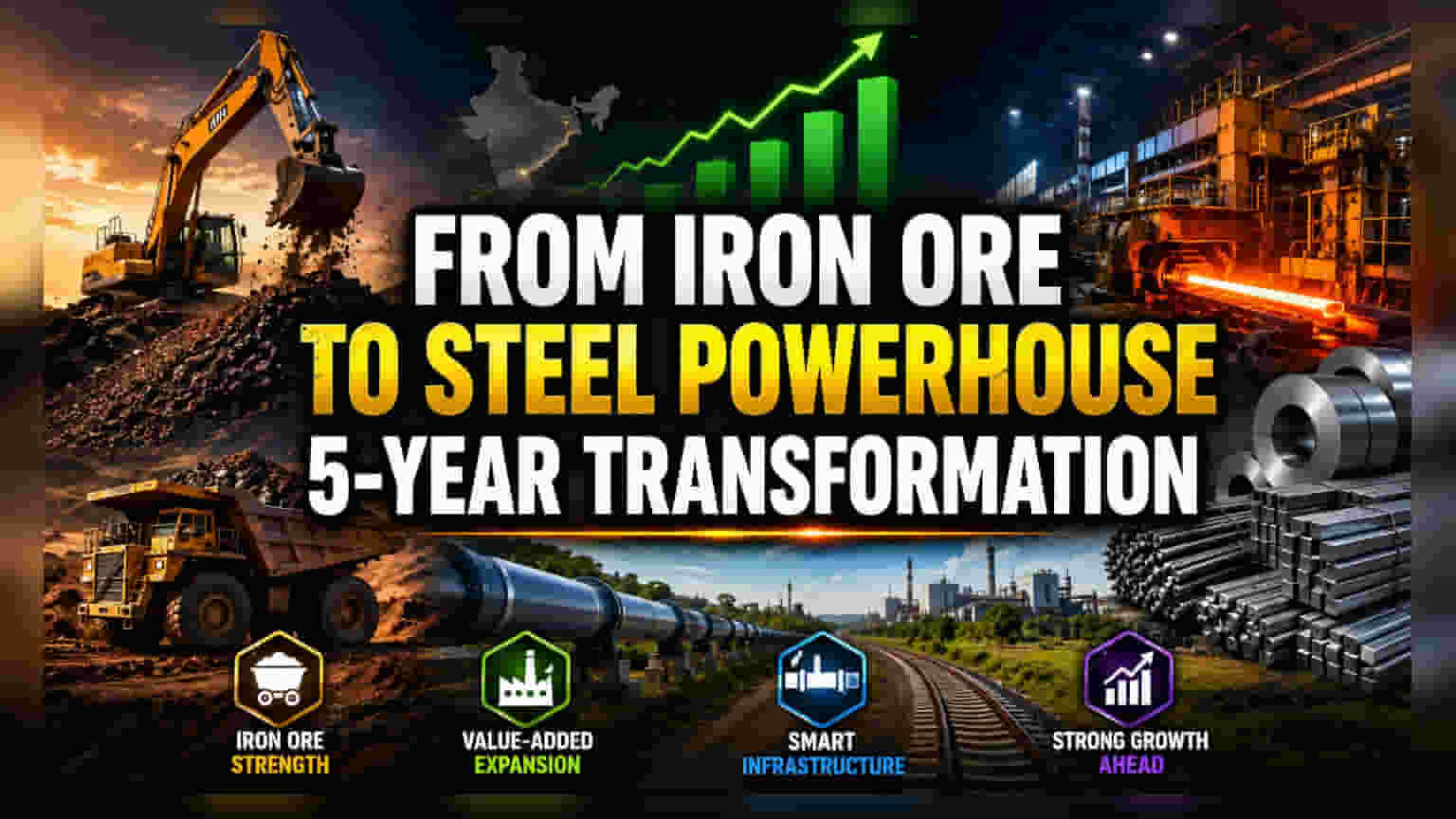
Lloyds Metals & Energy has grown revenue from ₹251 crore in FY21 to ₹13,681 crore in FY26, signaling a major transformation. The company is now shifting from a raw iron ore miner to a comprehensive mining-to-metals player, focusing on steel manufacturing and low-grade ore processing. Investors should watch the execution of these capital-intensive projects and infrastructure developments as the company moves into its next growth phase.
What Happened
Lloyds Metals & Energy has undergone a significant transformation over the last five years, with its revenue scaling from ₹251 crore in FY21 to ₹13,681 crore in FY26. This growth, accompanied by a net profit of ₹3,194 crore, represents a compound annual growth rate of 122%. The company’s primary operation remains its iron ore mining facility in Gadchiroli, Maharashtra, which holds a lease valid until 2057. Moving forward, the company is shifting from being a pure-play iron ore miner to a more complex mining-to-metals platform.
The Shift To Value-Added Metals
To move beyond just selling raw iron ore, the company is integrating downstream into higher-value products. It is expanding its merchant pellet plant capacity, which is expected to reach 12 million tonnes by FY28-29. Pelletization adds value to raw ore, allowing for better price realization. Furthermore, the company is building a 1.2 million tonne wire rod mill and a larger steel manufacturing facility, aiming for a total steel capacity of 4 million tonnes. By entering steel manufacturing, the company is trying to capture more profit margin throughout the production chain, rather than remaining dependent solely on raw ore prices.
Cost Efficiency And Infrastructure
The company has focused heavily on logistics to improve profitability. Transporting iron ore by road is expensive and prone to supply chain delays. To address this, the company has implemented an 85-km slurry pipeline to move material more efficiently. A second, 190-km pipeline is currently under construction to support its upcoming pellet and steel hub. By reducing reliance on road transport, the company aims to lower its operating costs and improve the speed of delivery, which is a significant factor in a commodity-heavy business.
The Operational Risks
While the company is expanding, moving into steel manufacturing and low-grade ore processing involves considerable risks. Large-scale capital spending on new plants and pipelines brings the risk of delays, cost increases, and challenges in reaching planned production capacity. Additionally, the mining sector is subject to strict regulatory oversight and environmental clearances. Any disruption or regulatory hurdle regarding the core mining lease or the new project sites could impact operations. Furthermore, the company is moving from a low-complexity mining model to a high-complexity manufacturing model, which requires different management skills and operational expertise.
What Investors Should Track
The company’s next phase will depend on how efficiently it manages its large capital spending projects. Investors may track the progress of the steel manufacturing facility and the new 190-km slurry pipeline, as these are central to the company’s future growth. Additionally, the success of the beneficiation project for low-grade Banded Hematite Quartzite (BHQ) will be important, as this determines whether the company can effectively extend the life of its reserves. The company's ability to maintain its profit margins while absorbing the costs of these major expansions remains a key monitorable.